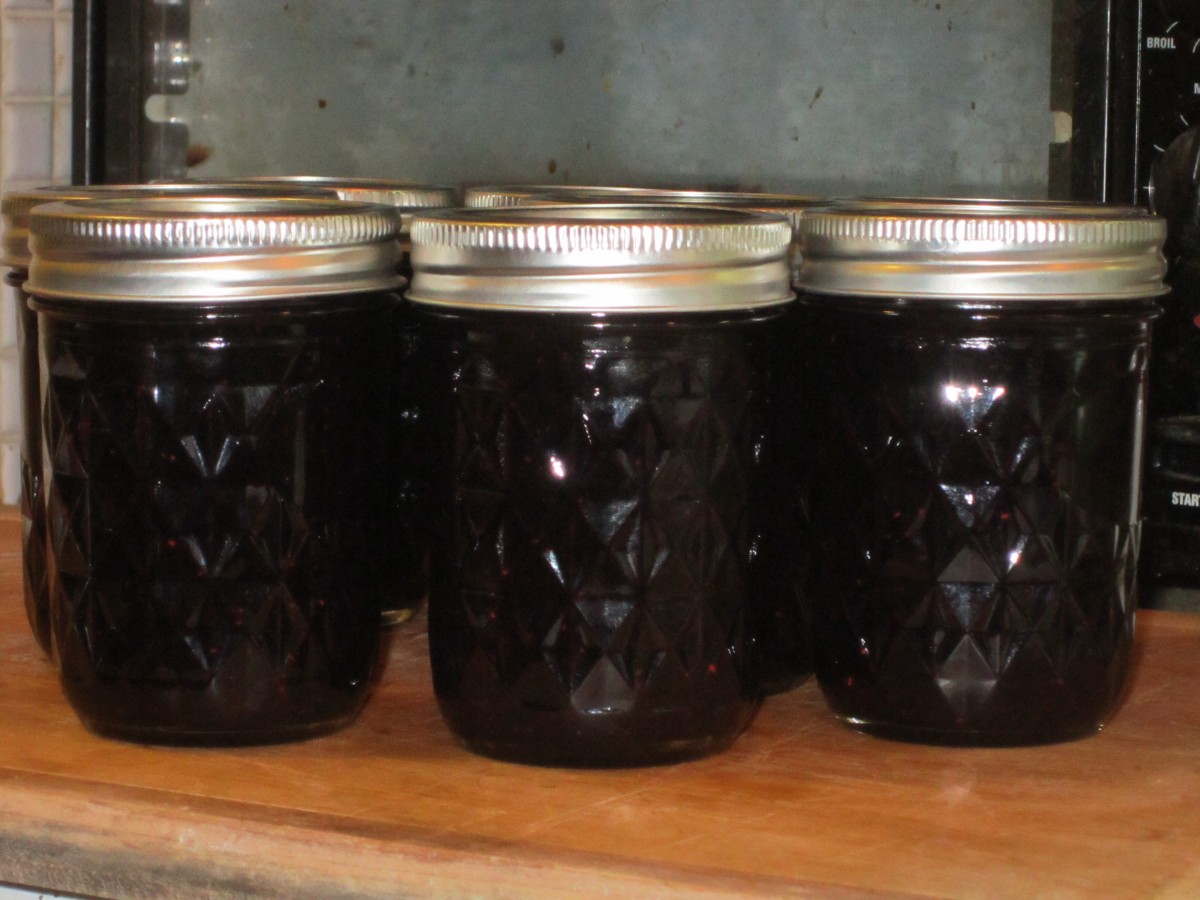
Blueberry Jam
Since so many people are making jams, jellies and preserves I thought I share some info to help your efforts produce perfect results.
Definitions
These are the definitions of several types of fruit-based products
Jelly: Made from juice only. Fruit is cooked and strained, juice combined with sugar and sometimes pectin and cooked until reaching proper jelling state
Jam: Fruit is crushed and cooked with sugar and sometimes pectin to a soft gel stage
Preserves: Preserves contain larger pieces of fruit suspended in a thickened syrup or gel
Conserves: Usually made from a mixture of fruits and often contains nuts and raisins
Butters: Fruit pulp and sugar are cooked over low heat for longer period until thickened
Marmalades: Citrus fruit product containing fruit pieces and peel suspended in a gel
Four Essential Ingredients
Fruit: Imparts the flavor and may provide pectin and/or acid to the recipe. Never use over ripe fruit!
Pectin: Starch found in unripe apples and the white pith of citrus fruits that expands and forms a thickened substance when heated with sugar and acid foods. There are pectins (low methoxyl) on the market now that will gel without the presence of sugar or with reduced amounts of sugar. When using powdered pectin it is added at the beginning of the cooking process. Liquid pectin is added at the end of the process.
Sweeteners: Granulated sugar is best. Do not use any sugar that is labeled “sucrose and dextrose blend”. It will not gel. Brown sugar is not recommended. In recipes that do not require pectin you can replace up to 1/4 of the sugar (jellies) or 1/2 the sugar (jams and preserves) with light corn syrup. Honey is much sweeter than sugar but can be used for up to half the sugar in recipes without added pectin and up to 1 cup in recipes with added pectin. Artificial sweeteners should only be used in recipes specifically designed for them.
Acid: Amount present in different fruits varies. Under ripe fruit contains more acid. Some recipes may call for the addition of lemon juice.
Pectin and Acid Content of Common Fruits
Group 1: No pectin generally needed
Sour apples, sour blackberries, crab apples, cranberries, currents, gooseberries, concord grapes, lemons, plums (not Italian) and quinces
Group 2: May need pectin
Ripe apples, ripe blackberries, sour cherries, elderberries, grapefruit, table grapes, oranges
Group 3: Always need acid or pectin
Apricots, blueberries, peaches, pears, prunes and Italian plums, raspberries, strawberries
Note: This is about making jellies. For preserves and jams, since a softer gel is required you may not need added pectin or acid for all the fruits in group 3.
Will it Gel?
When you are making jelly recipes that will sometimes say to cook to the jelly stage and I bet you are thinking “and that is…:.” There are 3 ways you can check to see if you have cooked your recipe long enough.
1. Use a candy thermometer, attached to the side of the pan and down in the jelly far enough to cover the bulb of the thermometer, but not touching the bottom of the pan. This is the most accurate method.
2. Spoon test by using a cool metal spoon dipped in the jelly and held on its side so the jelly can run off the edge. When jelly is not ready the drops will be light and syrupy. As it gets thicker the drops will falls off the spoon 2 at a time. When it has reached the proper stage two drops will form together and sheet off the spoon.
3. Freezer test just involves spooning a small amount of jelly on a plate and placing it in the freezer for a few minutes, to cool it down quickly. If the mixture gels, it should be done. While waiting for jelly test to cool, remove jelly from heat.
How much pectin is in my fruit?
When you are making jelly without added pectin you need to check how much pectin is in the juice you are using. I use the alcohol test. In a container that has a tight fitting lid combine 1 teaspoon prepared juice with 1 tablespoon rubbing alcohol. Place lid on container and shake to mix well. Fruit high in pectin will form a jelly-like mass that you could pick up with a fork. This juice will form jelly without added pectin. If it clumps into several small lumps you will need pectin to make your jelly set up.