Chocolate Recipes
With Valentine’s day just around the corner I’d like to share some of my favorite chocolate recipes with you. Personally I don’t think we need a holiday to enjoy chocolate. The first recipe is for a flour-free cake that is dense and rich. The pound cake recipe is a nice twist on a classic. The shortbread cookies are always a big hit when I make them- I think you’ll love them, too. enjoy!
Flourless Chocolate Mousse Cake
½ c. each sugar and water
1 stick butter
12 oz. semi sweet chocolate
6 eggs
¼ dark rum or other liqueur
Butter an eight inch cake pan and line with parchment. In saucepan heat together water and sugar until they boil. Stir in butter and bring to boil. Remove from heat and stir in chocolate until melted. Beat in eggs until smooth and stir in rum. Pour batter into prepared pan and place pan in a roasting pan. Pour boiling water into roaster to come up sides of pan 1 inch. Bake in a preheated 325 degree oven for 45 minutes. Cool, invert onto plate.
Serve cake topped with whipped cream and decorate with raspberries, other fresh fruit or even toasted nuts. Dense and rich this cake serves 8-10.
Chocolate Pound Cake
1 c. cocoa
2 c. flour
1/2 t. baking powder
1 t. salt
2 T. instant coffee powder
3 sticks butter
3 c. sugar
2 t. vanilla
5 eggs
1 c. buttermilk
1/4 c. water
Preheat oven to 325-degrees. Grease and flour a 10-inch tube pan. Sift together dry ingredients and set aside. Cream butter with mixer until smooth. Add sugar slowly while beating. Beat at high speed for 5 minutes. Stir in vanilla and beat in eggs one at a time beating briefly after each addition. Beat in flour mixture alternately with the liquid. Beat until batter is smooth and pour into prepared pan. Bake in top third of oven for 1 hour and 20 minutes or until tester comes out clean. Let cake rest in pan 20 minutes before inverting onto plate.
Chocolate Shortbread
1 c. butter, room temperature
3/4 c. sugar
2 c. flour
1/3 c. cocoa
1/4 t. salt
8 oz. semi-sweet chocolate
Beat together butter and sugar until well blended. Mix together dry ingredients and slowly beat into butter mixture, stirring it in at the end. Line a cookie sheet with foil or parchment and press dough out on prepared sheet into a 12×6- inch rectangle that’s about 1/2 inch thick. Bake in a 325-degree oven for 30 minutes. Cool on sheet 5 minutes. Trim edges to make straight and cut into 3×1-inch rectangles. Cool on rack. Melt chocolate and dip cookies in it. Place on wax paper until firm. Makes 24-28 bars.
The Challenge: Being Prepared
If there were a natural disaster how long would you be able to go without getting to the store? Since I have not been going to the grocery store for over a month now I have been getting a lot of comments pertaining to this. Carl Skalak from Blue Pike Farm sited a book he has which said that in the average town there is a 3 day supply of food in the stores. Mari Keating from Food Not Lawns mentioned at dinner last night that she heard it was even less than 3 days. We’ve all seen the pictures of stores when hurricanes or big snow storms are predicted. The lines are long and the shelves are bare in no time at all.
Living off stored foods has been an eye opening experience for me. I don’t take anything for granted. I am careful not to waste a thing. Also makes me happy that I canned, dehydrated and froze as much stuff as I did. Opens the conversation to more questions. How much water do you have? What if there were a boil alert or the water stopped running? What if the power went out?
I am not trying to be an alarmist. I am actually a pretty sunny person, but I do think we all need to think more about the “what ifs?”. Maybe the Boy Scout motto to “Be Prepared” is a lesson for us all.
So I’d like to hear from you. Do you think about what you would do if there was no food available at the store? How long could you and your family go before resources run out? Is it something you even think about?
The Challenge: Baking Bread / Swedish Limpa
Sometimes its the little things that you forget. Since I am committed to not going to the grocery store there are things I am bound to run out of. I have baked bread before- since I ran out a few weeks ago. Was thinking about it a few days ago. Hmmmm. I am out of bread.
Wanted toast this morning when it hit me. I never made the bread. Running to the store if we want bread is something we kind of take for granted. Not too many generations ago if you wanted bread you had to make it. The thing is my Dad was a baker, my Mom always baked bread and I love to make homemade bread. Well, if I want toast tomorrow morning I will have to get it done. Just a matter of which type to make. I finally decided on Swedish Limpa. It’s a rye bread with orange peel, caraway seeds and a little brown sugar. it is also a favorite of my brother-in-law, Bob. His Swedish Mom used to make it. So as I get ready to make the bread I will be thinking of Bob. Here is the recipe in case you want to try it, too.
Swedish Limpa
6 ½ c. flour
2 c. rye flour
¼ c. brown sugar
2 t. salt
2-t. caraway seeds
2 t. grated orange peel
2 pkt. Active dry yeast
2 T. margarine, softened
2 2/3 c. hot water (125-130 degrees)
Set aside 1-cup flour. Mix remaining flours and other dry ingredients in a large bowl. Add margarine and water to flour mixture and stir to blend. Mix in enough additional flour to make a soft dough. Knead on a floured surface until smooth about 8-10 minutes. Place dough in oiled bowl turning to oil top. Cover and let rest in a draft free area until doubled, about 30 –40 minutes. Punch down. Divide dough in half and form into 2 balls. Place on greased baking sheet and cover until doubled in bulk, about 30 –40 minutes. Bake in a preheated 400-degree oven for 30 minutes or until bread sounds hollow when tapped lightly. Makes 2 loaves.
More Cooking Tips
Thanks for the input from my post on favorite cooking tips. I got a couple more I wanted to share with you.
I mentioned a tip earlier about using cold water to clean up flour. My sister, Cindy Morgner in Central Lake, Michigan sent me this tip that is related.
Cindy Wrote: Another time for starting clean up with cold water is when preparing raw meat, chicken or seafood. I like to give my knives and cutting board a good cold water rinse before washing with hot, soapy water. The rationale is the same as for the flour: you don’t want to “cook” those juices onto your cutting board. Ugh!
My niece Sarah, also shared a good tip. When using a jar of pasta sauce use wine to rinse out what is left in the jar. That way the wine adds extra flavor to the dish. I love this tip- I normally use water. Thanks, Sarah.
Marilyn said she likes to wash and spin dry salad greens ahead of time and chill before using. Makes then extra crispy.
Keep the ideas coming. I have enjoyed reading them and will post more soon. 🙂
The Challenge: Sprouting Seeds
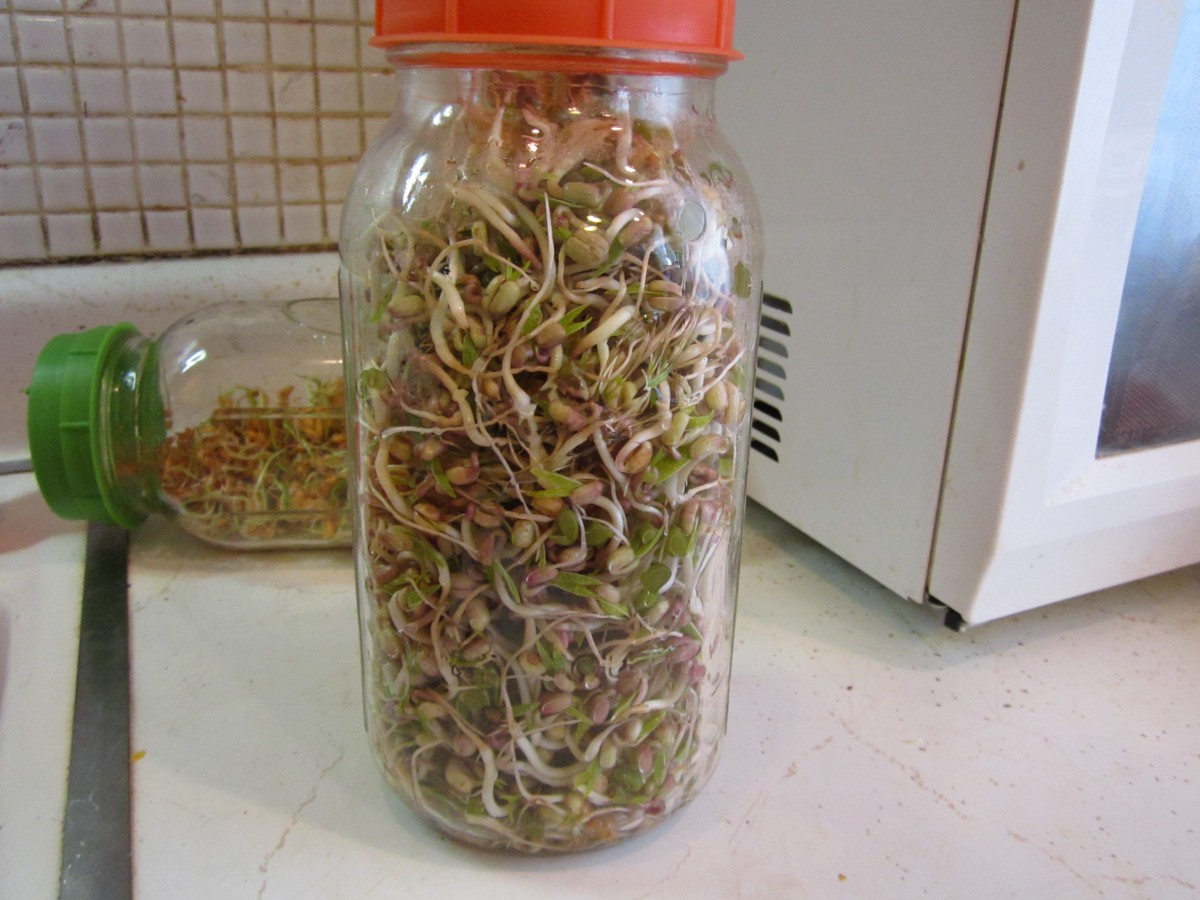
Mung Beans- a week old.
In an effort to have fresh produce even if I wasn’t going to the grocery store I invested in some seeds for sprouting. Its been a lot of fun so far. I purchased seeds of alfalfa, radish, peas, mung beans, adzuki beans, triticale, lentils and garbanzo beans. So far I have sprouted the peas- which I used in a stir fry for company a couple of weeks ago. Currently have seeds for mung beans and triticale sprouting and almost ready for harvest.
Sprouting is pretty simple- although it is a little like having a pet. There is some care than needs to happen. First, start with a clean, wide mouth jar. I have these handy lids with holes in them that are made just for sprouting. Place the seeds in the jars and cover with water. Allow them to be covered in the water for at least overnight. Drain and rinse the seeds. After the first soaking only keep what ever water stays on them after a rinse and drain. That’s pretty much the whole process. Twice a day, maybe three times if the weather is really warm, rinse the seeds and drain off any extra water. Depending on the seeds you can expect your first crop in 7-10 days. You can place the jars in a sunny window for greener sprouts.
Sprouts are full of nutrients and can be eaten cooked or raw. In some cases, like with mung beans the skin of the seed will come off after a few days. They tend to float so if you just place the sprouts in a big bowl of fresh water and agitate them. The skins will come to the top and can easily be discarded.
Also, quantity can be tricky. Very few seeds can produce a heck of a lot of sprouts so go easy. A few tablespoons of tiny seeds like radish, alfalfa or broccoli should be plenty. Perhaps a 1/4 cup of larger seeds like the beans and other legumes is also going to give you a bountiful supply. They do take time so if you want a steady supply start a new batch every few days. Once sprouts are the size you want them to be give them a final rinse and drain well. Store in the fridge until you are ready to use them. Do use them soon. Often they are quite perishable. Besides, if you were sprouting for fresh food- enjoy it while it is fresh.
This ones for you, Keith. 🙂
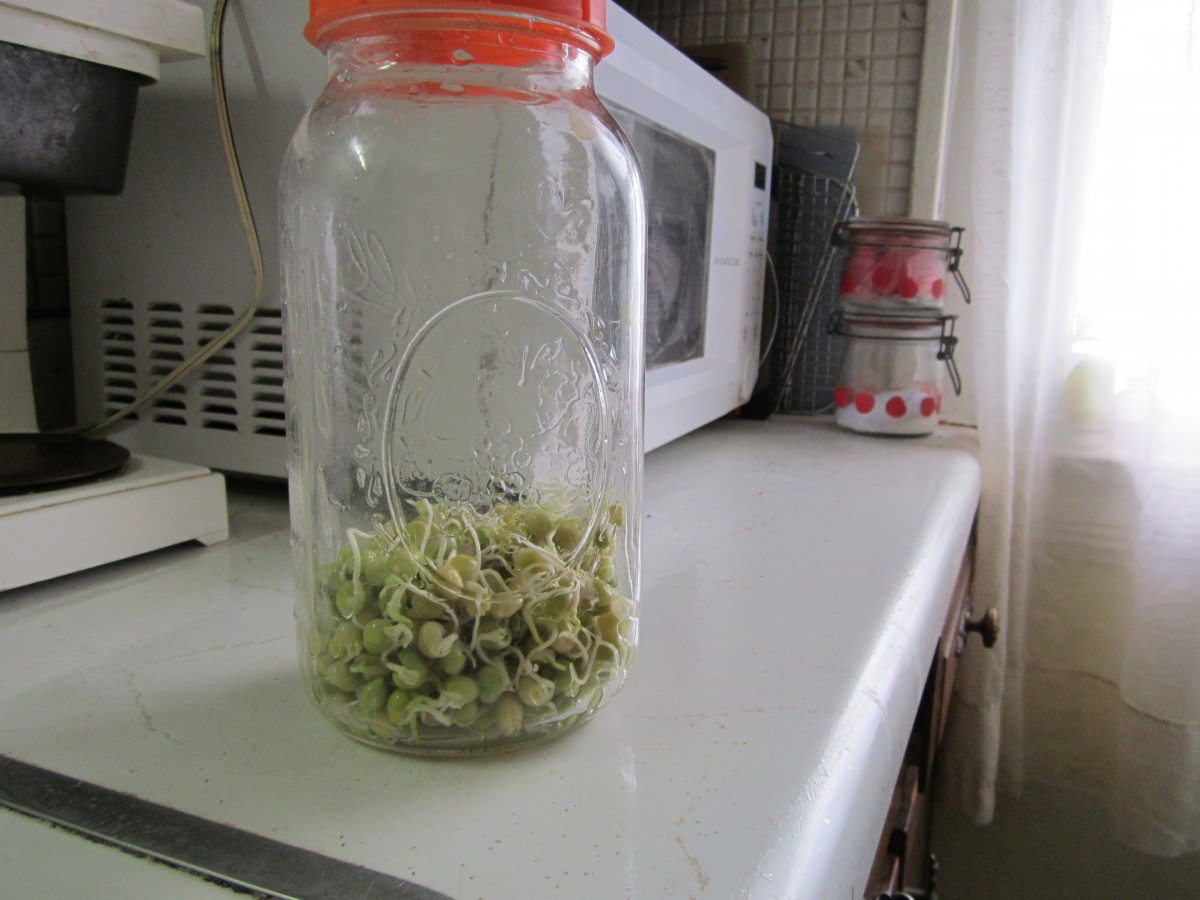
Pea sprouts- about 4 days old.
The Challenge: Green Bags Revisited
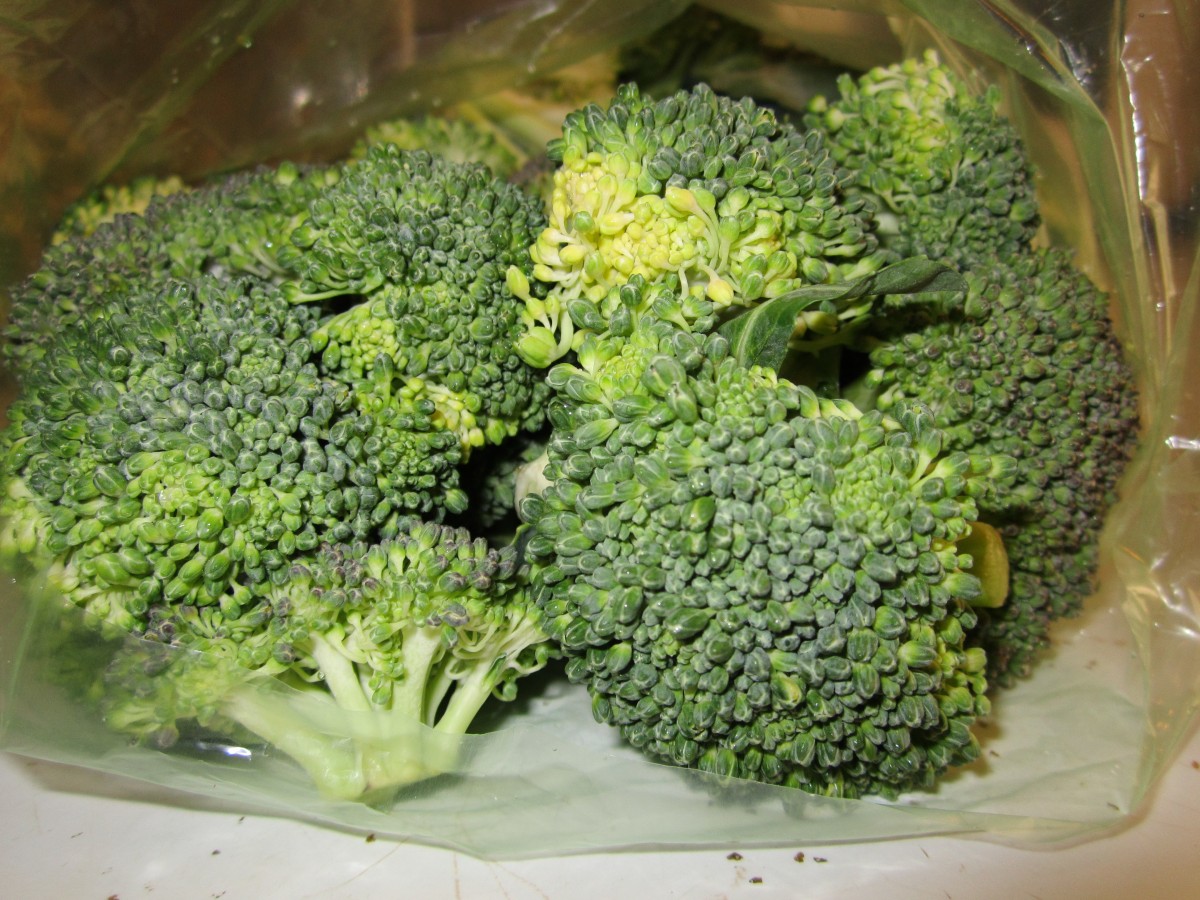
This broccoli had been in green bags for 4 weeks. Looks pretty yummy.
I can’t believe it’s been a month since I went to the grocery store. I have run out of some fresh produce including lettuce and Brussels sprouts and only a few oranges left but I still have plenty of food. Part of the point of this whole little experiment is about how much food we waste and how to waste less.
I’ve written in recent weeks about cleaning out freezers and pantries. I also wrote about “Green Bags”. It came up in conversation on Saturday night. With good reason. This photo of broccoli was taken on Saturday before it was added to our dinner. This is the same broccoli that I had packed in green bags in the very beginning of January. Peppers and oranges holding up well, too.
I am not suggesting that green bags are the only way or even the best way to store produce. I am saying that they seem to work pretty well for a lot of what I stored in them. Not sure how the long storage has affected their nutrition. For now I am just happy to have fresh stuff a month into this experiment.

Broccoli, oranges and peppers in early January
The Challenge: Feedback
When I started this challenge for myself to see how long I could go without a trip to the grocery store I had no idea how many others would try to do the same. I have gotten e-mails from a number of people with what they are doing to use up what they have on hand and to avoid wasting money. Here are a couple of responses I have gotten.
Rita writes: You’ve encouraged us to “pare our wares” in our fridge, pantry and freezers. I cleaned out the rest of holiday leftovers from the kitch fridge and it looks great in there! We are condensing and closing down the chest freezer in the garage, keeping the 2nd fridge w freezer in the garage going.
Marge

The Challenge: Meatless Fridays
I decided to make Fridays meatless. While I still have plenty of chicken and fish in the freezer it won’t last forever so this is also an effort to make them last. For the meat lovers out there I assure you- meat free can be satisfying and delicious. Last Friday I made ravioli with cheese and pumpkin fillings. This week I am thinking lentils. Tasty, nutritious and quick cooking they are a great choice for a busy day. The recipe I have in mind tonight is the Chili Bean Spoon Bread. It’s a sort of lentil- chili with cornbread baked on the top. You can substitute other legumes if you like. Canned kidney or black beans would work well. Enjoy!
Chili Bean Spoon Bread
1/2 lb. lentils
pinch of ground cloves
2 c. milk, you can use almond, soy or rice milk, too.
1/2 t. salt
2/3 c. cornmeal
4 T. butter or margarine
4 eggs or egg substitute
4 T. oil
2 large onions, chopped
1 clove minced garlic
1 T. chopped parsley or 1 t. parsley flakes
1 T. chili powder
1 t. ground cumin
1 (14 oz.) can diced tomatoes, undrained
salt and pepper to taste
In saucepan cover lentils with about 2 cups water and add cloves. Bring to a boil, turn down to a simmer and cook, covered, until lentils are tender, about 20 minutes. You may need to add a little more water. Meanwhile in another saucepan heat milk and salt almost to boiling. Stir in cornmeal and continue cooking, stirring constantly until thickened. Remove from heat. Stir in butter and eggs and set aside. In oil sauté onions and garlic until tender. Add seasonings, tomatoes and lentils and heat until bubbly. Adjust seasonings. Pour lentil mixture into greased 2-quart casserole dish. Spoon over the cornmeal mixture. Set casserole dish in larger pan and add 1 inch of hot water to larger pan. Bake in a 350-degree oven for 30-40 minutes, or until bread is firm and golden. Serves 4-6.
Favorite Cooking Tips
In my classes I am always sharing some of the things I have learned that may make life in the kitchen a little easier. Here are a few of them. Please feel free to share this information with your foodie friends.
When is the oil ready? You’re wanting to fry something and you aren’t sure the oil is hot enough. Low-tech solution- just put a single kernel of un-popped popcorn in the pan with the oil. It will pop when the oil reaches 350 degrees.
How do I get all the food out of my food processor? It’s very frustrating to make something in the food processor and then try to navigate around the blade to get it all out. I am sure I am not the only person who has cut a rubber scraper on that sharp blade. The easy solution- scrape out what you can easily- leaving anything on the blade behind. Then turn the processor back on. Since it is nearly empty the remaining food will go to the outside of the work bowl- leaving the blade clean. Just remove the blade and finish scraping out the bowl.
How do I clean the flour off the work surface after making bread? I love baking bread. My father was a baker and he taught me a little trick. Using hot water will cook the flour- causing it to get thicker and stickier. first scrape off any loose flour. Then clean counter tops with cold water. It will dissolve the flour without making it sticky. Use cold water to clean out bowls, too. Once the flour is gone you can wash with warm, soapy water.
How can I peel garlic faster? This is really fun. Just break apart a head of garlic into individual cloves. Place them in a bowl. Get another bowl that is the same size and turn it over on top of the bowl with the garlic, like a dome. I like to use bowls with a nice edge on them- makes it easier to hold. Grab the bowls and shake them really hard for 10 seconds., When you take off the top bowl you will have a bowl full of peeled garlic cloves!
How do I get fat out off a pot of hot soup, stew or chili? This is an old trick of my Grandmother’s. If there is a lot of fat you can skim some off with a spoon. Then just drop in a tray of ice cubes. Bob them gently with a slotted spoon. The fat will freeze around the ice cubes. Work fast so they don’t melt. After the cubes are coated with fat just lift them out with the slotted spoon. You won’t dilute the soup- you’ll only add a couple of ounces of liquid.
How do I get honey and other sticky foods out of a measuring cup? The easiest way I know is to spray the measuring cup with non-stick spray before adding the honey, molasses or other thick liquid. It will pour out quite easily. You can also add a little oil instead or coat the measuring cup with butter or margarine.
Fruit flies are around my kitchen- how do I get rid of them? Fruit flies are more common in warm weather but can show up any time of the year. Just take a jar or glass and pour in a little apple cider vinegar. Add a drop of dish washing liquid then cover the glass with plastic wrap. Poke a few holes in the wrap with a pencil and set on a kitchen counter- closest to where you are seeing the fruit flies. They will fly into the jar- but can’t find their way out. The detergent removes the surface tension of the vinegar so if they land on it, they will sink.
If you have other kitchen problems please let me know- maybe I can help you out. If you have tips you’d like to share please send them to me so I can post them.
Vegan Meals
My friend Janet asked me for some vegan info. I told her I would post some recipes and here they are. The layered salad is a lot of fun, very pretty and a way to use things like yellow and green split peas in some thing other than soup. The Minestrone recipe is a hearty soup- just perfect for chilly weather. Enjoy!
Layered Bean Salad
1 c. each green split peas, yellow split peas and red lentils
1 can black beans, rinsed and drained
1 can butter beans, rinsed and drained
1 c. diced sweet onion
1 c. diced sweet pepper
1 c. grated carrot
Cook split peas and lentils separately just until tender. Split peas, both green and yellow will take 20 minutes. Red lentils will take about 8-10 minutes. Drain and rinse each under cold water when done and set aside until ready to use, or you can cook them a day ahead and keep chilled. Each will yield about 2 1/2 c. cooked.
In large glass bowl, place the following ingredients in this order.Black beans, butter beans, green split peas. yellow split peas. onion, red lentils. carrots and peppers. Pour over dressing and chill several hours or overnight. Serve on a bed of greens.
Dressing *
1/2 c. oil
1/2 c. vinegar
1 (14 oz.) can diced tomatoes, undrained
2-3 T. sugar
1/2 c. parsley or cilantro
1 t. each chili powder, cumin and salt
dash hot sauce
Combine in a blender or food processor until smooth.
*Note: Any bottled dressing you like can be used. Italian works very well.
Meatless Minestrone
1 c. sliced celery
1 clove garlic, minced
1 c. diced onion
1 c. sliced carrots
1 (14 oz) can diced tomatoes
2 c. spaghetti sauce, without meat
1 (15 oz.) can kidney beans, drained and rinsed
4 c. vegetable stock
1 c. t.v.p. (textured vegetable protein)
1 T. parsley flakes
1 t. oregano
1 t. basil
salt and pepper to taste
2 c. shredded cabbage
1 c. fresh or frozen green beans, cut in pieces
2/3 c. macaroni
Place all ingredients, except cabbage, beans and macaroni in a kettle and simmer, covered, until vegetables are tender, about 25 minutes. Add cabbage, beans and pasta and cook 10 minutes more. Serves 6-8.