Marble Rye Bread
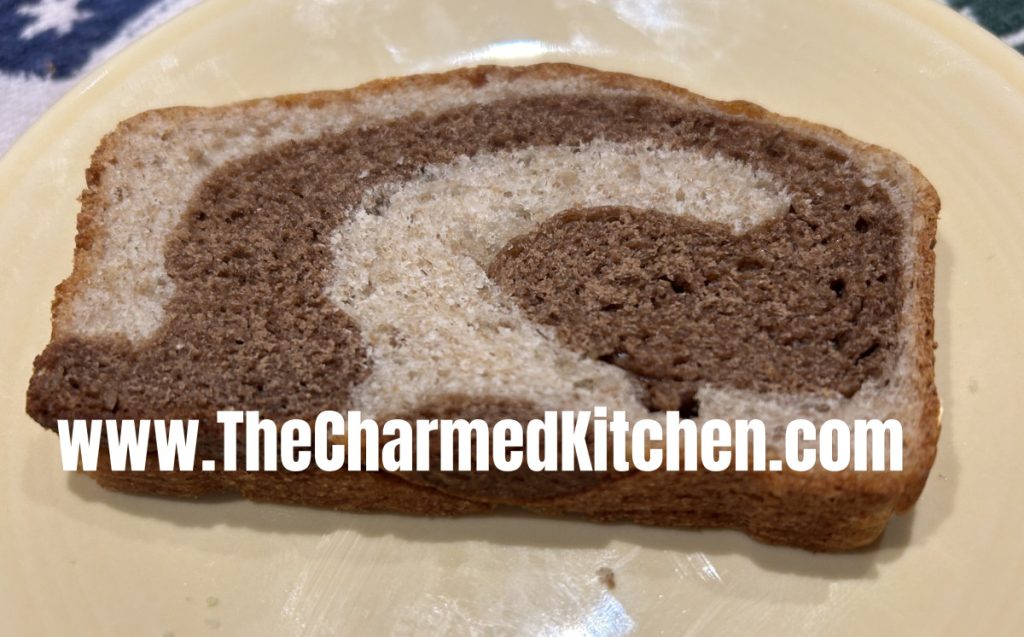
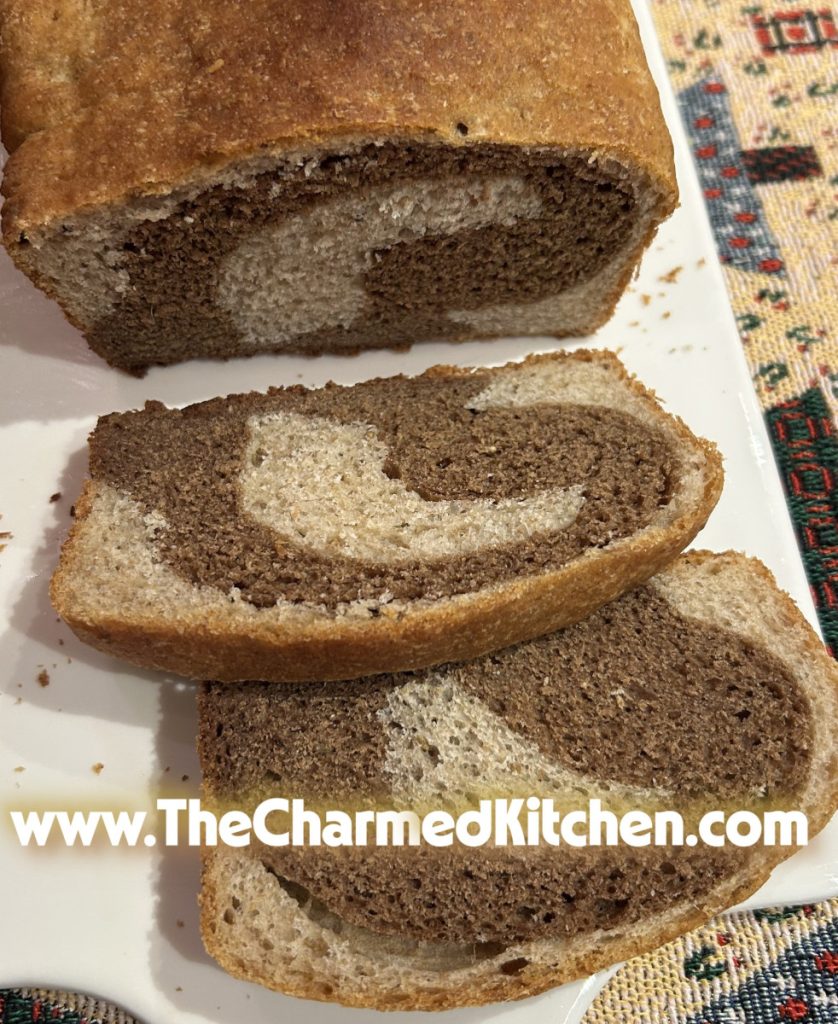
This might be one of my favorite breads. That’s saying a lot because I bake bread all the time. I bake both rye and pumpernickel breads. For some reason I never put the two together. A friend had been asking me for some time to make a marble rye, so I did. It came out really nice. I baked mine in loaf pans, since I wanted the bread for sandwiches. You can also roll the dough out and bake on a baking sheet. Directions for both versions are included below. So here is the recipe. I hope you try it. I think you will be as pleased as we were.
Marble Rye Bread
Light Rye Dough
1 packet active dry yeast or 2½ teaspoons
2 cups all-purpose or bread flour
2 teaspoons salt
2 tablespoons granulated sugar
1 tablespoon caraway seeds
1 cup warm water (120° to 130°F)
¼ c. dill pickle juice – or ¼ c. water
2 Tablespoons oil
1 1/3 cups medium rye flour
Pumpernickel Dough
1 packet active dry yeast or 2½ teaspoons
2 cups all-purpose or bread flour
2 teaspoons salt
1 tablespoon caraway seeds
2 tablespoons cocoa
1¼ cup warm coffee (120° to 130°F)
2 tablespoons molasses
2 T. oil
1 1/3 cups medium rye flour
Make the light rye dough: In a large bowl, combine yeast, 1 cup all purpose or bread flour, salt, sugar and caraway seeds; mix well. Add water, pickle juice and oil to flour mixture. Mix using wooden spoon or dough whisk until all ingredients are incorporated and have a shaggy dough. Gradually stir in rye flour and enough of the remaining bread flour to make a firm dough. Knead on lightly floured surface 5 to 7 minutes until smooth and elastic. Place dough in lightly oiled bowl and turn to grease top. Cover; let rise until indentation remains after poking dough with finger down to second knuckle; about 1-1½ hours.
Make the pumpernickel dough: In a large bowl, combine yeast, 1 cup all purpose or bread flour, salt, caraway seeds and cocoa; mix well. Add coffee, molasses and oil to flour mixture. Mix using wooden spoon or dough whisk until all ingredients are incorporated and have a shaggy dough. Gradually stir in rye flour and enough of the remaining bread flour to make a firm dough. Knead on lightly floured surface 5 to 7 minutes until smooth and elastic. Place dough in lightly oiled bowl and turn to grease top. Cover; let rise until indentation remains after poking dough with finger; about 1-1½ hours.
On lightly floured surface, divide each dough in half. Roll or pat each half to a 14×7-inch rectangle. For a dark crust, place a light rye piece on top of a dark rye. For a light crust, place a dark rye piece on top of a light rye. Starting with shorter side, roll up tightly, pressing dough into roll with each turn. Pinch edges and ends to seal. Working from the center of the loaf to the ends, gently roll the loaf back and forth to form a baguette shape approximately 14-inches long. Place on a greased or silicone-lined baking pan. Repeat for second loaf. Cover loaves; let rise until indentation remains when lightly touched. Preheat oven to 375°F. After dough has risen, bake until internal temperature tests 190°F, about 40-45 minutes. Remove from pan; cool on rack.
Note: You can also bake the loaves in 2 (9×5) loaf pans. When rolling out the dough roll into a 10×8 inch rectangle. Roll up starting on the 10 inch side. Pinch dough together at the seams and place seam side down in greased bread pans. Cover and let rise until doubled. Baking time is about the same.
Homemade Rye Bread
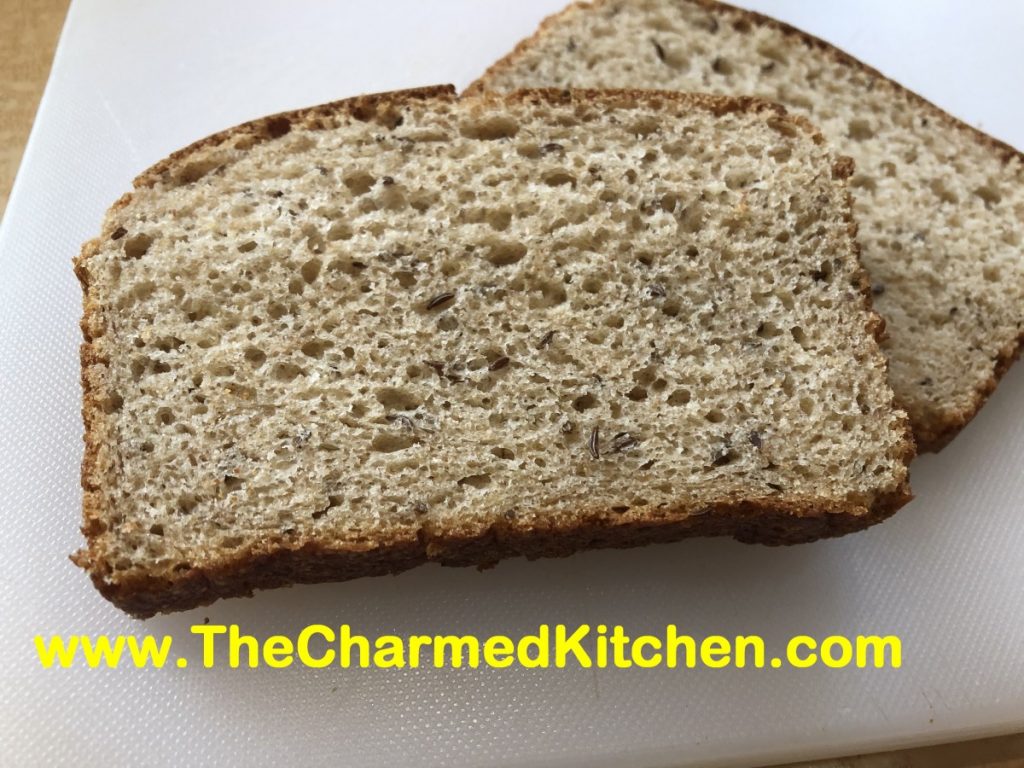
I have been playing around with baking rye bread for awhile now. Tried a few different recipes recently. I found this recipe online, but I did change it a little. I ended up with a rye bread with lovely flavor and texture.
Rye bread can be tricky. Rye flour needs to be paired with wheat flour to have the necessary type of gluten to rise. Rye flour does contain gluten, but not the type of gluten that gets stretchy. Rye flour also rises better when some acid is added to the dough. Molasses adds some acid. In this dough, sour pickle juice is added. Vinegar also works.
Rye flour is higher in the enzymes that break down starch into sugars. Starch is needed to form the structure of the crumb, and if too much starch is split up, the texture of the bread suffers and becomes gummy. Traditionally, this is prevented by acidifying the rye dough. This is why breads with a high percentage of rye flour are made with rye sour (rye-based sourdough starter), even if commercial yeast is added, to preserve the structure of the bread.
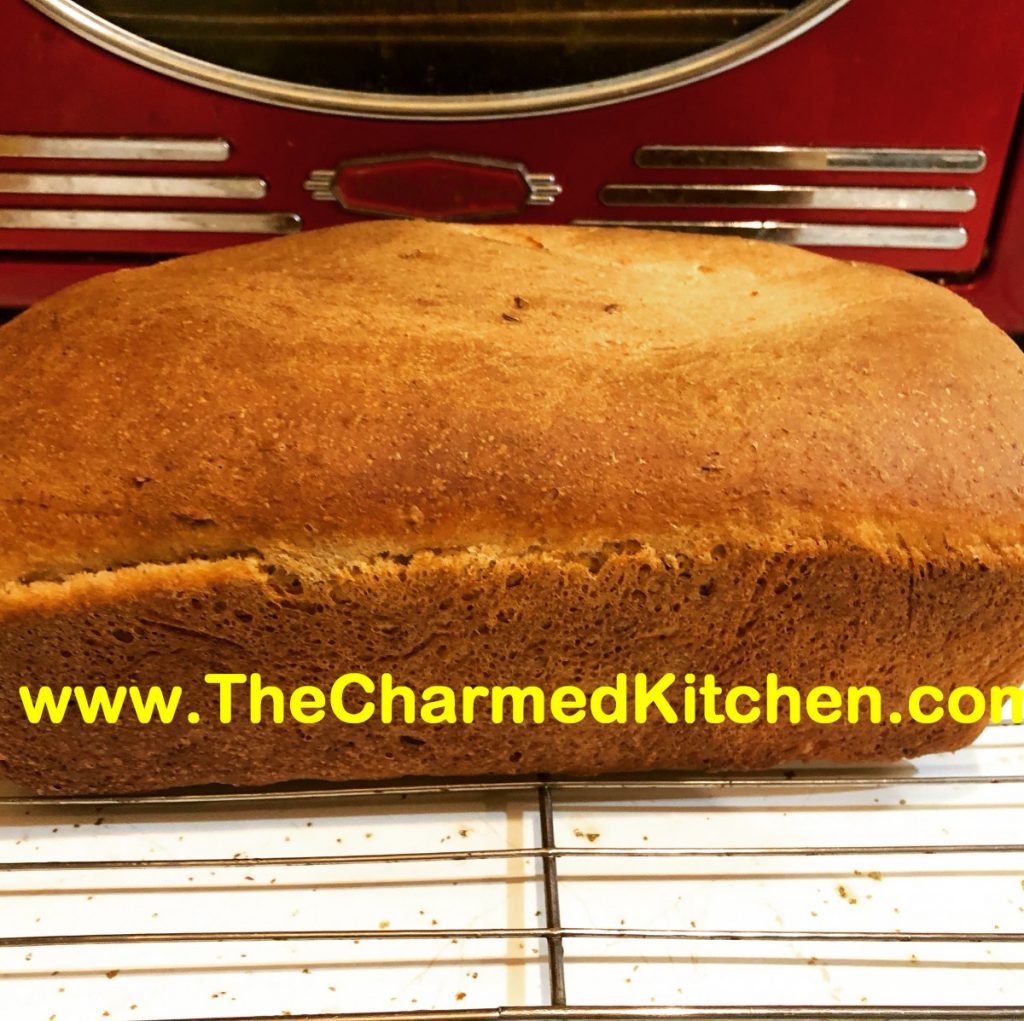
So here is the most recent rye bread I made.
Deli Rye Bread
2 c. bread flour
1 c. rye flour
3 T. potato flakes
2 T. caraway seeds
2 T. brown sugar
1 packet active dry yeast- scant tablespoon
2 t. salt
1 c. warm water
¼ c. olive or avocado oil
¼ c. sour pickle juice
2 T. molasses
Place bread flour, rye flour, potato flakes, caraway seeds, brown sugar, yeast, and salt in the bowl of a large stand mixer. Stir dry ingredients to combine. Add warm water, oil, pickle juice and molasses into dry ingredients. Fit dough hook onto mixer and beat until dough is just coming together. It will look rough. Cover bowl with plastic wrap and let rest for about 30 minutes. Remove plastic wrap and knead dough in stand mixer with dough hook until smooth, firm, and only slightly sticky, 6 to 8 minutes. Turn dough onto a floured work surface and knead until smooth, 1 to 2 more minutes. Form dough into a ball, place dough into an oiled bowl, and turn dough around several times in bowl to coat with oil. Cover the bowl with plastic wrap, set into a warm place, and let rise until nearly double, about 1 hour. Grease a 9×5-inch loaf pan. Turn dough onto a lightly oiled surface, shape into a log, and place into prepared loaf pan. Cover with a linen kitchen towel and let rise until top of dough has risen slightly over top of pan, 60 to 90 minutes. Preheat oven to 350 degrees F (175 degrees C). Bake loaf until golden brown and cooked through, about 35 minutes. If loaf browns too quickly, cover loosely with a tent of aluminum foil with shiny side out. Bread should sound hollow when tapped lightly. Remove from pan and cool on wire rack. Makes 1 loaf.
online, but I did change it a little. I ended up with a rye bread with lovely flavor and texture.
Rye bread can be tricky. Rye flour needs to be paired with wheat flour to have the necessary type of gluten to rise. Rye flour does contain gluten, but not the type of gluten that gets stretchy. Rye flour also rises better when some acid is added to the dough. Molasses adds some acid. In this dough, sour pickle juice is added. Vinegar also works.
Rye flour is higher in the enzymes that break down starch into sugars. Starch is needed to form the structure of the crumb, and if too much starch is split up, the texture of the bread suffers and becomes gummy. Traditionally, this is prevented by acidifying the rye dough. This is why breads with a high percentage of rye flour are made with rye sour (rye-based sourdough starter), even if commercial yeast is added, to preserve the structure of the bread.
So here is the most recent rye bread I made. More variations are coming.
Deli Rye Bread
2 c. bread flour
1 c. rye flour
3 T. potato flakes
2 T. caraway seeds
2 T. brown sugar
1 packet active dry yeast- scant tablespoon
2 t. salt
1 c. warm water
¼ c. olive or avocado oil
¼ c. sour pickle juice
2 T. molasses
Place bread flour, rye flour, potato flakes, caraway seeds, brown sugar, yeast, and salt in the bowl of a large stand mixer. Stir dry ingredients to combine. Add warm water, oil, pickle juice and molasses into dry ingredients. Fit dough hook onto mixer and beat until dough is just coming together. It will look rough. Cover bowl with plastic wrap and let rest for about 30 minutes. Remove plastic wrap and knead dough in stand mixer with dough hook until smooth, firm, and only slightly sticky, 6 to 8 minutes. Turn dough onto a floured work surface and knead until smooth, 1 to 2 more minutes. Form dough into a ball, place dough into an oiled bowl, and turn dough around several times in bowl to coat with oil. Cover the bowl with plastic wrap, set into a warm place, and let rise until nearly double, about 1 hour. Grease a 9×5-inch loaf pan. Turn dough onto a lightly oiled surface, shape into a log, and place into prepared loaf pan. Cover with a linen kitchen towel and let rise until top of dough has risen slightly over top of pan, 60 to 90 minutes. Preheat oven to 350 degrees F (175 degrees C). Bake loaf until golden brown and cooked through, about 35 minutes. If loaf browns too quickly, cover loosely with a tent of aluminum foil with shiny side out. Bread should sound hollow when tapped lightly. Remove from pan and cool on wire rack. Makes 1 loaf.