Cream of Fresh Tomato Soup
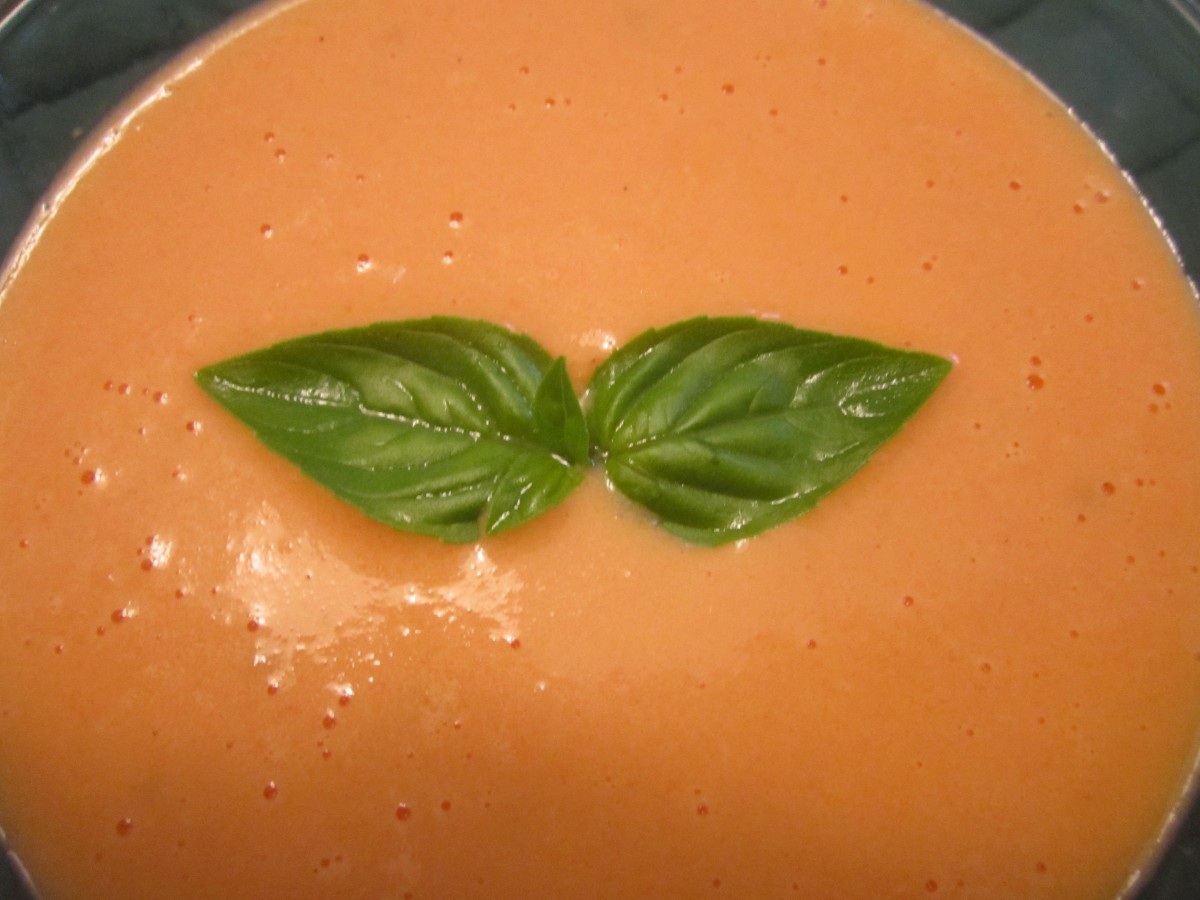
Cream of Fresh Tomato Soup
This is a great way to use some of those fresh tomatoes. A simple soup with lots of flavor it is my favorite tomato soup ever. Try it by itself or pair with a grilled cheese sandwich. Yummy!!
Cream of Fresh Tomato Soup
3 medium-sized ripe tomatoes
1 small onion, chopped fine
1 rib celery, chopped fine
Pinch of sugar, optional
3 whole cloves
1 small bay leaf
3 T. butter
3 T. flour
1 t. salt
3 c. milk
Peel and chop tomatoes. Place tomatoes in saucepan with onion, celery, sugar (if adding), cloves and bay leaf. Bring mixture to a boil; reduce heat and cover, simmering 15 minutes. Melt butter in a large saucepan then stir in flour and salt. Cook mixture until bubbly. Add milk and cook until thickened stirring constantly. Puree tomato mixture through strainer, food mill or in a blender or processor. Add to milk mixture and heat through. Serves 6.
Canning Tomatoes
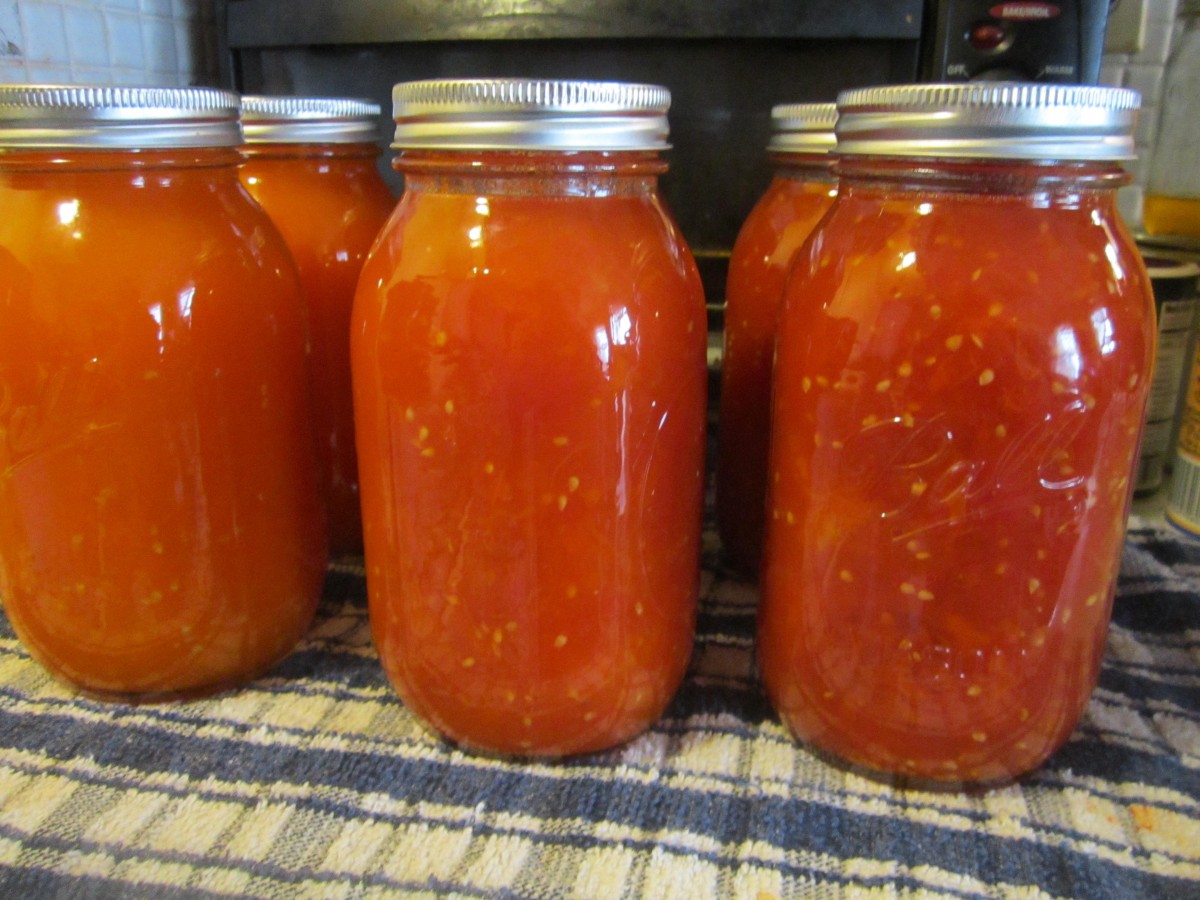
Canning Tomatoes
Certainly one of the most popular products to can each year here are a few recipes to start you off.
Crushed Tomatoes
Peel and core tomatoes , trim off any bad spots and quarter. Place about 1/4 of your prepared tomatoes in the kettle and cook, stirring constantly over high heat. Use a potato masher to crush tomatoes and extract juices. Once they are boiling add remaining tomatoes, stirring constantly. You don’t need to crush these tomatoes. Bring to a boil and boil for 5 minutes. In clean, hot jars add needed acidity listed below. You can also add 1 teaspoon of canning salt per quart if desired. Ladle in hot tomatoes, leaving 1/2-inch headspace. Wipe jar rims clean and adjust lids. Process in boiling water bath. Pints 35 minutes, quarts, 45 minutes. 1,000-3000 ft over sea level add 5 minutes. Twenty-two pounds of tomatoes will yield about 7 quarts of tomatoes.
Whole Tomatoes in Juice
Use any extra tomatoes to make juice. I use tomatoes that are too big to can whole, or those that have blemishes that need to be trimmed. Cut up clean, unpeeled tomatoes in a kettle and cook, stirring often until tomatoes are mushy. Strain mixture, pressing on solids or run through a food mill or tomato juice extractor. Set aside,. Place peeled, whole tomatoes in kettle and add enough tomato juice to cover them. Heat to a simmer and simmer gently 5 minutes. Add lemon juice or citric acid to jars, using amounts listed below. Add salt, if desired. Add tomatoes and cover with hot juice, leaving 1/2 -inch headspace. Wipe rims and adjust lids. Process both pints and quarts 85 minutes in a boiling water bath.
Tomato Juice
Wash, stem and trim bruises off tomatoes. Cut into chunks. Add about 1 pound of tomatoes to kettle and bring to a boil while crushing. Continue to add additional cut up tomatoes slowly, keeping mixture boiling. This will keep the juice from separating later. Simmer an additional 5 minutes once the tomatoes have all been added. Press mixture through a strainer , sieve or food mill to remove seeds and skins. Add lemon juice or citric acid to jars according to directions listed below. Add salt if desired. Return juice to boil and add to prepared jars leaving 1/2-inch headspace. Wipe rims and adjust lids. Process n a boiling water bath pints 35 minutes and quarts 40 minutes. Add 5 minutes processing time at elevations between 1,001 and 3,000 ft.
Tomato Sauce
Prepare as for juice. After juice is made return to pot and start cooking down to desired thickness. You’ll lose about 1/3 of the volume for thin sauce and 1/2 of the volume for thick. Add lemon juice or citric acid to prepared jars as described below. Add salt if desired. Add boiling sauce leaving 1/4 -inch headspace. Wipe rims and adjust lids. Process in a boiling water bath 35 minutes for pints and 40 minutes for quarts. Add five minutes at 1,001-3,000 ft. elevation.
Acidity and Tomatoes
Tomatoes must be acidified before canning. When canning either whole, crushed or juiced tomatoes you must add either 2 T. bottled lemon juice per quart or 1/2 t. citric acid . For pint use 1 T. lemon juice or 1/4 t. citric acid. You can also use 4 T. (5%) vinegar per quart, but it will alter the flavor and is not recommended. You can add a little sugar to offset the flavor, if you like.
Cherry Almond Clafouti

Cherry Almond Clafouti
I posted the picture of my clafouti and now, as promised, here is the recipe. Clafouti is a sort of pancake, sort of quiche. Its a wonderful dish that is the perfect dessert for fresh fruit. I used cherries in this one but you can use all sorts of fruits- peaches, plums, blueberries, raspberries….. Most people enjoy it as a dessert but it is also nice with that morning cup of coffee.
Cherry Almond Clafouti
2 c. pitted cherries
1/3 c. sliced almonds
3 eggs
1 c. sugar
1/2 c. flour
2 t. vanilla extract
1 t. almond extract
pinch of salt
1 c. half and half
powdered sugar, optional
Grease and flour a 9×9-inch baking dish. Preheat oven to 350 degrees. Place cherries and almonds in the prepared pan. In blender combine eggs, sugar, flour, flavorings and salt.* Blend until smooth. Add half and half and blend again until smooth. Pour batter over the cherries and almonds. Bake for 45-50 minutes or until clafouti is browned around edges and puffed up. Allow to cool and dust with powdered sugar, if you like. Serves 6.
* You can whisk the ingredients together by hand, if you prefer.
Green Beans in Herb Butter
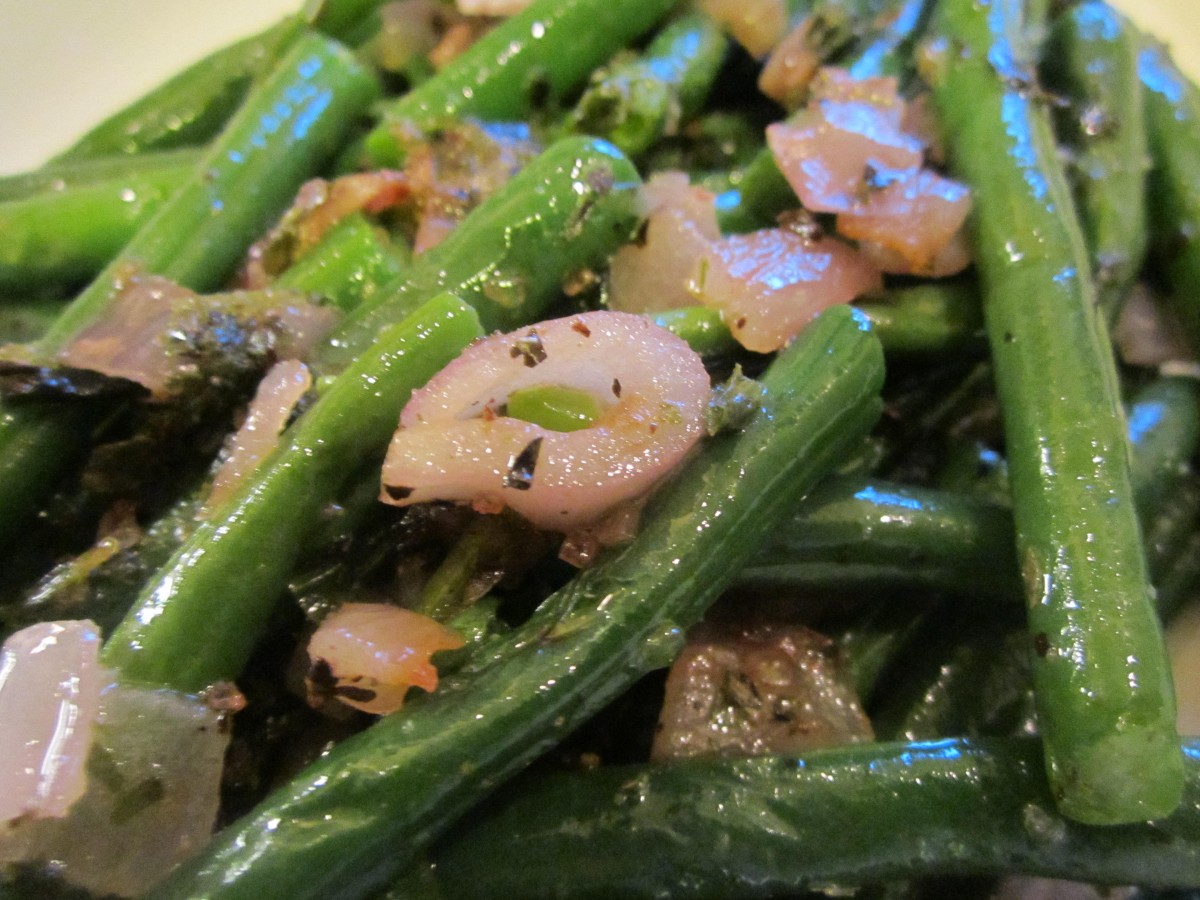
Green Beans with Herb Butter
With fresh green beans everywhere it seemed like a good time to share this recipe. I love them and can’t get enough this time of year. I like this preparation because it adds flavor and a nice twist without covering up the flavor of the beans. Fast and easy to make, too, which is always a plus.
Green Beans with Herb Butter
1 lb. Green beans, washed and trimmed
¼ c. butter
¾ c. minced onion or shallots, I used shallots
1 clove garlic, minced
2 T. chopped parsley
¾ t. salt
1/2 t. each oregano and basil
Boil or steam beans until tender, about 5 minutes. Drain and set aside. Meanwhile, start sauce. Heat butter in skillet and add shallots or onion and garlic. Cook 5 minutes then add seasonings and cook, covered, 5 minutes more. Toss beans with sauce. Serves 4.
Peach and Almond Smoothie
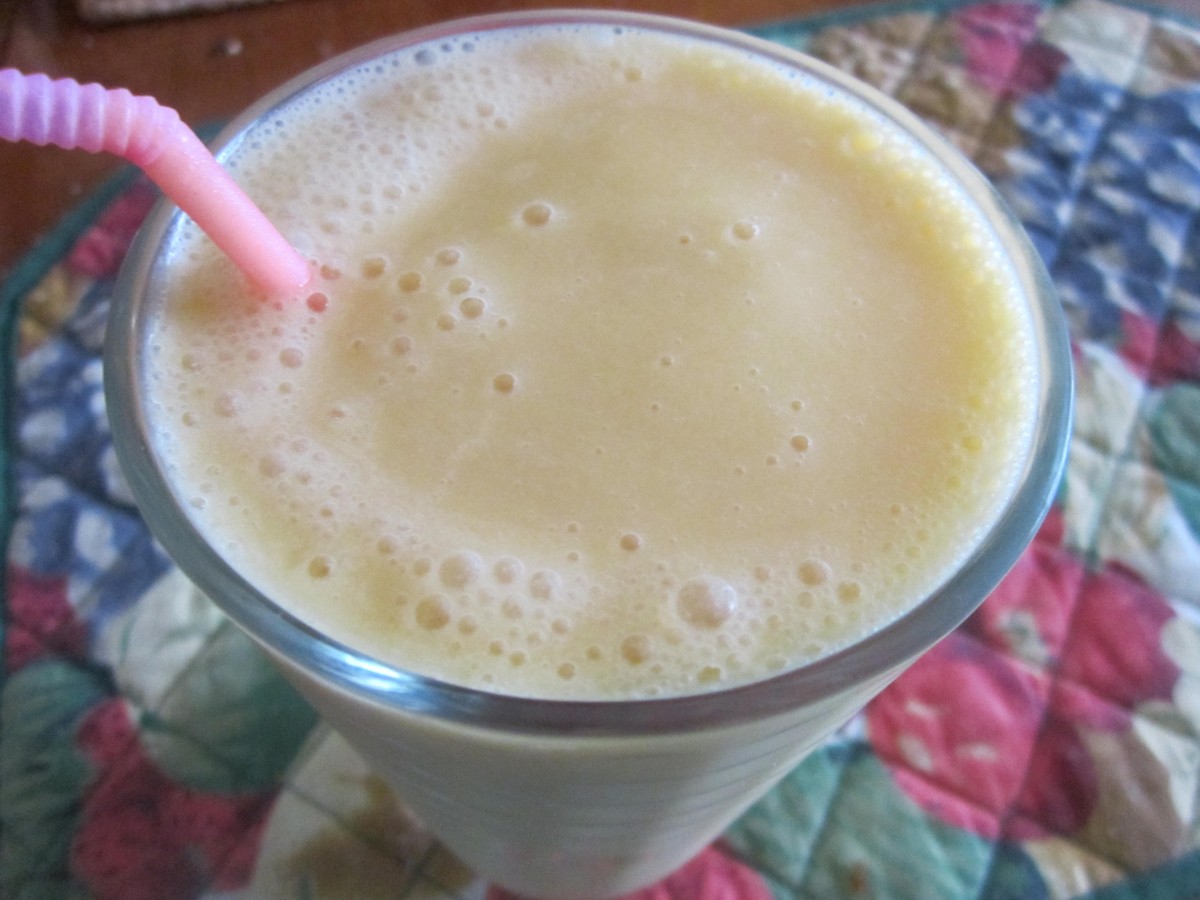
Peach and Almond Smoothie
I have been enjoying fresh peaches a lot lately. I wanted to use some of them in a smoothie. I peeled and sliced a couple of peaches and put them in the freezer. I combined the frozen peaches with almond milk, honey and a little vanilla. I will definitely make this one again!!
Peach and Almond Smoothie
2 peaches, pitted and peeled- then frozen
1 1/2 c. plain almond milk
2-3 T. honey, or to taste
1 t. vanilla
Place all ingredients in a blender and process until smooth. Makes 1 large or 2 smaller servings.
Easy Turkey Vegetable Soup
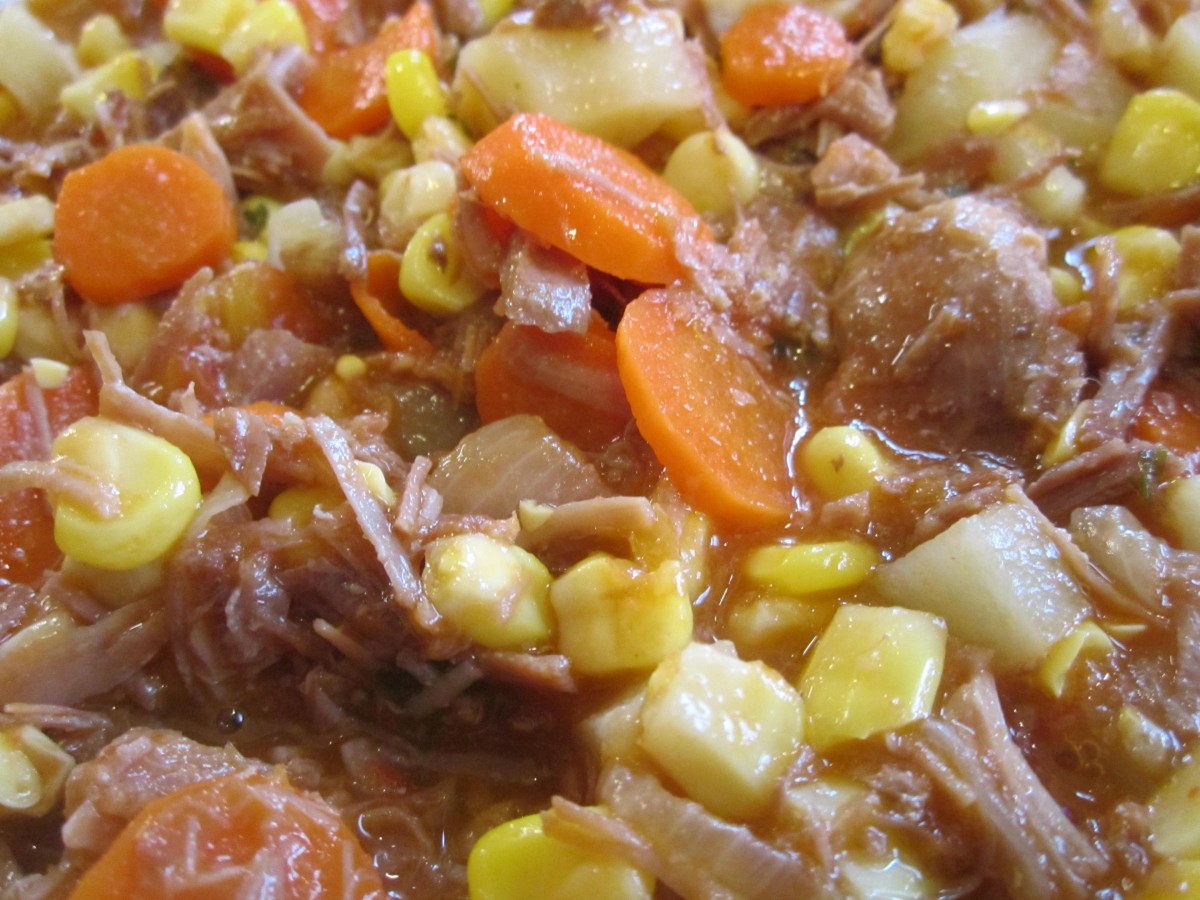
Easy Turkey Vegetable Soup
Its been a little cool lately. Made me want to have some soup. I had picked up some turkey drumsticks so I put them in the crock pot with some onions, carrots, celery, garlic and herbs. Covered the meat and veggies with water and let it cook overnight. The next morning I strained it and had lovely turkey stock. I also had some seasonal veggies so I threw it all together and ended up with an easy and tasty dinner. If you don’t have turkey stock- use what you have.
Turkey Vegetable Soup
1 onion, chopped
oil
3 carrots, peeled and sliced
3 small potatoes. peeled and cubed
1 c. corn- cut from 1-2 ears
1 medium tomato, peeled and chopped
2 c. shredded cooked turkey *
3-4 cups turkey stock- or whatever you have and like
Fresh parsley and basil
salt and pepper to taste
dash of hot sauce
Heat oil in pot and cook onion until golden. Add carrots and cook a few more minutes. Add remaining vegetables, turkey and stock and simmer, covered, for 10 minutes- or until veggies are tender. Add herbs and simmer a few more minutes. Adjust seasoning and add hot sauce. Serves 2-3 for dinner.
*If you want to turn this into a vegetarian soup add vegetable stock and add a couple of cups of cooked beans. Kidney beans would work well.
Chicken with Very Cherry Sherry Sauce
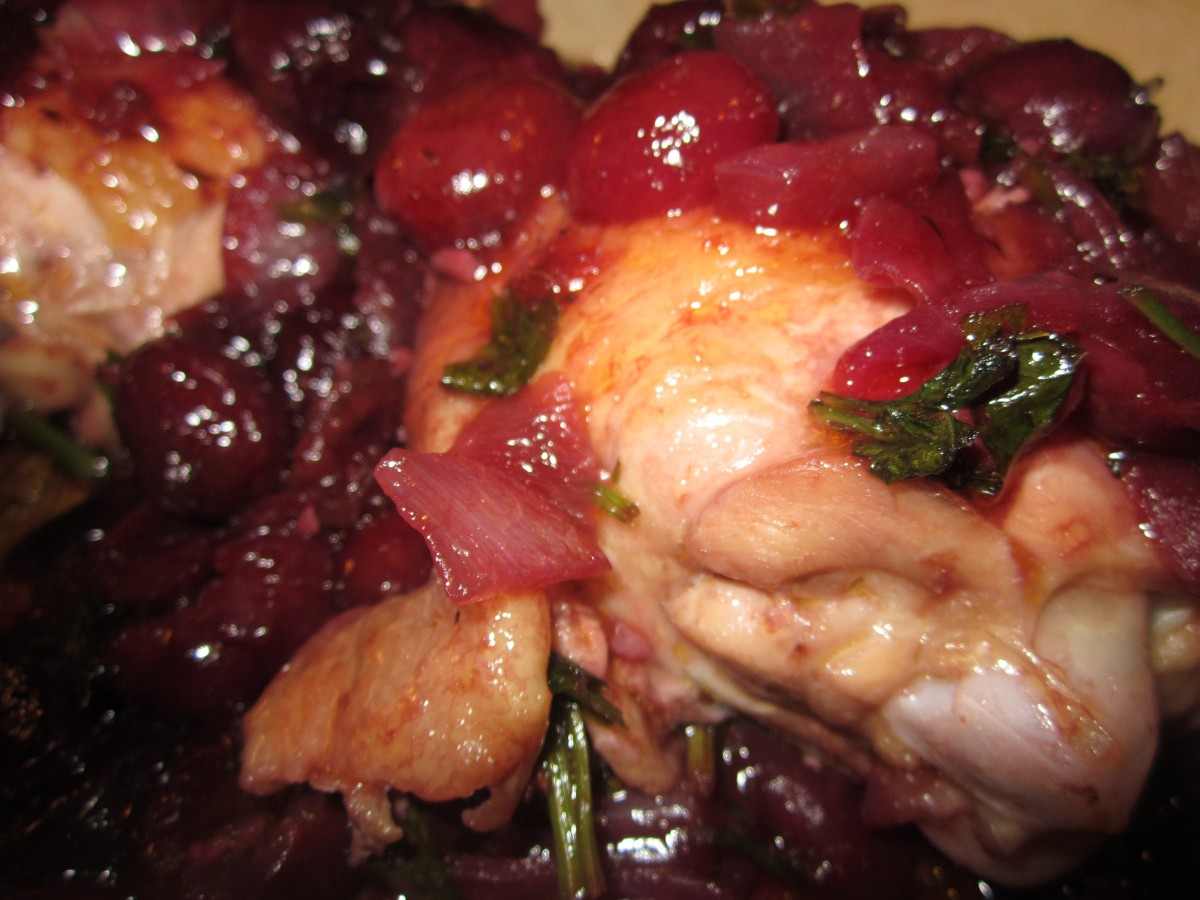
Chicken with Cherry Sherry Sauce
I had some beautiful sweet cherries and wanted to use them in my dinner somehow. Been on a fruit with dinner kick lately, as you might have noticed. I decided to make a sauce for some chicken. It came out great. I added some horseradish to spice it up a bit and a generous splash of sherry. Here is the recipe.
Chicken with Very Cherry Sherry Sauce
6-8 chicken thighs
salt and pepper
Cherry sauce, recipe follows
Place chicken in a roasting pan and season with salt and pepper. Roast in a 400 degree oven for 45-60 minutes or until juices run clear. While chicken is cooking make the cherry sauce in a large skillet. When the chicken is cooked place it in the skillet with the cherry sauce and cook, turning often until chicken has had a chance to absorb flavor from the sauce, about 5-10 minutes. Serve chicken with sauce spooned over it. Serves 3-4.
Very Cherry Sherry Sauce
oil
1 medium onion, sliced thin
2 cloves garlic, sliced
3-4 c. pitted sweet cherries
1/2 c. chicken stock
1/2 c. sherry- don’t use cooking sherry
2 t. prepared horseradish
1 t. thyme
salt and pepper to taste
hot sauce to taste
fresh chopped parsley
Heat oil in skillet and saute onion until golden. Add garlic and cook 1 minute more. Add cherries and cook over high heat, stirring often for several minutes. Add stock, sherry and horseradish and cook at a simmer for 10-15 minutes more. As sauce cooks it will thicken. Adjust seasonings and add herbs and simmer a few more minutes. Reheat just before adding chicken.
Food Preservation Workshop this Saturday
I will be teaching a food preservation workshop after the seed saving class. Come for one or both.
Anyone needing a refresher or a first-time discussion of seed saving whys and how-to’s are invited to come:
FOOD NOT LAWNS, CLEVELAND, with support from OSU EXTENSION, presents
SEED SAVING WORKSHOP/POTLUCK
10:00 – 12:00, potluck lunch to follow
Grace Lutheran Church
We will discuss: the economics and politics of seed-saving and several ways to collect, dry and store saved seed from very easy (beans, squash and other larger seeded plants) to seeds that require a little fermenting, flower seeds, stratifying, saving seeds from produce you buy and wild harvesting. Feel free to bring a specimen to de-seed!
Save them now for something to grow later or swap in January!
Please RSVP
To register for either workshop contact Mari Keating at beanpie55@att.net
Venison Meatballs
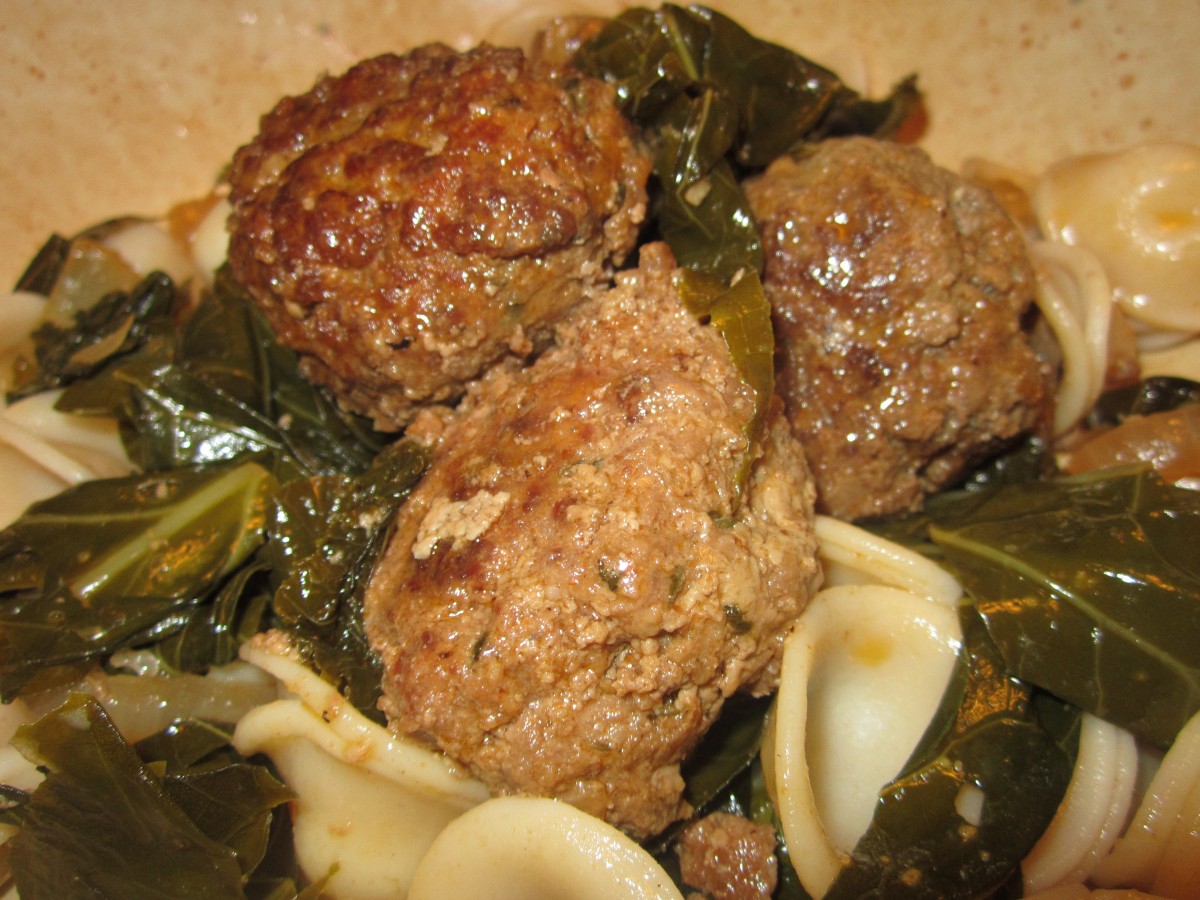
Venison Meatballs
I had gotten some ground venison from a friend a while ago and finally decided how to cook it. Thanks to Tracey and Jeff Bales for sharing it with me. 🙂 I ended up making meatballs and they were fabulous. The meat was very lean so I added oil to the pan when cooking them. My friend Jonathan was coming over and I knew he loved venison so it seemed the right time to make the meatballs. He loved them. Served them over pasta with sauteed greens. Really tasty.
Venison Meatballs with Greens and Pasta
1 recipe venison meatballs-recipe follows
oil
1 large onion, chopped
8 cloves whole garlic, peeled*
8 cups chopped greens- I used a combination of kale and collards
salt and pepper to taste
Hot sauce to taste
hot cooked pasta
Prepare venison meatball recipe. Heat oil in skillet and brown the meatballs on all sides over medium heat. Cover the skillet and allow the meatballs to cook through over medium-low heat. While the meatballs are cooking in another skillet heat more oil and saute onion until wilted. Add garlic cloves and cook several minutes longer. Add greens and cook, stirring, until greens are wilted. Cover pan and allow greens to cook until just tender- about 10 minutes. Adjust seasonings. While greens are cooking cook pasta. Combine greens with meatballs and stir to combine. Spoon over hot pasta on a large serving platter. Serves 6.
Venison Meatballs
2 lbs. ground venison
2 eggs
1/2 c. bread crumbs
1/4 c. dried minced onion or 1/2 c. minced fresh onion
2 t. minced garlic
2 t. salt- or to taste
1 t. ground ginger
1/2 t. ground cinnamon
hot sauce to taste
In a large mixing bowl combine all ingredients with your hands and form into balls. Try to handle the mixture as little as possible to keep the meatballs tender. I took a small amount of the mixture and cooked in in a skillet to check seasoning levels before cooking the whole batch.
* the reason I used so many whole cloves of garlic is that Jonathan really likes a lot of garlic. By leaving the cloves whole I could flavor the dish- but make it easy for him to eat the garlic and me to avoid them. Feel free to just add the amount of garlic you like.
Lemon Tea Cake
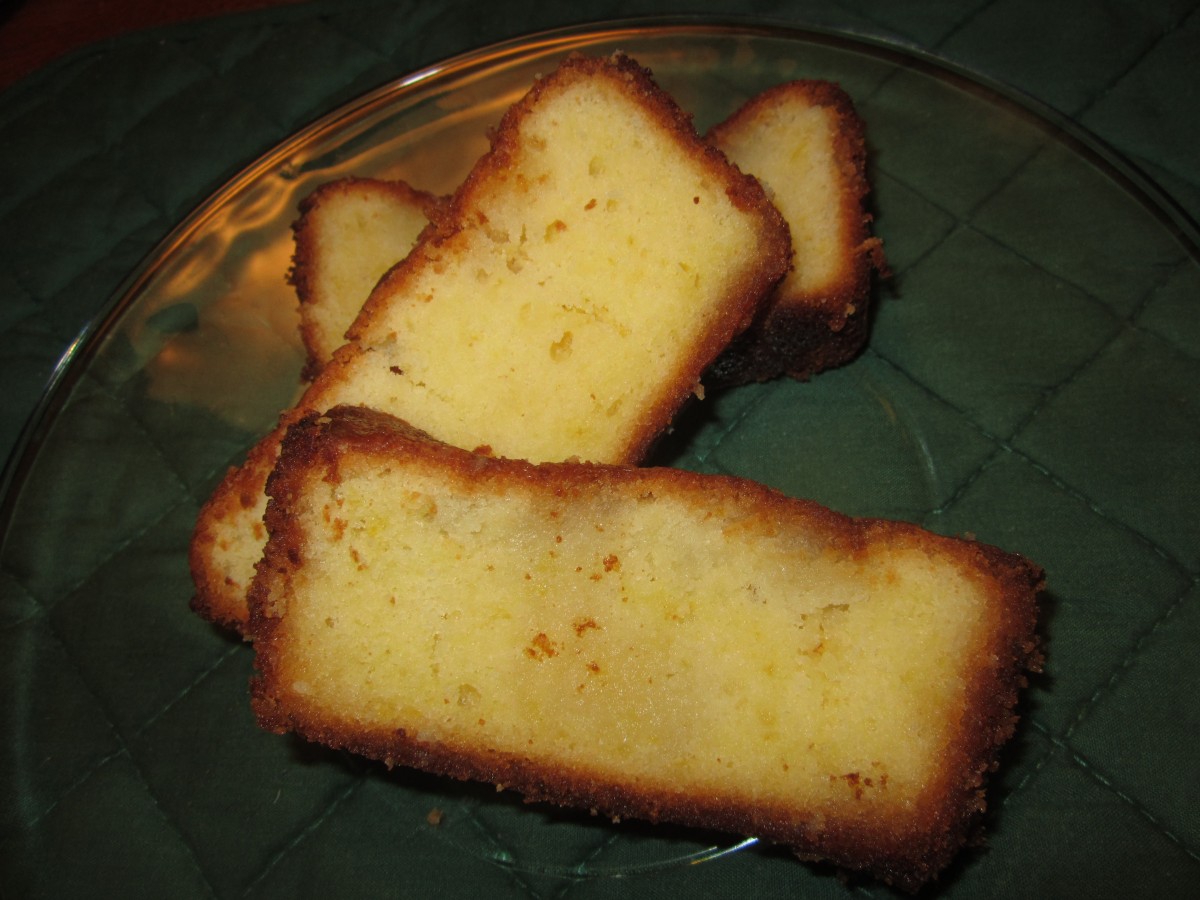
Lemon Tea Cake
I made this Lemon Tea Cake for a brunch I went to earlier today. Its is one of my favorites. After the cake comes out of the oven you poke it with a large fork and drizzle a lemon syrup all over. It ends up moist and a little tangy. Easy to make and they freeze well, too.
Lemon Tea Cake
2 lemons
3 T. sugar for topping
½ c. butter, softened
¾ c. sugar
2 eggs, beaten
3/4 c. flour
6 T. milk
Preheat oven to 375 degrees. Grease an 8- inch loaf pan and line with wax or parchment paper. Grate the lemon rinds and set aside. Combine the juice of 1 of the lemons with the 3 tablespoons of sugar, stirring to dissolve sugar. Set aside.
Cream together the butter with the rest of the sugar and beat until fluffy. Beat in the eggs, a little at a time until well mixed. Stir in the flour and lemon peel and beat well. Add the milk and beat well. Pour batter into prepared pan and bake about an hour. The cake should spring back when touched lightly. As soon as you remove the cake from the oven pierce it all over with a long-tine fork or a skewer. Pour over the reserved lemon juice mixture. Cool cake in pan before serving. Cake will be moist and tangy.