Asparagus Irene

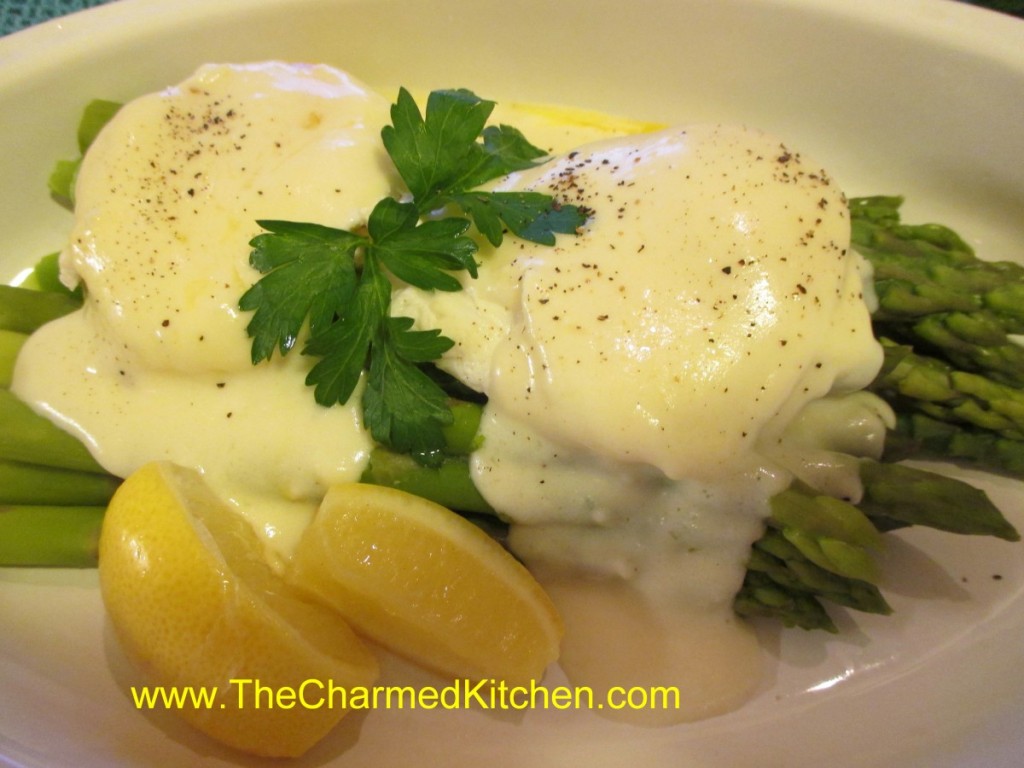
Asparagus will always be one of my favorite vegetables. I just love it. This would be a nice breakfast or lunch dish for Mother’s day.
As I started writing out the recipe for this dish, I was thinking about my Mom and how much she loved asparagus. She always wanted the bigger asparagus spears- she said they had more flavor.
I remember her showing me how to break the bottom of the stalks off and how she would cook them until they were just done- but not mushy.
She wouldn’t consider eating canned asparagus- only fresh- so the season was short. It was something to be savored while it lasted.
Most times she just placed the cooked asparagus on a plate, topped with a pat of butter and a sprinkle of salt. One time, though, she made a white sauce and poured it over the asparagus. It was bliss.
Naming a recipe can be tricky. I started out calling this Asparagus with Eggs, which was fine. Then I thought of how much my Mom loved asparagus. So in her memory- I named the dish after her.
For this version I used a white sauce, and topped the asparagus with 2 poached eggs, too. It is a lovely dish and makes a great dinner, too.
It also makes a nice meat-free meal.
Here is the recipe.
Asparagus Irene
1 lb. fresh asparagus, washed and stems trimmed
white sauce- recipe follows
fresh lemon, cut in wedges
2 eggs
vinegar- for the poaching water
salt and pepper to taste
Put the asparagus in a steamer and cook for about 5 minutes- or until almost done. Set aside. Make white sauce, but add some lemon juice to it. I just kept squeezing lemon wedges in until it tasted right to me. Set sauce aside. Boil some water in a shallow pan and add a tablespoon of vinegar to the water. Drop the two eggs in and simmer, covered until the whites are opaque and the yolks are still runny. While the eggs are cooking return the asparagus to the heat and cook until just tender. Place asparagus on a serving dish. Sprinkle with a little salt. Gently place the eggs on top of the asparagus. Spoon some of the white sauce over the eggs. You will have more sauce than you need. Save it for another use. Garnish with lemon wedges and parsley, if you like. Finish with some salt and fresh ground pepper. Serves 2.
Basic White Sauce (Bechamel)
The start of many a classic dish.
2 T. butter or oil
2 T. flour
1 1/4 c. warmed milk
salt and pepper to taste
In saucepan melt butter or heat oil and add flour, stirring until smooth. Slowly whisk in milk, stirring constantly until thickened and bubbly. Turn heat down and continue to cook, stirring constantly for a couple minutes longer. Season to taste. If you are going to store the sauce for later use place a layer of wax paper on top, store in a container with a lid or pour a little milk over the top to prevent a skin from forming. Makes about 1 c.
Lemon: Add zest of a lemon, 2 T. lemon juice and 2 T. butter just before serving.
Creamy Spinach Sauce

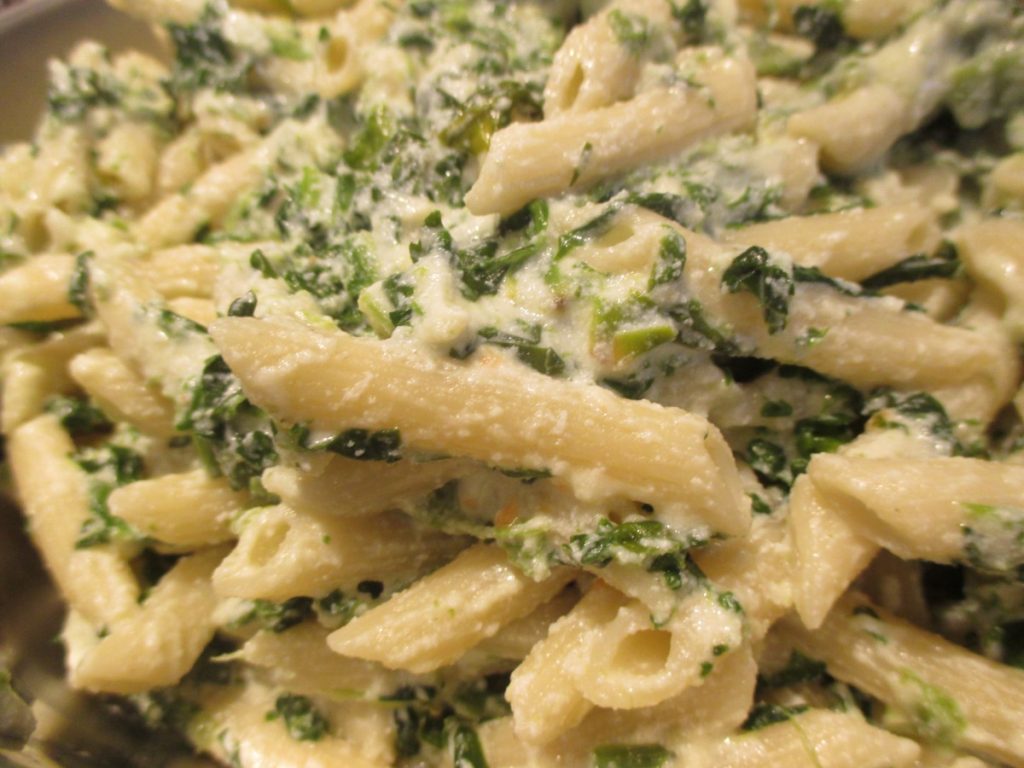
The sauce reminds me of creamed spinach, a favorite childhood dish of mine. The recipe makes enough to generously sauce a pound of pasta. It is very tasty and easy to make. Great when you need a home made meal, but don’t have a lot of time. You can also use this sauce on hot cooked rice or baked potatoes.
The recipe uses frozen spinach, but you can use fresh spinach , if you prefer. Just cook down 12-16 oz. of fresh spinach and use like the frozen spinach.
There is Parmesan cheese in the sauce, but I like to serve extra on the side.
Creamy Spinach Sauce
1/4 c. butter
1 (10 oz.) package frozen spinach, thawed and drained
1 t. salt
1 c. ricotta cheese
1/4 c. grated Parmesan cheese
1/4 c. milk
Heat spinach in butter for 5 minutes. Add remaining ingredients and heat gently until warmed through. Do not boil sauce. Toss sauce over hot, cooked pasta. Makes 2 1/2 cups, enough for about a pound of pasta.
Cinnamon Shortbread Cookies- Gluten Free


These shortbread cookies are a favorite of mine. They have a nice crunchy texture and a wonderful cinnamon flavor. They are also gluten-free, so everyone in my family can enjoy them.
If you, or someone you love, can’t have gluten, the options are getting better. Even a few years ago, it was hard to find decent gluten-free baked goods. Now they seem to be everywhere.
Gluten-free home baking has gotten easier too. Rather than mixing up numerous ingredients, you can buy a bag of gluten-free flour, ready to bake with. Gluten-free flour is getting easier to find, too.
There are some differences. I find things made with gluten-free flour brown faster. I often bake at a slightly lower temp, or for a shorter time. This recipe has already been adjusted for that.
When I made these cookies I was really pleased with the results. Not because these cookies are OK, but because these cookies are GREAT. I would make them again in a minute. Super crisp and not too sweet, they were also very easy to make.
Cinnamon Shortbread Cookies- Gluten Free
1/2 c. butter, softened
1/2 c. sugar
1 t. vanilla
pinch of salt
1 c. gluten-free flour
2 t. cinnamon
extra sugar for topping the cookies
Preheat oven to 325 degrees. In mixing bowl cream together the butter and sugar until smooth. Stir in the vanilla and salt. Stir in the flour and then stir in the cinnamon. Roll dough into 1-inch balls and place on an ungreased baking sheet. Flatten the cookies out by dipping the bottom of a glass in some sugar and pressing down on the dough. To help the sugar to stick to the bottom of the glass rub a tiny bit of butter on the bottom of the glass. I used the paper the butter was wrapped in. After you dip the glass the first time the sugar will stick to it. Bake cookies for 12-15 minutes- or until golden around the edges. Cool on wire rack. Makes 30.
Velvet Crumb Cake

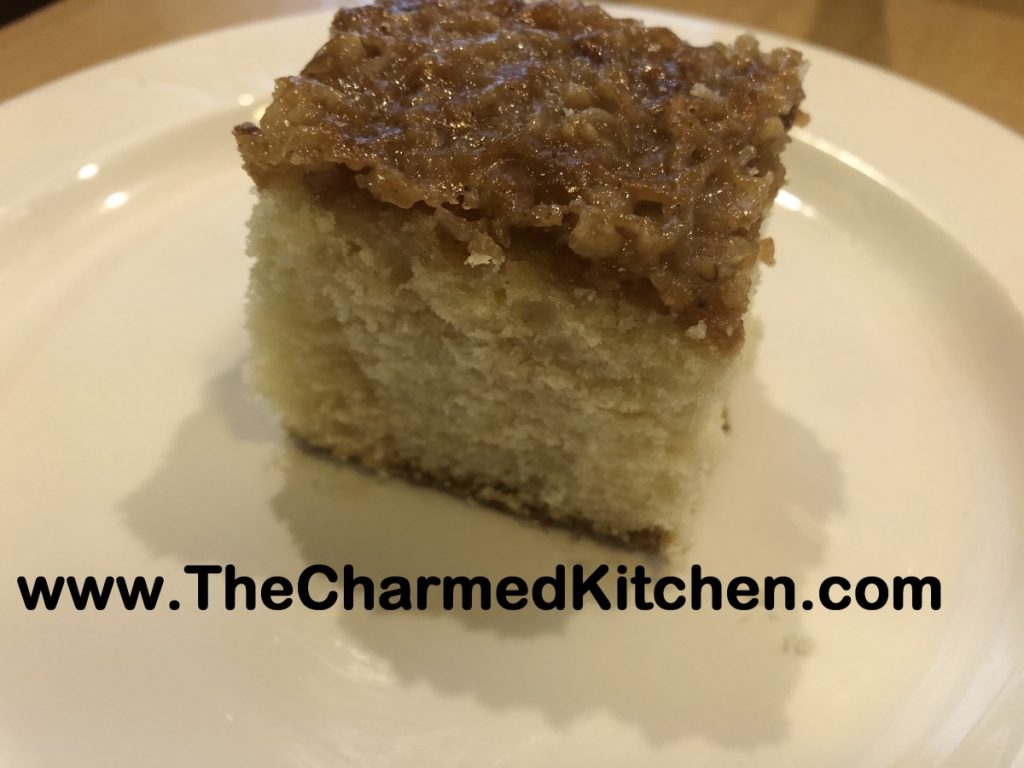
This cake has a soft, delicate texture and a crunchy, coconut-nut topping. For added fun- the cake is finished under the broiler to toast the topping. Probably not the way you finish most cakes!
For some reason, I have been feeling nostalgic all week. My cooking has certainly reflected that. Today is no different. When I was a child, my Mom made this cake pretty often. I am not sure I ever remember having it as an adult. It was probably the only way I would eat anything coconut as a kid.
I found the recipe in a Bisquick cookbook. I tweaked it a little from the original. I wondered if I would like it as much as I did when I was a child. I was not disappointed. It was every bit as good as I remember.
Here is the recipe.
Velvet Crumb Cake
Cake:
1½ c. baking mix- like Bisquick or Jiffy Mix
½ c. sugar
½ c. milk or half and half
2 T. butter, softened
1 t. vanilla
1 egg
Topping:
½ c. flaked coconut
1/3 c. brown sugar
¼ c. finely chopped nuts
3 T. butter, softened
2 T. milk or half and half
1 t. cinnamon
Preheat oven to 350 degrees. Grease an 8×8-inch baking pan or 9-inch cake pan. Set aside. In medium bowl, combine all of the cake ingredients. Combine with electric mixer for 30 seconds on low to mix. Then bring speed up to medium and continue beating batter for 4 minutes. Pour batter into prepared pan and bake 30-35 minutes or until wooden pick comes out clean when inserted into cake. While cake is baking, combine topping ingredients in small bowl, mixing until well mixed. Let cake cool a few minutes before spreading topping over the cake. Place cake under the broiler- about 4 inches away, until topping gets golden brown. This only takes 3-4 minutes. Watch carefully. Remove from broiler and cool cake before slicing.
Noodles and Eggs


This was one of my favorite breakfast dishes when I was a kid. It is just what the name says, noodles- or pasta- combined with with eggs. This time I used bow tie pasta.
I suspect this recipe came about as a way to stretch eggs to feed more people. Or perhaps somebody had some leftover cooked noodles to use up.
You can keep it simple, or add cooked meats, like ham, sausage or bacon. You could add some shredded cheese or even some cooked veggies. This is a great way to use up leftovers, the way you might in an omelet.
I always think of my Mom when I make noodles and eggs.
Noodles and Eggs
1 T. butter or oil
8 oz. cooked noodles- any pasta you like is fine
8 eggs
Salt and pepper to taste
Heat butter in large skillet and add noodles, cooking until heated through. Beat eggs in bowl and add to hot noodle mixture, stirring until eggs are cooked and dish no longer looks wet. Season to taste and serve. Serves 6-8.
Variations: Add diced cooked ham, bacon or Canadian bacon with the noodles. Other options add 1 c. chopped tomato or chopped up cooked veggies. You can add 1-2 c. shredded cheese just after you add the eggs.
Saving Specialty Ingredients


We all have certain ingredients that fall into this category. You might use it once in a great while, or only in one recipe. Then you have extra, but aren’t sure what else to do with it, or how to keep it from going bad. These ingredients are often expensive, and can be at waste of money to just toss.
There are a couple of ways to handle the situation. You can find more uses for the product or find ways to make it keep longer. So let discuss a few products and how you can get more from them.
Capers: The buds from the caper bush, capers come pickled and are salty and similar in flavor to gherkins. Probably most often used in tartar sauce they can be used lots of other places. Since they taste like intense little pickles use them where you might use pickles. Capers are great in potato salad, chicken, tuna or ham salads and in eggs dishes and omelets. They also go great with seafood. I love to add a few capers when I enjoy lox on a bagel. Once open, they are kept in the fridge and will keep for a very long time.
Tomato Paste: Think of tomato paste as super concentrated tomato sauce. Strong in flavor a little goes a long way. How many of us have opened a jar for the one tablespoon of tomato paste a recipe calls for, and then end up throwing the rest away when we find it in the back of the fridge weeks later looking like a science experiment gone bad? You can get tomato paste in squeeze tubes that keep longer in the fridge or you can freeze it. That seems to be the easiest solution. Put dollops of tomato paste in ice cube trays and freeze. Once frozen you can pop out the cubes, place them in little freezer bags, label, and toss back in the freezer. Now when you need that tablespoon of tomato paste- you’ll have it.
Chutney: This fruit- based relish is used in Indian dishes. Most often made with mangoes. It can be used in tuna and chicken salad. You can use chutney as you might use cranberry sauce as a side dish or to glaze meats. A mix of fruit, garlic, vinegar, sugar and spices it has a complex flavor. I use it in bobotie- a North African casserole. It is one of those items that you might use a couple of times and then forget about. Because of its sugar and vinegar base it will keep for a pretty long time in the fridge. Like tomato paste you can freeze the chutney in smaller amounts and defrost for later use. What’s better though is to start to use it more. Try adding it to sauces or even make a salad dressing with some chutney in it. Chutney can be a great base for a sweet and sour sauce for meats or veggies.
Ginger: This versatile root can be grated in everything from savory to sweet dishes. Although often associated with Asian cooking, ginger is used in all sorts of foods. I get this question all the time. How do I keep my fresh ginger root longer? Some people like to peel it and place it in a jar of sherry and keep it in the fridge. You can also save peeled garlic cloves this way. But I prefer to just freeze it. Take the whole ginger root and place in a freezer bag. I like to keep mine on the freezer door so I can find it easily. When ready to use, just scrape off the peel, like you might on a carrot. Use a grater on the ginger while it is still frozen and return the unused portion to the freezer. It will keep for a very long time this way- as long as the ginger is in a freezer bag. You can even slice and chop the frozen ginger- although I must admit that is a little trickier. Next time you are making gingersnaps try using the fresh/frozen ginger over the dried version. Another option is to candy the ginger. Here is the recipe.
Candied Ginger
6-8 oz. fresh ginger
¾ c. water
¾ c. sugar, plus extra for rolling
3 T. light corn syrup
Remove peel from the ginger. Slice into disks, about ¼ -inch thick. Place ginger in a pot with cold water and bring to a boil. Boil 1 minute, drain and rinse under cold water. Repeat process 2 more times. Return to pan with fresh water and boil 15 minutes. Drain and pat dry. Bring ¾ c. water and ¾ c. sugar to boil in sauce pan with the corn syrup. Boil 2-3 minutes and then add the ginger. Simmer, stirring occasionally until all but a spoonful of the syrup is left. This should take about 10 minutes. On a wax-paper lined baking sheet sprinkle 1 cup of sugar and arrange the ginger slices on top of the sugar. Toss around until cooled, adding more sugar if needed. Place on a drying rack for 24 hours before storing. Makes a little over ½ pound.
Buttermilk: I buy fresh buttermilk always planning on baking more with it. I do not like to just drink it. That leaves me with unused buttermilk. I hate just pouring that money down the drain. I freeze it! Keep in mind it will separate when thawed- but you can still cook and bake with it. Another easy solution is to buy powdered buttermilk and just mix up what you need. Yet another answer is to make your own- well, sort of. Just use regular milk in the recipe but add some acid to it to make it curdle. I use lemon juice- but vinegar works well, too. If the recipe calls for a cup of buttermilk- measure out the cup of milk just a little short-leaving room for the extra liquid. 1-2 tablespoons of lemon juice or vinegar per cup of milk will work fine.
Tahini: I first started using tahini when I made my own hummus. Tahini is like peanut butter, but made with sesame seeds. I only needed a small amount and then found myself with this open jar of tahini. I never seemed to use it in anything else. While tahini keeps for a long time, I never felt comfortable using tahini that had been opened for more than a few months. I found freezing tahini was a decent solution. I just put it in a small plastic container and popped in in the freezer. When I needed it, I would just spoon out what I needed. You can also make your own tahini when you need some. Just combine sesame seeds in a blender with a small amount of oil. I normally add 1/4 cup of sesame seeds and a couple tablespoons of olive oil. Avocado oil works well, too. You can add more oil, if needed. I finally started using tahini in other ways. Its a great base for salad dressing. Here is the salad dressing recipe.
Tahini Dressing
1/3 c. tahini
1/3 c. water
¼ c. oil, optional
1/4 c. lemon juice
2 garlic cloves, chopped
3/4 t. salt
Combine all ingredients in a blender until smooth. Use on green salads or on fish dishes and falafel.
Note: You can add a little more lemon juice to this recipe when using on seafood dishes.
Whipping Cream: While not an exotic ingredient, I find I rarely need the whole pint that I bought. So many recipes call for smaller amounts. Unless I am making dessert for a crowd, I know some of the whipping cream will go to waste. Once the carton is open, you have to use it fairly soon. You can use it in coffee, or in your cooked oatmeal or cereal to replace some of the liquid. You can use to make French toast or custard. Another solution is to freeze what you can’t use right away. Once it is frozen, the thawed whipping cream won’t whip like before. But you can still cook with it. You can make ice cream with it, too. Below is a recipe for making chocolate ice cream, but you can add other flavors to your whipped cream, like jams or preserves. If you have an open container, you will likely have less than a full pint. Just whip up what you have, and flavor to taste.
Super Easy Homemade Chocolate Ice Cream
1 pint whipping cream
1/2 c. chocolate syrup or to taste
Place whipping cream in a bowl and whip until stiff peaks form. With mixer running, add the syrup. Add until mixture is the color of chocolate ice cream. You can also give it a taste, to be sure. Place mixture in a container with a tight fitting lid and place in freezer. Freeze several hours before trying it. Makes 1 quart.
Kahlua Blondies

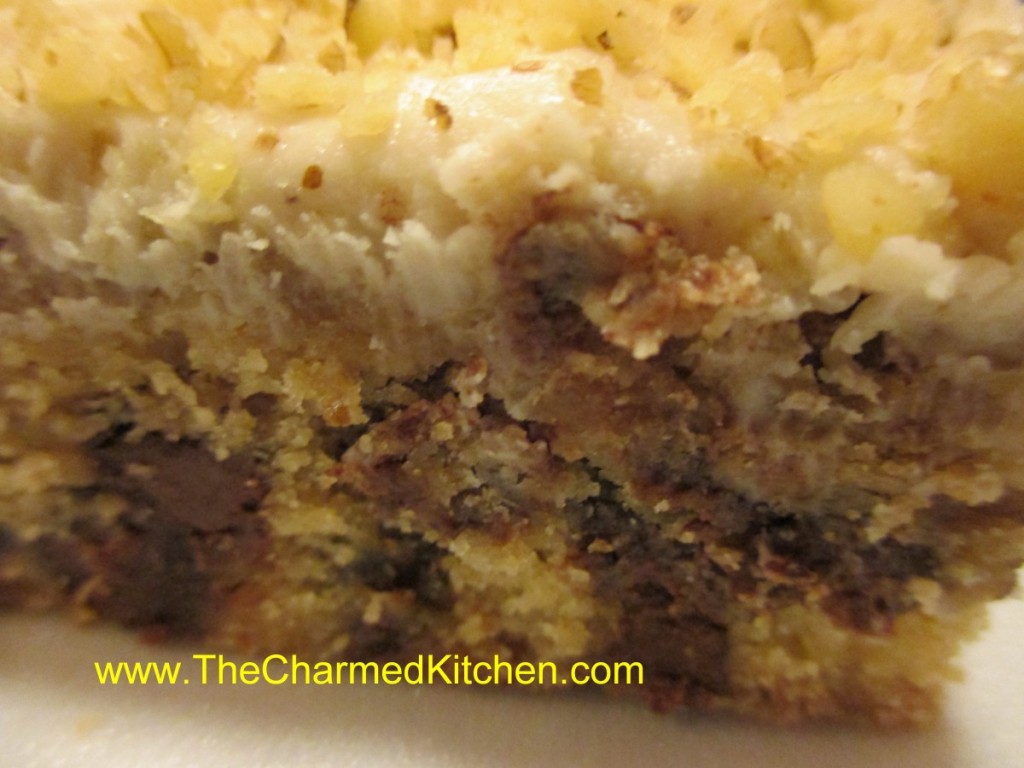
These yummy treats are brownie-like in texture, studded with nuts and chocolate chips and full of Kahlua flavor. There is Kahlua in the batter, Kahlua brushed over the squares after baking, and Kahlua in the brown butter frosting. So easy and so tasty.
I wanted to call them brownies, but they really aren’t a brownie, so much as a blondie. Whatever you call them, I know you will enjoy them.
Kahlua Blondies
1 ¼ c. all purpose flour
¾ t. baking powder
½ t. salt
½ c. butter, softened
¾ c. packed brown sugar
1 egg
¼ c. coffee liqueur
1-c. chocolate chips
1/3 c. walnuts
1 T. coffee liqueur (for tops of bars)
Brown butter icing
2 T. butter
1 T. coffee liqueur
2 t. milk
1 1/3 c. powdered sugar
Walnut halves or chopped walnuts
Combine dry ingredients and set aside. In large bowl cream butter and sugar until light and fluffy. Beat in egg then stir in liqueur, then flour mixture. Fold in chips and nuts. Turn into greased 7×11 inch pan and even out. Bake in a 350-degree oven for about 30 minutes. Top should spring back when touched lightly. Cool in pan 15 minutes then brush with remaining liqueur. When cool spread with brown butter icing and top with nuts. Makes 24 bars.
To make icing:
Brown butter in small saucepan. Do not burn. Remove from heat and beat in remaining icing ingredients. Spread on bars. Allow frosting to set up before cutting.
Toasted Sugar

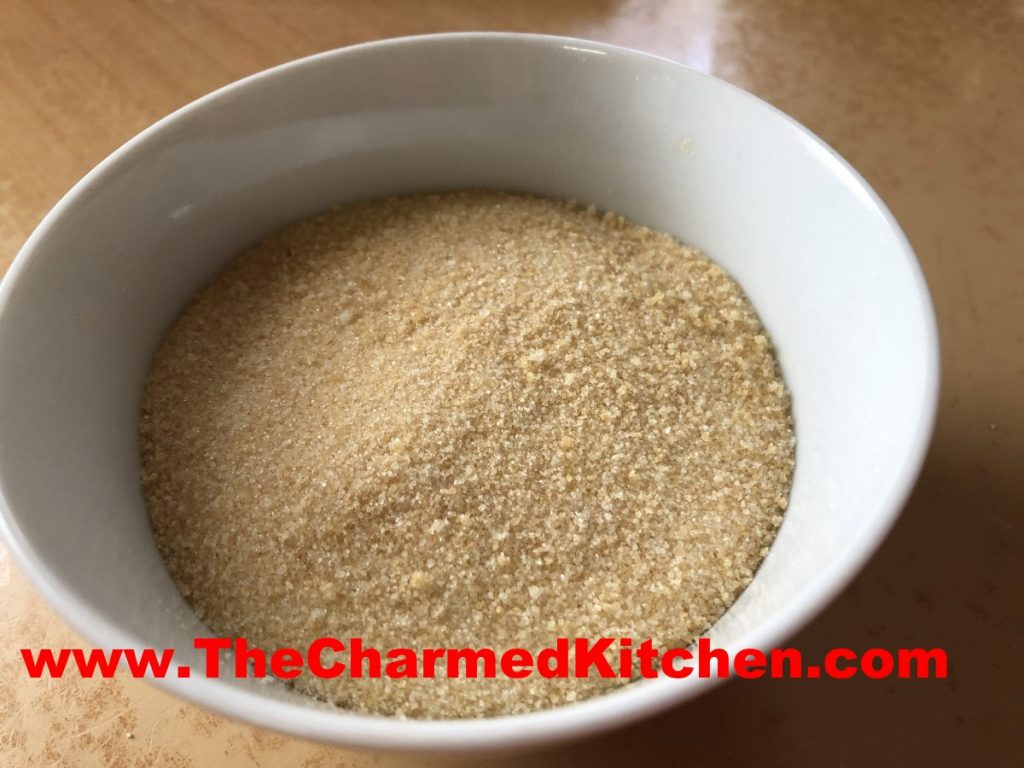
If you never toasted sugar, you might want to start. Toasted sugar is just sugar that is baked, at low heat, until it turns a caramel color. The sugar also picks up a lovely caramel flavor. That flavor change is what really makes it worth it.
I first heard about toasting sugar a few years ago. I was intrigued and decided to try it myself. The flavor was wonderful. I always keep a supply of toasted sugar around.
So how do you use toasted sugar? Simple- just like regular sugar. Measures the same, bakes the same. The only difference is that extra caramel flavor it adds to everything. From your morning coffee, to baked goods, the toasted caramel flavor comes through.
How to Toast Sugar
Preheat oven to 300 degrees- no higher. If your oven runs hot, you might want to bake at 275. Place sugar in a baking dish. I used a glass baking dish. You’re going to stir the sugar a few times during baking, so a dish with high enough sides is a must. I always toast at least 3 or 4 pounds of sugar at a time. It keeps, so why not? Also, I worry that smaller amounts might toast too fast.
Toast until the sugar turns an ivory color, about 1 hour. Stir thoroughly and continue baking, checking and stirring about every half hour, until the sugar gets to the color you want. The darker the color, the more intense the caramel flavor. You can bake the sugar until it looks like brown sugar, if you like. I usually stop when it looks like light brown sugar.
The sugar will produce steam as it heats up, so it should be stirred to allow that moisture to escape. Stirring will help move hot sugar from the edges toward the center, and cool sugar from the center toward the edges, for even toasting. Continue toasting and stirring every 30 minutes until the sugar has darkened to the desired color. The process can take 2-5 hours in total. It’s not a lot of work, mostly just waiting. You can see why I do a large batch at a time. I would rather bake 4 pounds of sugar- and have plenty for months and months.
When the sugar has finished toasting, remove from the oven and set aside and cool to room temperature, stirring from time to time to speed the process and allow for continued evaporation of steam. I like to transfer the toasted sugar to a large foil pan, where it cools down quicker. Once fully cool, transfer to an airtight container and store as you would plain white sugar. It can be used interchangeably in any recipe that calls for white sugar.
Sometimes, the sugar clumps as it cools. You want to break those clumps up when you see them- or press the cooled sugar through a sieve to get out the lumps.
In the end, I think the effort is worth it. In cookies and other baked goods, toasted sugar adds the nicest flavor.
City Chicken


If you never had City Chicken, you don’t know what you are missing. Meat on a stick- always a good thing. But not just meat on a stick- breaded meat on a stick! If you like breaded pork chops, you should love City Chicken.
This is a dish I grew up with. When my Mom made City Chicken, I knew dinner was going to be special.
There is no chicken in the dish at all. Odd, but well, I didn’t name the dish, I just like eating it.
City Chicken is normally made with chunks of pork- or chunks of pork and veal- skewered on wooden sticks. I used pork. After skewering, the meat is dipped in seasoned flour, egg wash and then bread crumbs- or cracker crumbs.
You can just bake them, or brown in a little oil first, before baking- for a crispier coating.
I didn’t have my Mom’s recipe, so I recreated it as I remembered it. So here is my recipe. A tasty dish, and also a trip down memory lane.
City Chicken
2 lbs. boneless pork – I used Western style ribs
½ c. sherry – not cooking sherry
2 T. soy sauce
¾ c. flour
Salt and pepper
3 eggs
½ c. milk or half and half
2 T. chopped parsley
Hot sauce
½ t. garlic powder
1-2 c. bread crumbs
2 t. dried basil
2 t. dried oregano
½ t. dried thyme
Oil
6 –inch Wooden sticks or skewers
Cube pork into 1-inch cubes. Place in a bowl and add the sherry and soy sauce. Stir to combine, cover bowl and place in fridge. You can do this a couple of hours ahead or even a day ahead. You might not really need to do this step, but I like the flavor of the sherry, so I chose to marinade my pork in it before breading. Your choice, completely.
Take pork and skewer it onto wooden sticks. I used skewers that were a little thicker than what I normally use. Since they were long, I cut them in half before using. I ended up with 9.
Place flour in a bag with salt and pepper to taste. Add one pork skewer at a time to the flour, shaking to coat evenly. Place floured pork skewers on a tray. Once finished, combine eggs with the milk, parsley, hot sauce, garlic powder and a little more salt and pepper. Place bread crumbs in a bag with the basil, oregano and thyme. Shake to combine. Dip each floured skewer into the egg mixture, remove from egg mix and allow excess to drip off a little. Then place in the bag of bread crumbs, shaking to coat evenly. Repeat until all the city chicken is breaded.
Now I know I already asked you to wait to marinade the pork in the beginning. I am going to ask you to wait again. If you fry up the city chicken right away, the breading is likely to fall off. If you bread the city chicken early in the day- then leave it in the fridge at least a couple of hours before cooking it, the breading will stay on much better. I actually marinade a day ahead, in the morning. Then I bread them in the evening the night before. But even breading them a couple of hours before makes a big difference. Just keep in the fridge until you are ready to cook.
When ready to cook them- I know you were giving up hope we would ever get to this step- heat oil in a large skillet. You don’t need much oil- a few tablespoons, at most. Brown the city chicken on all sides in the hot oil. Transfer them to a baking dish, as you finish browning them. Place in a preheated 350-degree oven for about 30 minutes. Don’t bake them too long- you don’t want them to dry out. Pork has to reach a minimum internal temp of 145 F. Serves 6.
100% Whole Wheat Bread

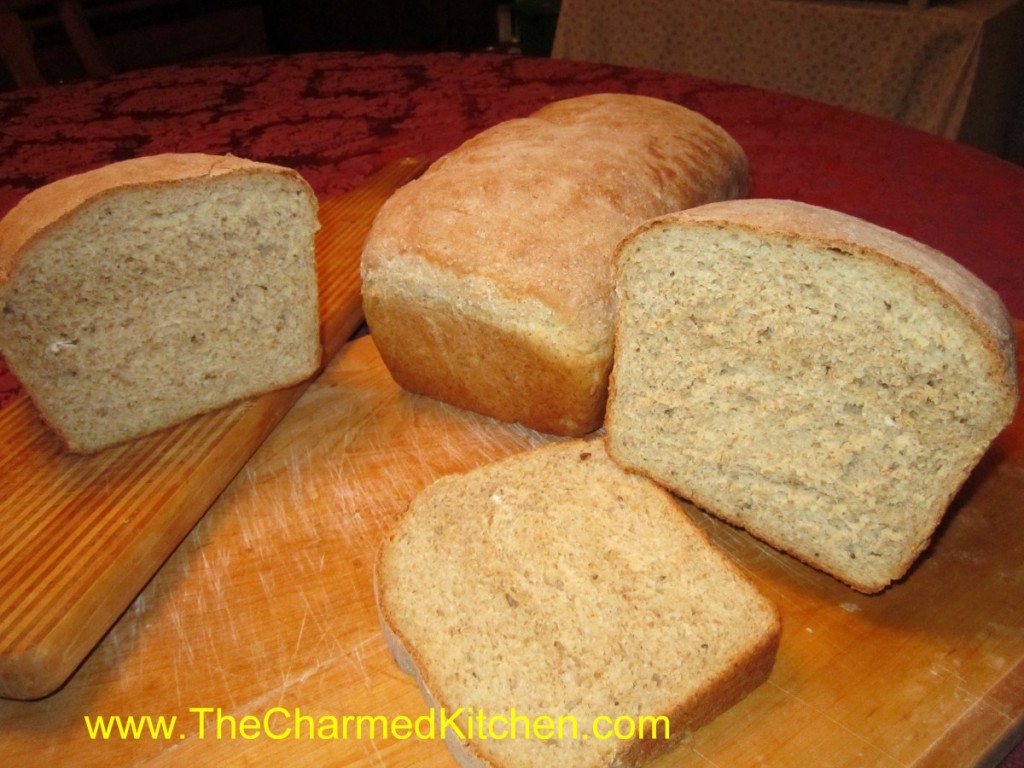
A lot of us want to eat more whole grains, but are unhappy when we try to make 100% whole wheat bread at home. There is a secret to baking whole wheat bread that is both tender, and slices easily.
Whole wheat flour, high in gluten, also is high in fibers, which make it harder to get the gluten to that stretchy state. If you knead whole wheat bread dough for 5- 10 minutes, like white bread dough, you’ll have a dough that is far from elastic.
The secret? Knead it longer. I knead my whole wheat bread dough about 20 minutes. That is easy if you have it in a stand mixer. Just set it on low and let the dough hook do the work. Not so easy if you are kneading by hand. When kneading for 20 minutes by hand, more and more flour gets added to the dough, to keep it from sticking. The extra flour results in a heavy dough, and a loaf of bread that is best used as a door stop. If you have to knead by hand- knead on a wet surface. The dough won’t stick to your hands or the board and you can knead it long enough to get a properly worked dough. How do you know your dough has been worked long enough? Hold the dough up to light and pull it. It should stretch thin enough so that you can see the light through it, without tearing. Here is one of several recipes I have for 100% whole wheat bread. I love it and I think you will, too.
100% Whole Wheat Bread
2 packets active dry yeast
2 2/3 c. warm water
½ c. oil
½ c. honey, molasses or maple syrup
6 ½ -7 c. whole wheat flour
½ c. non fat dry milk
2½ t. salt
Combine first 4 ingredients in a mixing bowl and stir in 3 cups of the flour the dry milk and the salt. Beat with electric mixer for 3 minutes. Stir in enough flour for mixture to form a thick batter and continue mixing on low in mixer for 15-20 minutes. Dough takes time to become elastic. Add extra flour slowly until dough comes away from the sides of the work bowl, but not too soon. Note: if you must do this by hand add flour until dough starts to come away from the sides of the bowl and knead with wet hands on wet work surface for 15-20 minutes. Transfer dough to lightly greased bowl and cover, allowing to rise until puffy, about 1 hour. Punch dough down and transfer to a lightly floured surface. Divide in half and shape each half into a loaf. Place in a lightly greased 9×5 – inch pan. Brush top with oil and place a piece of plastic wrap over the top. Allow to rise until doubled. Bake in a preheated 350 degree oven for 40 minutes. Tent with foil after 20 minutes to prevent over browning of the top. Test for doneness by removing bread from pan and thumping on the bottom. Bread should sound hollow. Makes 2.