Cherry and Blueberry Clafoutis
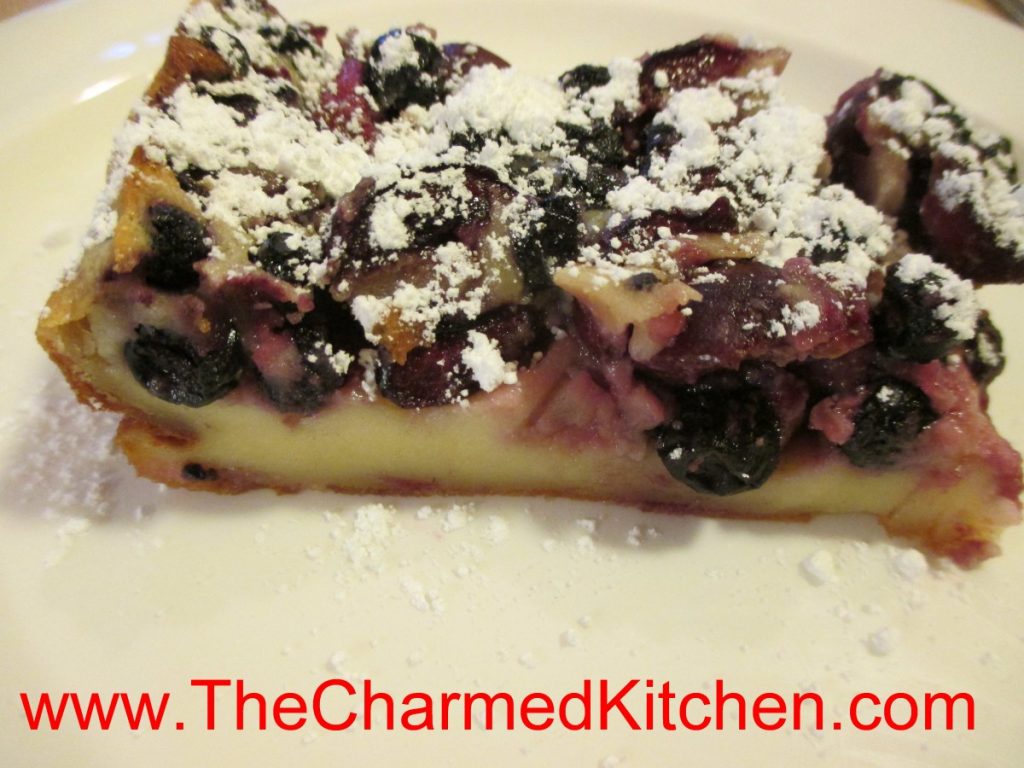
So what is clafoutis? Clafoutis is a sort of pancake, sort of custard, sort of quiche. It is a lovely dessert for fresh fruit, for sure.
You can serve clafoutis plain, or topped with powdered sugar or whipped cream. On a hot day, I like to serve it with a scoop of ice cream.
Clafoutis is really simple to make, too. You start by putting the fruit in a prepared pan. The batter is made in a blender, and takes just a couple of minutes to prepare. You pour the batter over the fruit- and bake.
I used cherries and blueberries in this one, but you can use all sorts of fruits- peaches, plums, raspberries…..
Most people enjoy it as a dessert, but it is also nice with that morning cup of coffee.
I used a combination I thought would make a nice dessert for summer.
Cherry and Blueberry Clafoutis
2 c. pitted cherries, I cut them in half, but you can leave whole
1 c. blueberries
3 eggs
1 c. sugar
3 T. melted butter
½ c. flour
2 t. vanilla extract
1 t. almond extract
pinch of salt
1 c. half and half
powdered sugar, optional
Grease a 9×9-inch baking dish or pie pan. Preheat oven to 350 degrees. Place cherries and blueberries in the prepared pan. In blender, combine eggs, sugar, butter, flour, flavorings and salt.* Blend until smooth. Add half and half and blend again until smooth. Pour batter over the cherries and blueberries. Bake for 45-50 minutes or until clafoutis is browned around edges and puffed up. Allow to cool and dust with powdered sugar, if you like. It will deflate as it cools. Serves 6.
* You can whisk the ingredients together by hand, if you prefer.
Blueberry Liqueur

I always stock up on blueberries when they are in season. I end up with a lot of frozen berries to enjoy throughout the year. I was cleaning out the freezer awhile ago, and decided to use some of my frozen berries to make blueberry liqueur.
After steeping for several months, I strained out the blueberries last night. I ended up making two different liqueurs. One is unsweetened- just blueberries, vodka, lemon zest and a clove. It is sometimes called an eau de vie- French for water of life- or blueberry vodka.
The other was sweetened a little with a sugar syrup- but you could use honey. That is blueberry liqueur or blueberry cordial. It will be allowed to mature for a couple of weeks.
Both are wonderful.
The color is so pretty and they can be sipped, as is, or used in cocktails. You can use other berries, if you prefer.
I look forward to enjoying these with friends and family.
Blueberry Liqueur
4-c. fresh or frozen blueberries
Sliced and scraped peel of one lemon, optional
1 clove, optional
3-c. vodka or 2 c. vodka and 1 c. brandy
1 c. sugar syrup, optional, recipe follows
Lightly crush berries with a fork. Combine with peels and clove and vodka and steep 3 months. Strain and filter and add sugar syrup. Mature 4-6 weeks.
Sugar Syrup
Simple syrup is made from 1 cup of sugar and ½ cup of water. Bring to a boil, then cool. You will have 1 cup of syrup. Some recipes call for plain sugar and others for honey. Watch when you substitute honey for sugar, as it is sweeter and stronger flavored. Better to use orange or clover honey.
Pesto Potato Salad
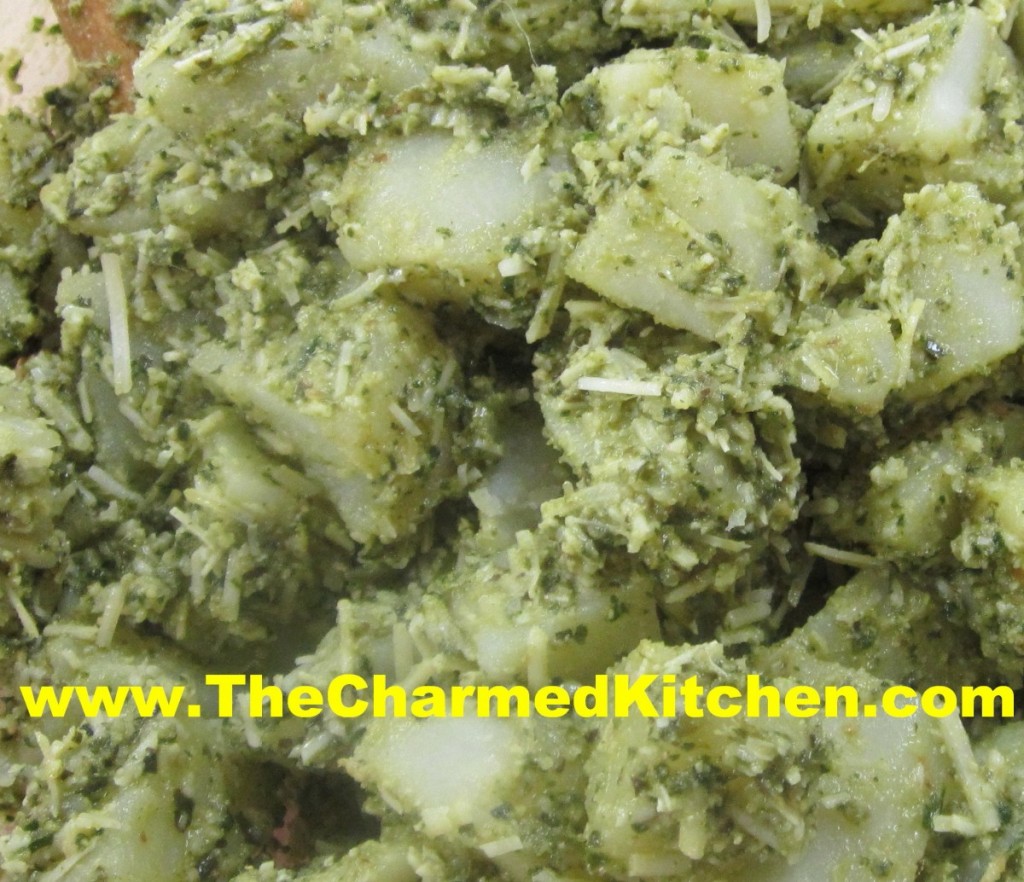
This salad always makes me think of a warm summer day. I think it’s because of the basil. During the summer my driveway is lined with pots of basil. I cook with it almost every day. A lot of people first think pasta when you mention pesto. Pesto can be used in a lot of different dishes. Here I’ve paired it up with potatoes. The combination works great together. I always freeze extra basil so I can enjoy it year round.
Pesto Potato Salad
2 lbs. Boiling potatoes, cut into bite sized pieces
1 c. basil leaves
3 T. pine nuts
3 T. olive oil
2 garlic cloves, minced
1/3 c. Parmesan cheese
Salt to taste
Cook potatoes until tender. Cool. In blender combine remaining ingredients, except 1 tablespoon of the pine nuts. Pour blended mixture over potatoes and sprinkle with the reserved nuts. Chill. Serves 6-8.
Black Currant Ice Cream
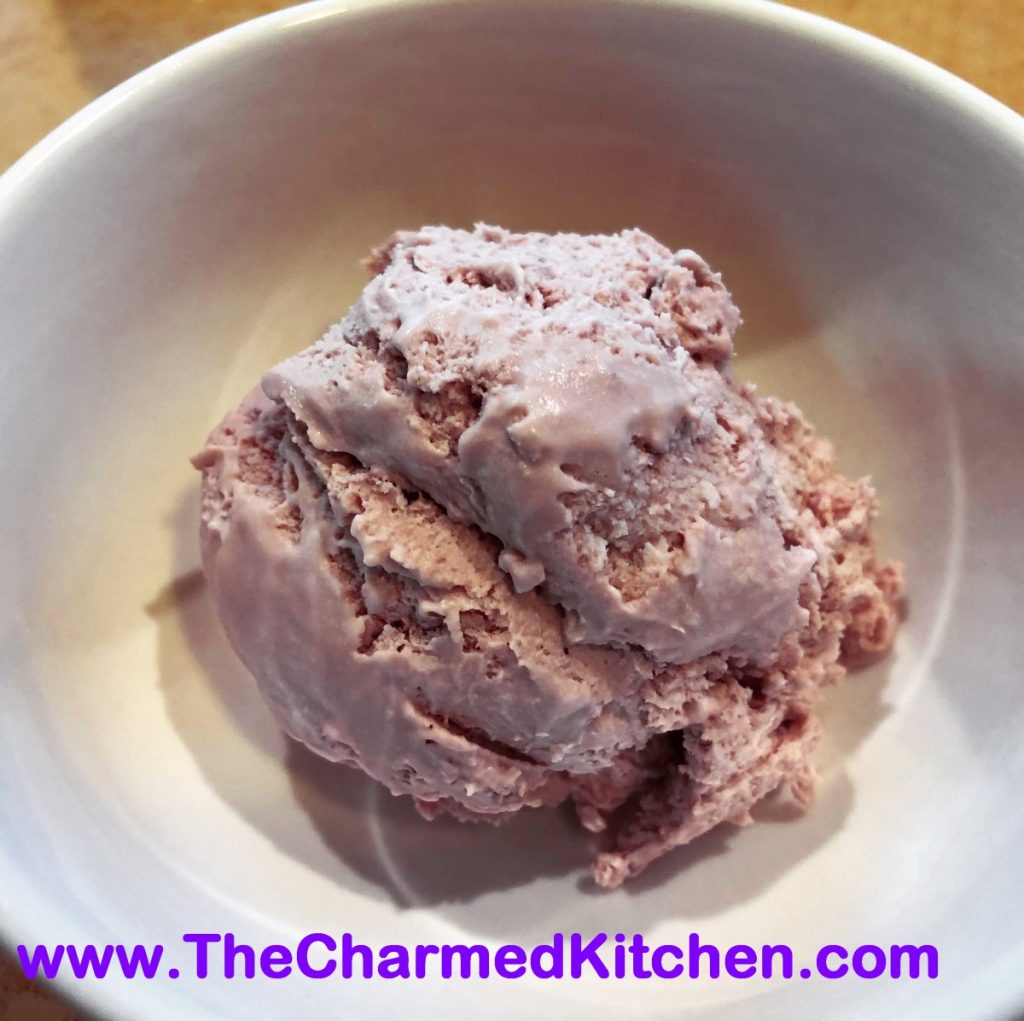
Black Currant ice cream sounds delicious, and it is. It might be my new favorite ice cream this season. The ice cream requires no special equipment. It comes out rich and creamy with only a small amount of effort. What could be better? This is a great ice cream for kids to make, too.
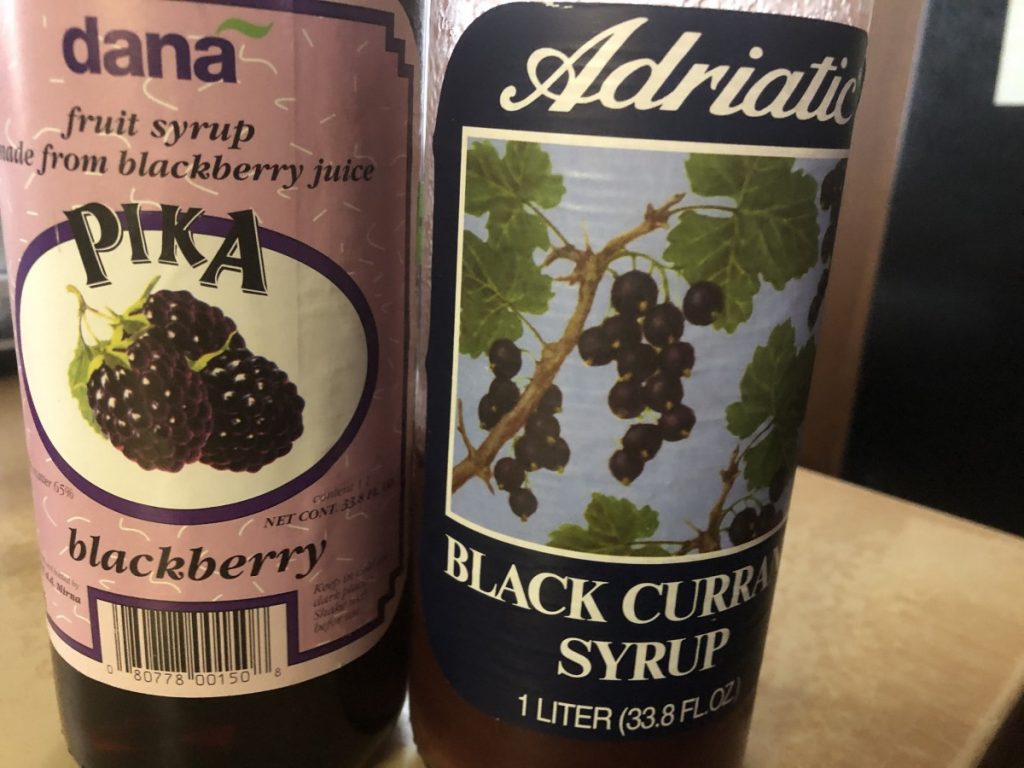
The recipe came about as almost an afterthought. I had an open bottle of the black currant syrup in the fridge and a pint of whipping cream with a fast approaching expiration date. I whipped cream, added the syrup and froze it. This might just be the easiest ice cream I ever made!
The secret is to whip whipping cream until it is pretty stiff, then stir in a fruit flavored syrup. Once it is mixed, pop in the freezer. The result is a surprisingly nice ice cream.
It was inspired by a similar ice cream I make using whipped cream and chocolate syrup. I figured if it worked with chocolate syrup, it should work with other syrups. I was right. It worked out great. The only negative is an almost buttery mouth feel after eating a whole portion. I decided to alter the recipe a bit by adding some half and half to some of it, just before popping in the freezer. That version was also creamy and smooth, but without the mouth feel I didn’t like.
I am probably being too picky. I had several people try both versions and no one saw a big difference. One person said they preferred the half and half version. Here is the recipe, with variation. I also shared the original chocolate ice cream recipe and a recipe for making your own fruit syrup. Enjoy!!
Black Currant Ice Cream
1 pint whipping cream
1/2 c. black currant syrup, or to taste*
Place whipping cream in a bowl and whip until stiff peaks form. With mixer running, add the syrup. Add until mixture is light lavender color. You can also give it a taste, to be sure. Place mixture in a container with a tight fitting lid and place in freezer. Freeze several hours before trying it. Makes a bit over a quart.
* It occurred to me that besides using different fruit syrups, you could also try using maple syrup or perhaps honey. I make honey ice cream. Honey is pretty sweet, so use a lighter hand when adding it.
Variation: After you add the syrup, stir in ½ cup of half and half or milk. Freeze. Makes about 6 cups.
The recipe that inspired me.
Easy Homemade Chocolate Ice Cream
1 pint whipping cream
1/2 c. chocolate syrup or to taste
Place whipping cream in a bowl and whip until stiff peaks form. With mixer running, add the syrup. Add until mixture is the color of chocolate ice cream. You can also give it a taste, to be sure. Place mixture in a container with a tight fitting lid and place in freezer. Freeze several hours before trying it. Makes 1 quart.
You can use any number of fruit syrups, if you prefer. I find mine at a local grocery store and at an Italian import store. You could also make your own fruit syrup, if you wanted. Here is my recipe for blueberry syrup. It could be adapted to other fruits.
Blueberry Syrup
4 c. blueberries
1 c. water
1 1/2 c. sugar
In saucepan heat berries and water to a boil and boil 2 minutes. Crush berries with a potato masher as they cook. Pour mixture through a fine mesh strainer and press to extract all the juices. Return to pan and add sugar. Boil 2 minutes and strain mixture again. Cool, then refrigerate. Keeps a couple of weeks. Makes about 3 1/2 cups.
Chocolate “Magic” Shell

I used to love getting a chocolate-dipped ice cream cone when I was a kid. I still do.
The ice cream shop near my house had them. I watched as the soft serve was swirled onto the cone, then turned upside down and dipped into a vat of melted chocolate goodness. Like magic, the chocolate hardened, and made this lovely, crisp shell.
Then they came out with the squeeze bottles of the stuff. Just a drizzle onto your ice cream and the chocolate hardened like, well, magic.
There are a lot of recipes out there for “magic” shell. I tried a few. All tasted fine, but some just worked better than others. I played around and found the mix that worked best for me.
You store it at room temp, then drizzle on ice cream. In a few seconds, it hardens up.
It is very easy to make- just three ingredients. So easy- so good.
Homemade Chocolate Magic Shell
1 c. chocolate chips- I used dark chocolate chips
3/4 c. coconut oil- I used the unrefined
1/2 c. powdered sugar
Heat all together until melted. I melted mine in a microwave for 1 minute, but you could also melt over a double boiler. Stir until smooth. Store at room temp. To use, drizzle over ice cream, wait about 10-20 seconds- and it will harden.
Homemade Plum Jam
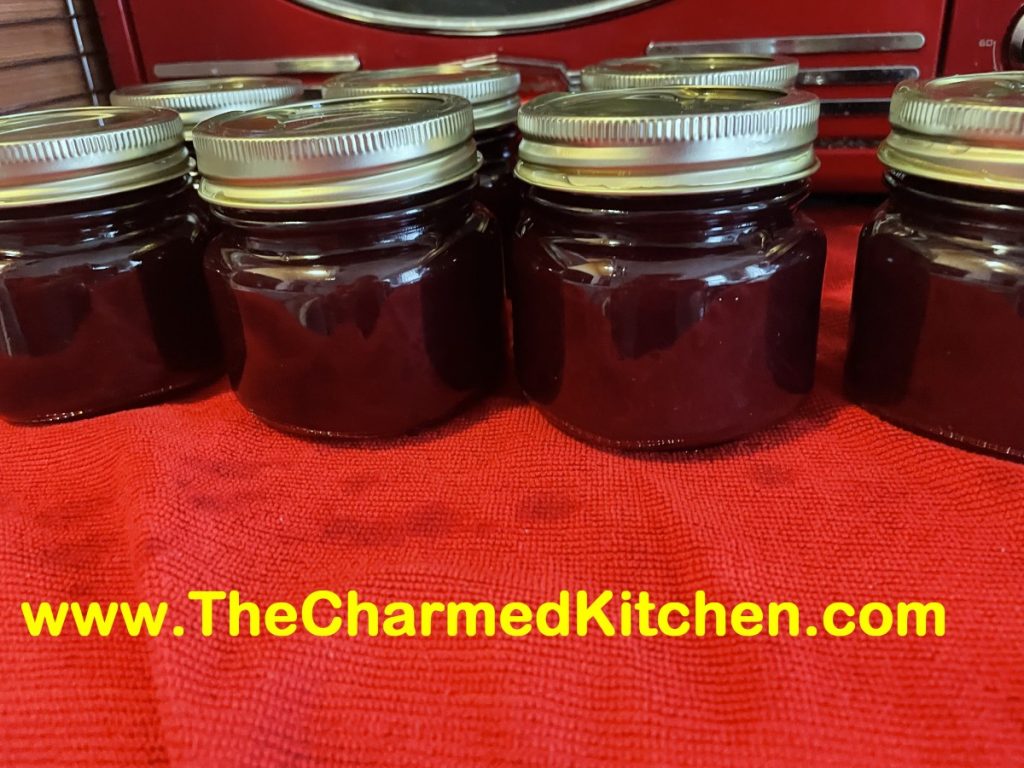
This is one of the easiest jams you can make. You don’t need pectin and it cooks pretty quickly into sweet, thick jammy goodness. I prefer a softer set, so I stopped cooking mine a little sooner than you might prefer. I like a jam that spreads easily, even after it has been opened and stored in the fridge. I hadn’t made plum jam in a long time. That will change after this. I love this jam.
Because I hadn’t made it in years, I did a test with just a couple of plums. The flavor was great, but some of the pieces of the peel seemed too big. I could see them in the finished jam. To insure the skins got chopped up, I cooked my jam for awhile then used an immersion blender to smooth it out. This is just a cosmetic preference. You can just cook down chopped up plums and they will be fine.
So here is the recipe. I got it from the NCHFP website. The only changes I made was to up the processing time to 10 minutes, so I didn’t have to sterilize the jars. I also let the jam sit in the canner a few extra minutes to prevent siphoning.
Plum Jam
2 quarts chopped, pitted tart plums (about 4 pounds) – any plums will work
6 cups sugar
1½ cup water
¼ cup lemon juice
Combine all ingredients; bring slowly to boiling, stirring occasionally until sugar dissolves. Cook rapidly to, or almost to, the jellying point (which is 8°F above the boiling point of water, or 220°F at sea level). Stir constantly to prevent sticking or burning.
Pour hot jam into hot jars, leaving ¼ inch headspace. Wipe rims of jars with a dampened clean paper towel; adjust two-piece metal canning lids. Process in a boiling water bath canner for 10 minutes. Turn off the heat and allow jars to remain in canner 5 minutes before removing. Set jars on cooling rack or towel in a draft free place while they cool down. Check seals once jars are cool. Yield: About 8 half-pint jars.
Cold Beet and Watermelon Soup
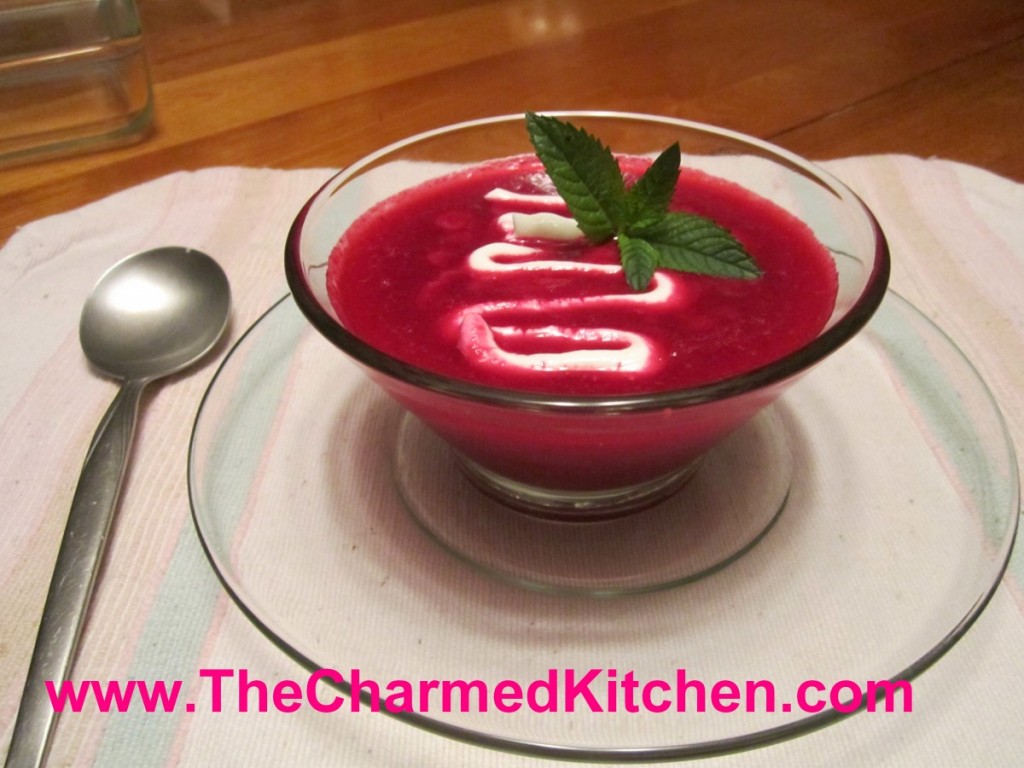
I really love this soup. On a hot day, it makes a great first course. I love salads, but sometimes I just want something else. It couldn’t be easier. You just blend up equal parts of watermelon and beets. Thin the mixture down with some stock. Add a bit of mint, and you are good to go.
I got this recipe from a friend of a friend. I tweaked it a little from the original, but it is pretty much the same. It is so simple and a great soup for a hot day. The sweetness of the watermelon pairs nicely with the earthy flavor of the beets. The mint also adds a nice little pop of flavor. The color is pretty cool, too.
I shared this recipe with a friend and she said she just drinks it like a smoothie. I find it a refreshing start to any meal, especially on a hot day.
Cold Beet and Watermelon Soup
1 part diced beet (cooked)
1 part diced seedless watermelon
a spring of mint
Put in blender
Add Chicken or Vegetable stock to taste/consistency
Add salt if desired
Dollop with Creme Fraiche or Sour Cream or even Greek Yogurt, if desired.
Garnish with fresh mint.
With any cold soup- chill well after you make it. You might even want to chill the bowls and spoons.
Chocolate Eclair Cake
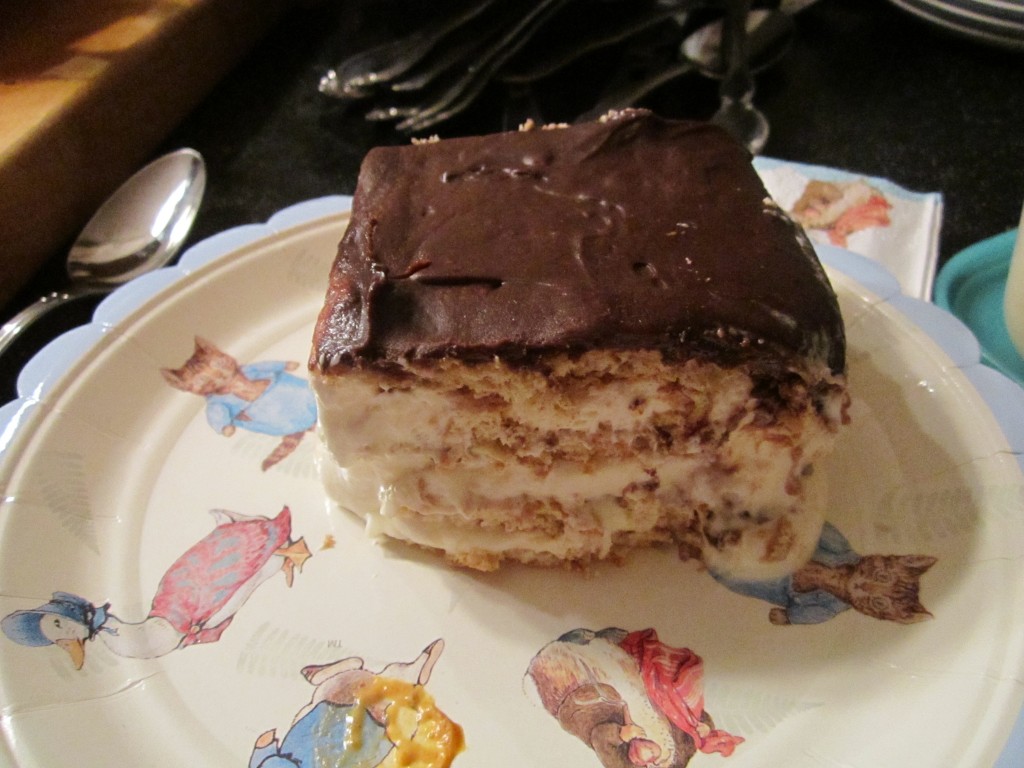
This recipe has been around a long time. It’s very tasty and deceptively simple to make. For starters there is no baking involved. Nice when it is hot and you just don’t feel like turning on the oven.
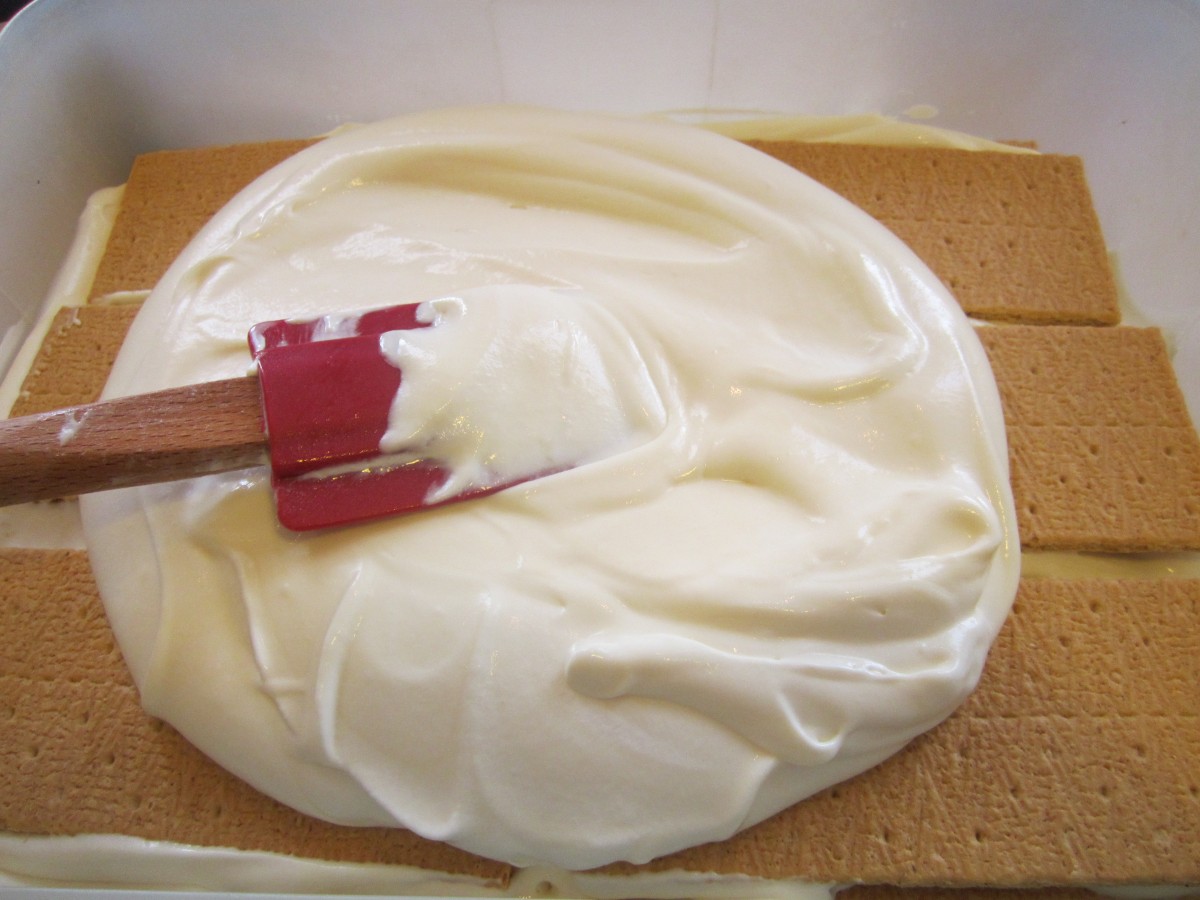
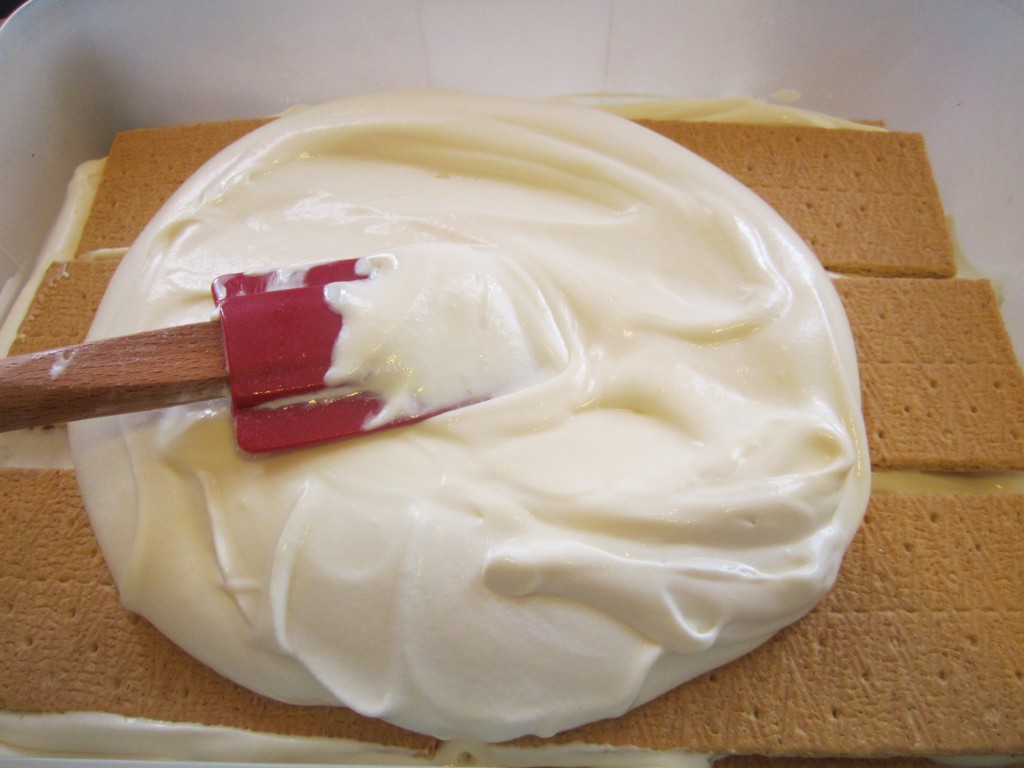
The dessert itself is layers of graham crackers and a pudding and cream mixture with chocolate frosting to finish it off. You do need to assemble it a day ahead, so there is some planning needed, but no cooking. As the mixture sits, the crackers soften. When you serve the cake it cuts beautifully. The cake is supposed to remind you of an eclair, thus it’s name.
The original recipe calls for frozen whipped topping – like Cool Whip. You can easily substitute real whipping cream.
No-Bake Chocolate Eclair Cake
4 c. vanilla pudding
1 small container non-dairy whipped topping, thawed or 1 cup whipping cream, whipped
1 box graham crackers
1 can chocolate frosting or 1- 2 c. homemade chocolate frosting
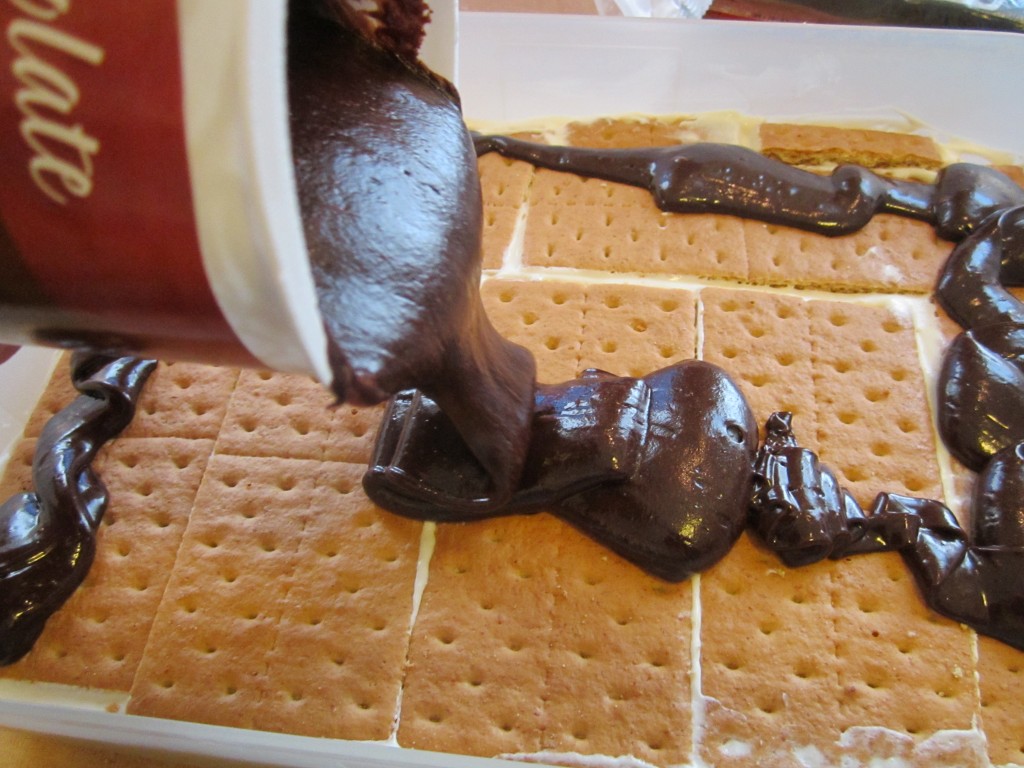
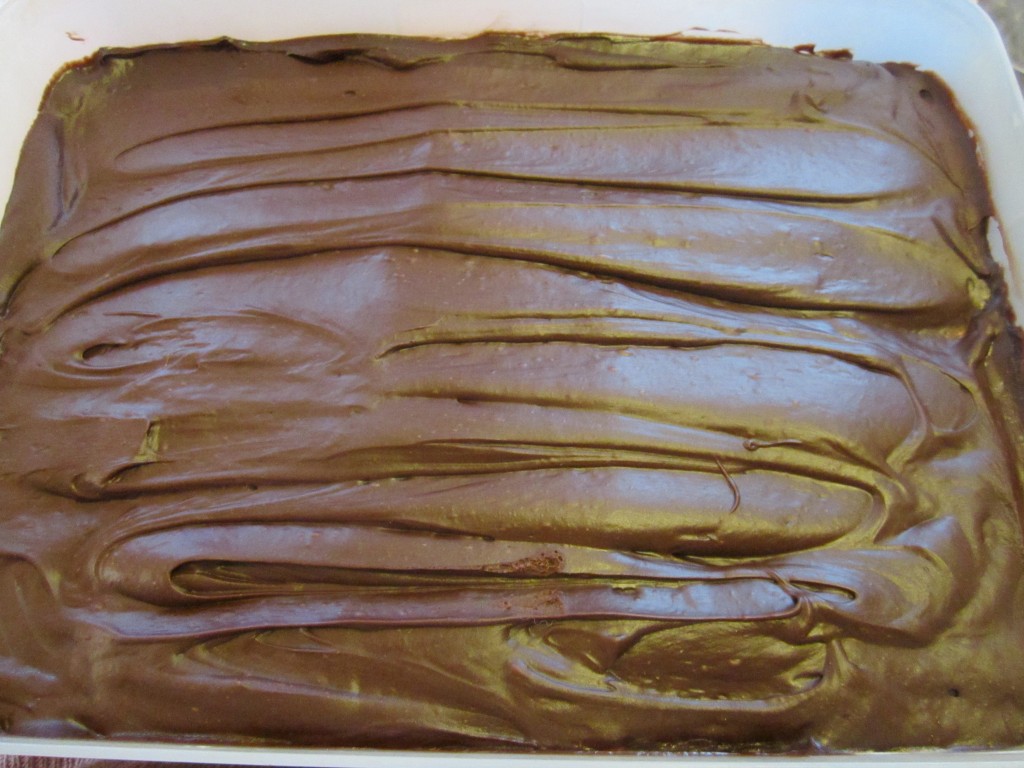
Combine pudding and whipped topping or whipped cream and set aside. In 9×13 inch cake pan place 1 layer of graham crackers. Try to cover the whole bottom of the pan with the crackers, breaking them to fill in gaps, ff needed. Spoon half of the pudding mixture over the crackers and spread out evenly. Place another layer of graham crackers over the pudding mixture and then spoon on the remaining pudding mixture, smoothing evenly. Place last layer of crackers on top. Warm frosting slightly and pour over the top. Spread out evenly. Cover and refrigerate overnight. Serves 10-12.
Corn and Black Bean Salad
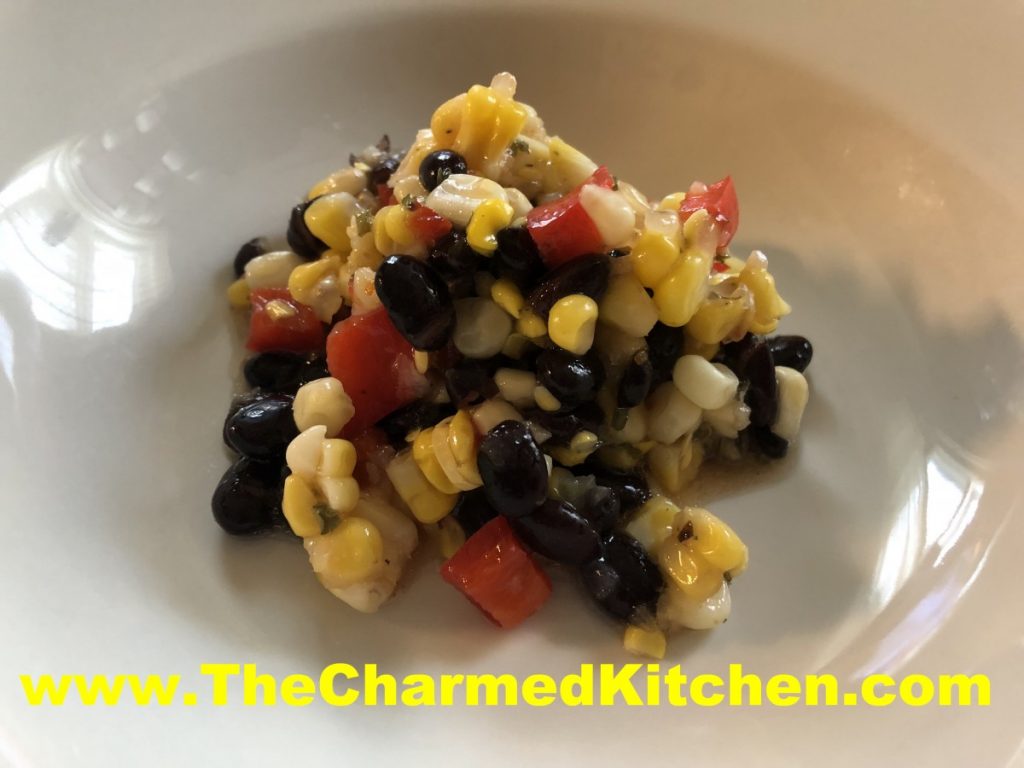
This salad was inspired by ingredients I had on hand. I had picked up some beautiful sweet corn the other day. I also had some sweet peppers and home canned black beans. I knew the trio would work well together.
I used fresh corn in this dish. You could use frozen corn, if that was all you had. Fresh corn season is too short around here. I always buy extra corn for freezing. I just blanch the shucked corn for a few minutes in boiling water, then drop into ice water. Once the corn is cool enough to handle, I cut the corn off the ears. Then I package up the corn and freeze it.
You could also grill corn and cut it off the cob to freeze.
I like to boil the cobs after the corn is cut off, for a corn stock, which I also freeze. The cobs have a lot of flavor.
If using the frozen corn in a salad, you’ll want to drain it after thawing.
So here is the recipe. Pretty simple. You could add some sweet onion, if you like, too.
Corn and Black Bean Salad
4 c. cooked corn
1 can black beans, rinsed and drained
1 sweet pepper, seeded and chopped
¼ c. olive oil
3 T. red wine vinegar
1 T. Balsamic vinegar
2 t. Italian seasoning- I used my Tuscan blend
Salt and pepper to taste
Hot sauce to taste, optional
Combine all ingredients in medium bowl. Stir to combine well. Chill before serving. Serves 6-8.
Honey-Pomegranate Glazed Ribs

I like my ribs to be tender, but still have a crispy exterior glaze. I decided to use a combination of moist and dry heat to get the result I wanted. I finished them off with a sauce made from pomegranate molasses and honey. They were really good.
While I prefer cooking ribs on the grill, you can cook them indoors with good results. Sometimes the weather isn’t right for cooking them outside. Sometimes, you realize too late, that you are out of charcoal. You might be forced to cook your ribs indoors.
Honey-Pomegranate Glazed Ribs
1 slab ribs, cut into 3-4 rib portions
salt and pepper
1 c. apple cider vinegar
2 T. soy sauce
1 T. hot sauce
1 t. garlic powder
1 t. smoked paprika
Glaze:
3/4 c. pomegranate molasses*
1/2 c. honey- or more to taste
1 T. hot sauce, or more to taste
Place rib portions in a large pan and season with salt and pepper. Pour over the vinegar, soy sauce, hot sauce, garlic powder and smoked paprika. Cover and chill for a couple of hours. You could even do this the night before. Preheat oven to 425 degrees. Place rack in large baking dish. Pour 2 cups of water into the bottom of the pan. Place rib portions on the rack. Pour over the marinade. Season with salt and pepper then place in the oven and bake for 1 hour. Turn heat down to 400 degrees. Remove ribs from oven. Place ribs in a fresh baking pan. Combine glaze ingredients and brush all over the ribs. Return to oven and bake 20-30 minutes longer, or until glaze has gotten sticky and browned a little.
*Pomegranate molasses is available in some specialty stores, or you can make your own by boiling down pomegranate juice until it gets thickened.