Easter Cupcakes

These cupcakes would make a great dessert for Easter- or any time. They are also a fun dessert for kids to make.
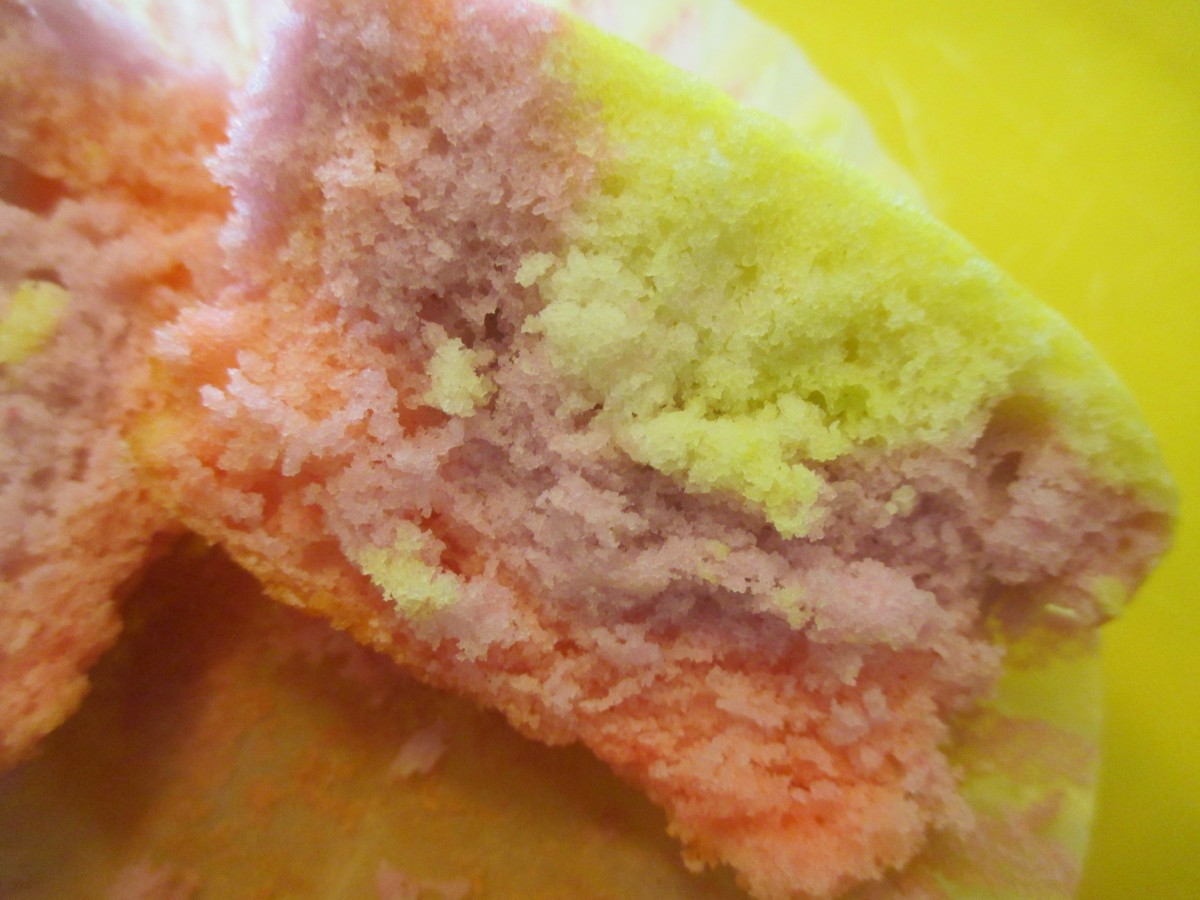
I started out by making a double batch of my classic white cupcakes- recipe follows. To add a little color to the cupcakes, I divided the batter into three bowls and tinted each of them a different pastel color. You can leave them white.
As I filled the pans, I just added a spoonful of each of the tinted batters in them. They came out really nice.
I made three different cupcakes: bunnies, chicks and nests.
I also made a double batch of white chocolate frosting. You could certainly make a vanilla buttercream, if you prefer.
Details on how to make each of them are listed below.
Classic White (Vanilla) Cupcakes
1 cup sugar
1/2 cup butter
2 eggs
2 teaspoons vanilla extract
1 1/2 cups all-purpose flour
1 3/4 teaspoons baking powder
1/2 cup milk
Preheat oven to 350 degrees. Line a muffin pan with 12 paper liners. In a medium bowl, cream together the sugar and butter. Beat in the eggs, one at a time, then stir in the vanilla. Combine flour and baking powder, add to the creamed mixture and mix well. Finally stir in the milk until batter is smooth. Pour or spoon batter into the prepared pan. Bake 20 to 25 minutes. Cupcakes are done when they springs back to the touch. Makes 12.
White Chocolate Frosting
6 oz. white chocolate – if using bars, chop before melting
1 stick (4 oz.) cold butter, cut into cubes
1-2 c. powdered sugar
1 t. vanilla
Melt chocolate. I just melt mine in a microwave safe dish, but you can use a double boiler. Let chocolate cool down a little. Beat butter into the melted chocolate. Beat until smooth and then beat in the powdered sugar and vanilla. Whip until frosting is smooth and fluffy. I normally beat for 5 minutes or longer. If too thick, add a few drops of water or milk. For this recipe, I made a double batch of frosting.
Bunnies
extra white chocolate
food coloring- pink or red
chocolate chips
pastel ( pink) M&M’s
Make bunny ears by melting some white chocolate and putting it in a piping bag or bottle. On wax paper, make outline of the ears in white chocolate and allow to cool/harden. Place a drop or two of pink or red food coloring in a microwave safe bowl and add some white chocolate. Melt in microwave, being careful not to burn the chocolate and stir until it turns pink. Pipe the pink chocolate into the middle of the ears. Allow to harden before peeling off of the was paper. Using a star tip, pipe frosting on cupcake. I made three layers – to add height to the cupcake. place ears on cupcake and add chips/candy for eyes and mouth.
Chicks
Frosting tinted yellow and green
mini chocolate chips
fruit roll up
Using star tip, pipe the chick’s body onto the cupcake in yellow frosting. Pipe on head and wings. Pipe green frosting around chick to form a nest. Use mini chips for eyes and cut fruit roll up for beak.
Nests
Frosting tinted green
egg shapes malted milk balls- or you could use jelly beans
Pipe green frosting on cupcakes to make nests. Add three, or more, candies in the middle for eggs.

Piping pink filling in ears
rainbow cupcake
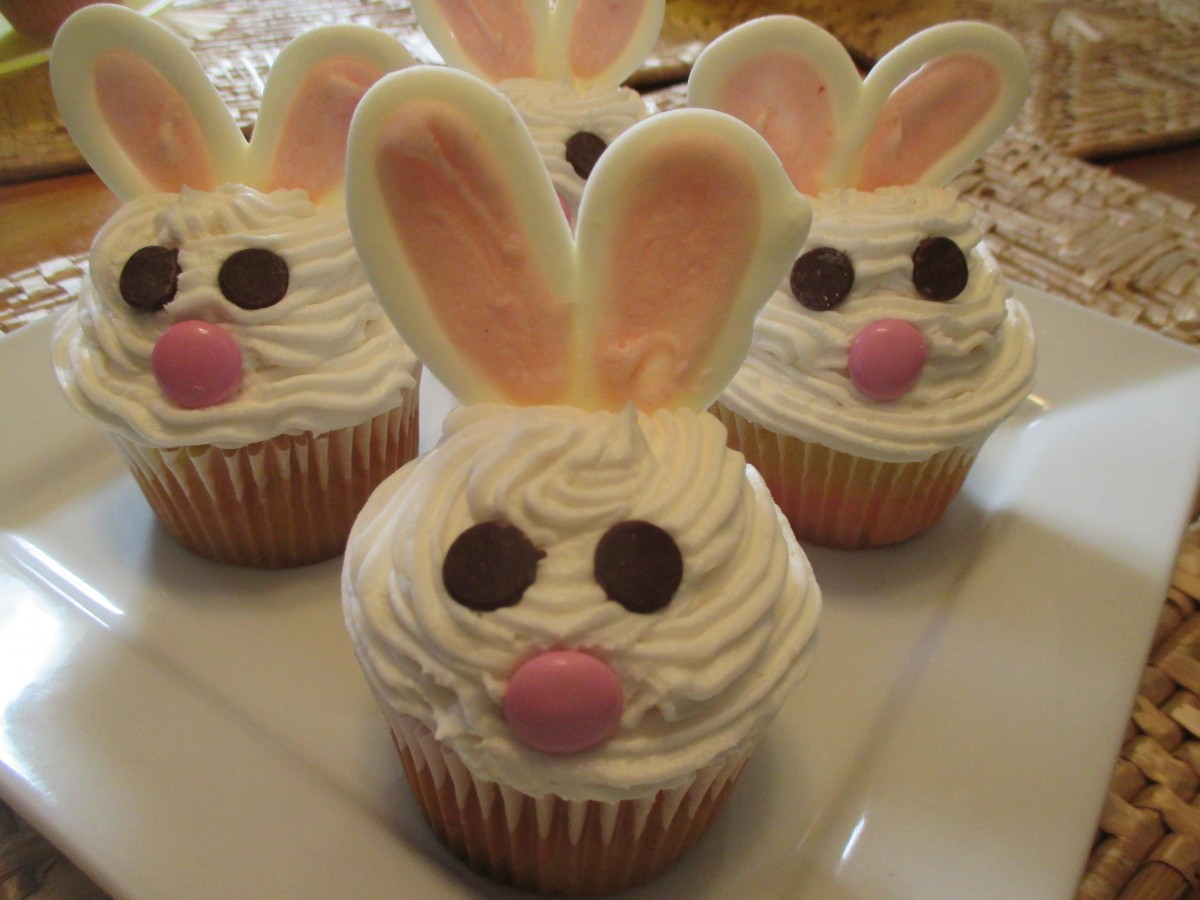
bunnies
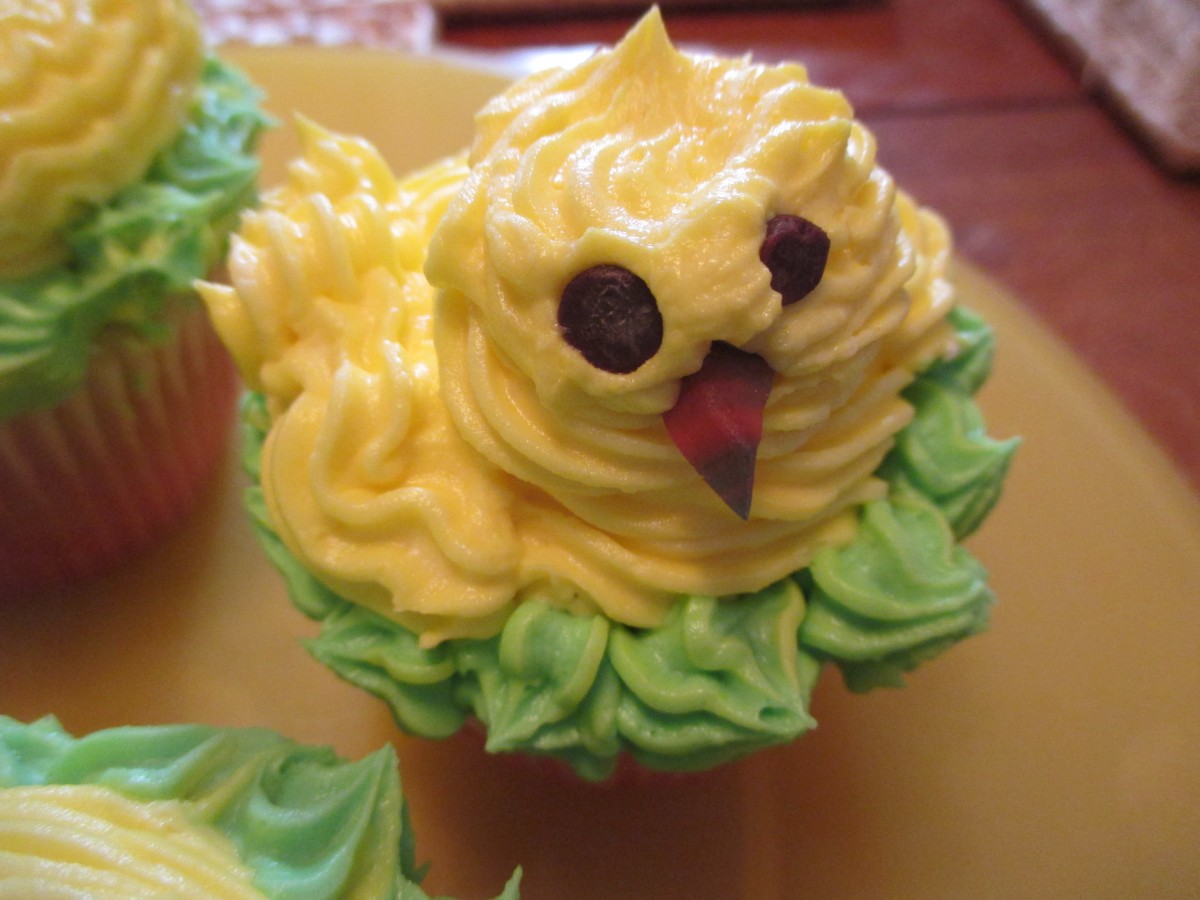
Chick cupcake
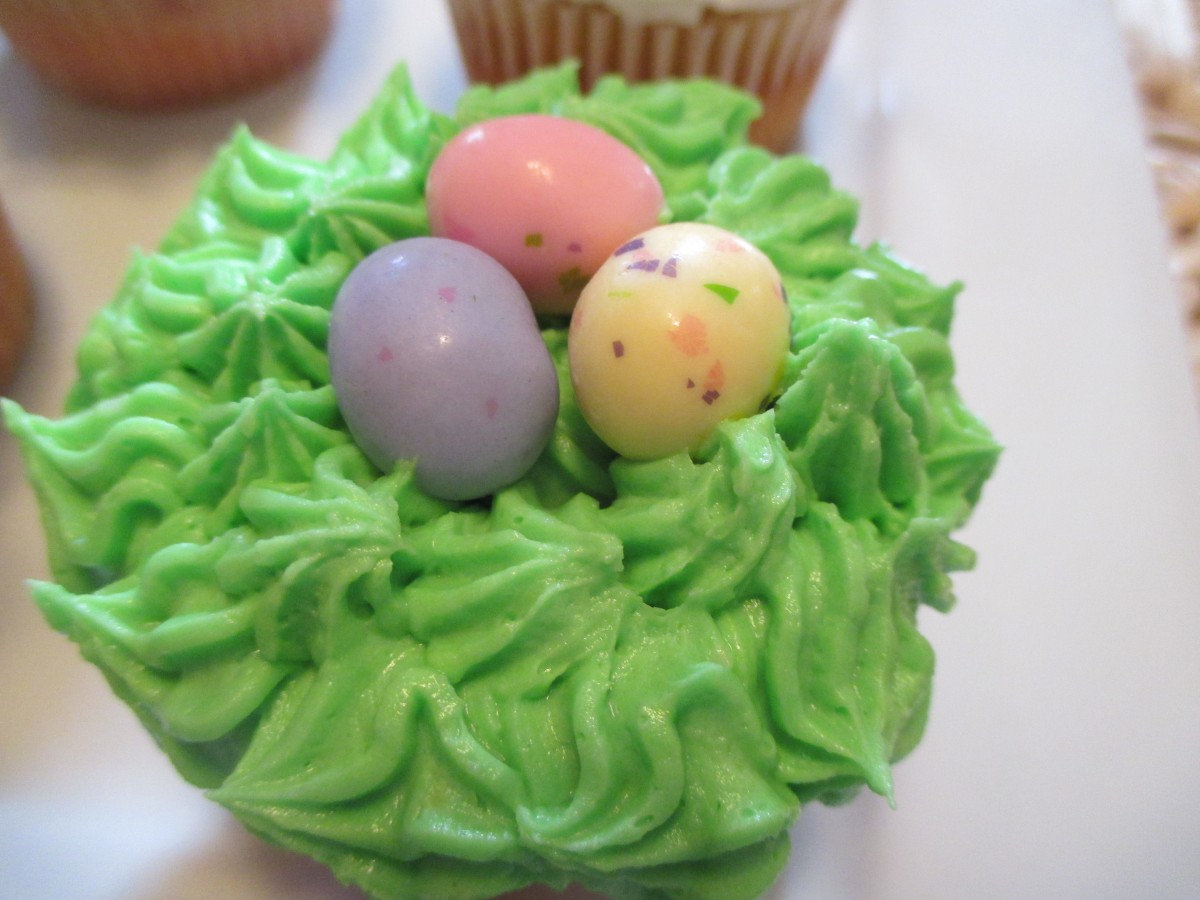
The nest cupcake
Fruit Vinegars and Shrubs
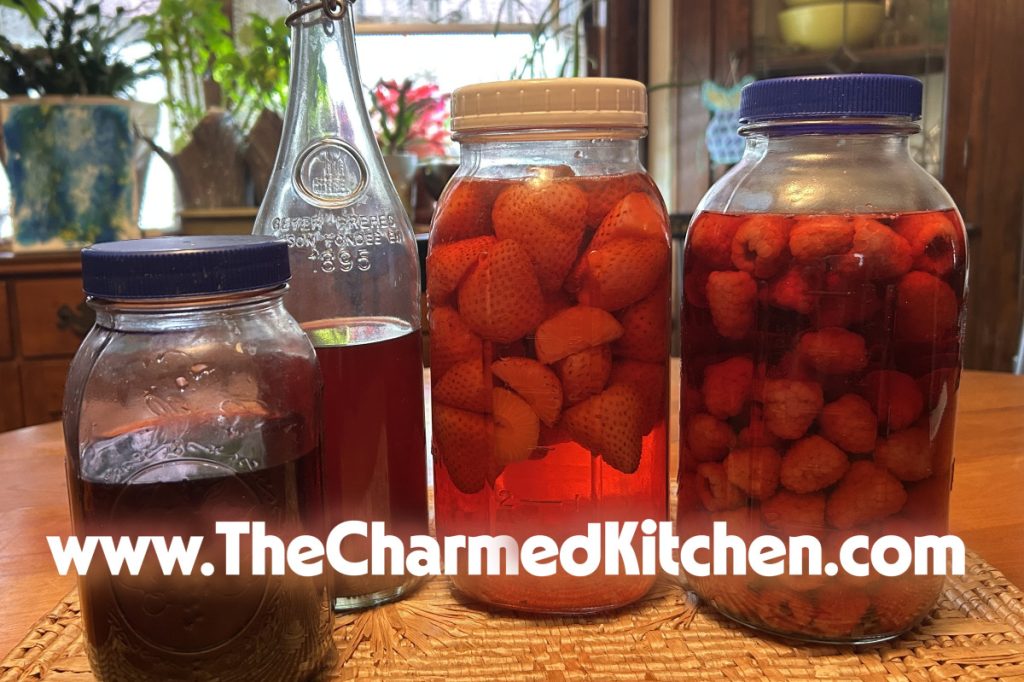
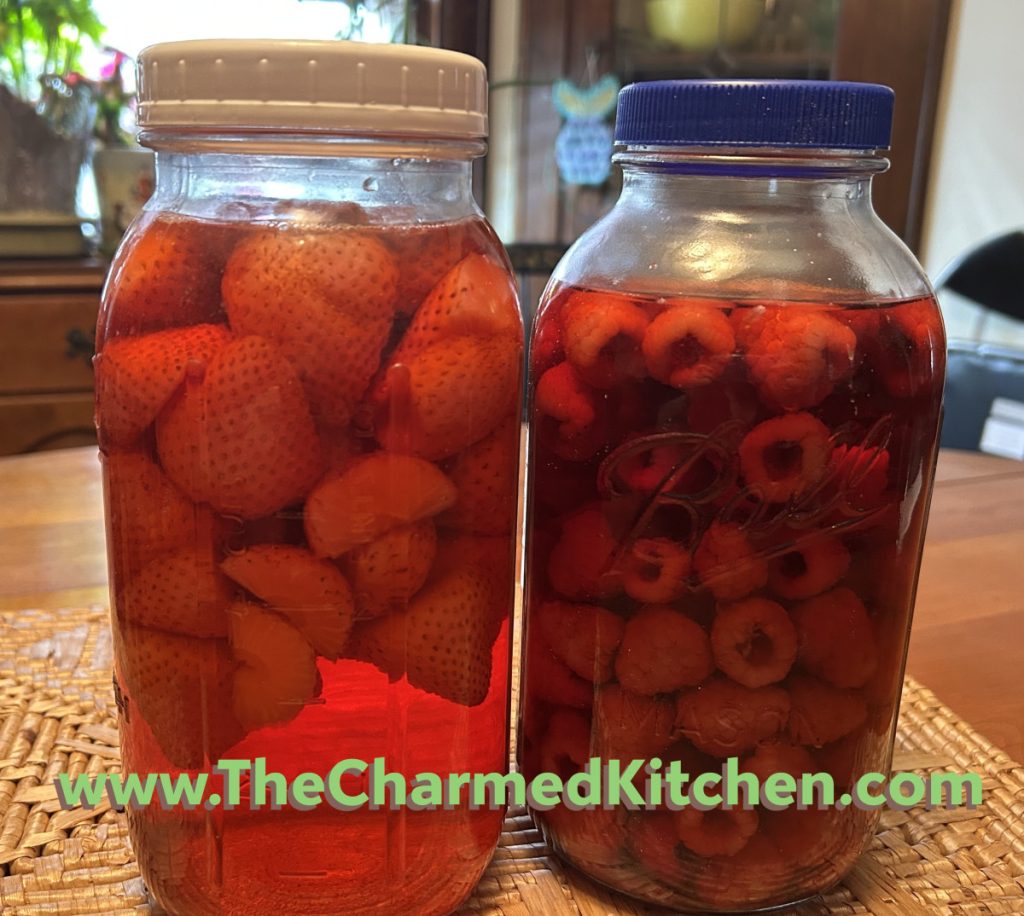
If you want a different addition to your salads and dressings, you might want to make fruit infused vinegars. They are super easy to make and can be used in all sorts of dishes. If you find yourself with more fruit or berries than you can use, it’s also a handy way to preserve their flavor. I use them as the base for dressings and marinades. I’ll often add a splash to soups or other hot dishes for a little bit of zing.
You can also make shrubs, which are used in cocktails and mocktails and are essentially fruit vinegars with added sugar. So let me give you the directions for making both. They are so much fun to cook with and so easy to make. Well worth the time.
Fruit Infused Vinegar
The formula is easy. Just put fruit in a jar and cover with vinegar. Well, that may be an oversimplification, but it’s not much more than that.
For every cup of berries, or other fruit, you add 1-2 cups of vinegar. Large pieces of fruit need to be cut up. I like to use white vinegar with 5% acidity. You could use white wine vinegar or red wine vinegar. While I love cider vinegar, it seems a little strong for most berries or cherries, but peaches, plums and pineapple would stand up to it. Once your fruit and vinegar are combined, you can add other spices or herbs, if you like. Or not. Then just close the jar and set it aside in a cool, dark place for a week or two. Longer if you forget about it. The longer time won’t hurt it. Then you just strain out the fruit and discard it. I’m sure someone has figured out a way to use the fruit. I haven’t come up with anything yet. You can just use a fine strainer. If you want the vinegar to be crystal clear, then strain it a second time through layers of cheesecloth or coffee filters. Store at room temperature, in the dark, or you can store in the fridge. They keep for a year or more, but might lose some color over time. They hold their color better when stored in the fridge.
Shrubs
Shrubs are fruit, vinegar and sugar syrups used to flavor drinks. They are traditionally made with berries and herbs, but other fruits work, too. Have some fun with it. They can be a nice addition to drinks of all sorts. I like a splash of shrub in iced tea or lemonade. They can really brighten up cocktails, too. The main difference in shrubs over the infused fruit vinegars is the addition of sugar or another sweetener. The ratio is 1:1:1. Equal parts fruit, vinegar and sugar, but you have some wiggle room there. The procedure is a bit different from fruit vinegars. In a glass jar, you start by crushing berries- or other fruit. If you want to add some herbs, this is the time. Sage, basil and rosemary are often used. Perhaps a cinnamon stick or a piece of vanilla bean. Go with something you like, or nothing at all. Totally up to you. Then add an equal amount of sugar. Stir to combine and let sit on the counter for a day or in the fridge for 1-2 days. At this point most recipes suggest you strain out the fruit, extracting as much juice as you can. I prefer to add an equal amount of vinegar and place the mixture in the fridge for a day or two. I find when you add the vinegar first, it is easier to strain later and you get more fruit flavor. Strain as you did for the fruit vinegar, using cheesecloth or coffee filters for a clear shrub. Taste it and see if you want to add more sugar, more vinegar or leave it as is. Store in the fridge. Shrubs keep for weeks and weeks.
Baby Clams with Pasta
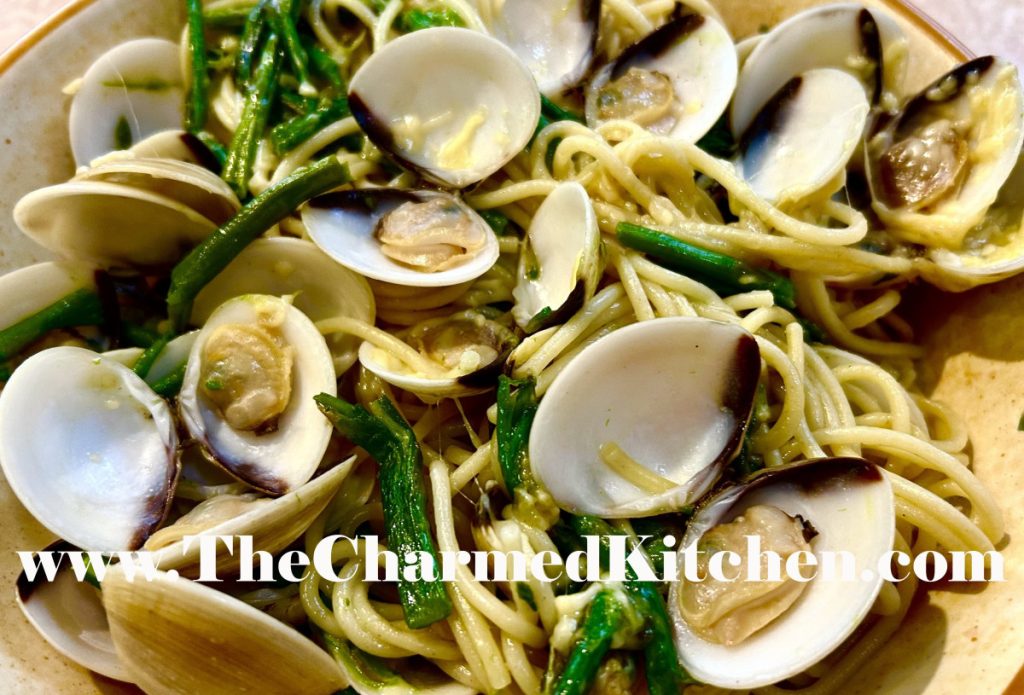
A store near me sells these adorable baby clams in their freezer section. I’m sure they can be found in lots of stores. When I am pressed to make a quick dinner, they work out so well. Let’s be honest. A pound of baby clams aren’t going to have a lot of meat in them. But they bring so much flavor in a small package.
You don’t need to defrost them ahead of time. The package has several methods to cook them. I like to cook them, out of any packaging they came in, right in the pan, then add pasta or rice to soak up any juices in the pan. Yum. This time I used pasta. I had some cooked asparagus from the night before , so I cut it into 1-inch pieces, give or take, and added them at the last minute. It worked out great. I had leftovers, but it would make a nice appetizer for two people.
Baby Clams with Pasta and Asparagus
1 small onion, diced
2 T. butter
1 (1 lb.) package frozen baby clams
4 oz. fettuccine, cooked al dente
1 cup chopped cooked asparagus
Salt and pepper to taste
Hot sauce
½ c. shredded Parmesan cheese, optional
In medium skillet heat butter and cook onion until translucent. Remove clams from packaging and add them to the skillet. In a few minutes the clams will open up. Add the pasta and heat through. Then add the asparagus- it was already cooked. If your asparagus is raw, add it with the clams. Adjust seasonings and add a few dashes of hot sauce to suit your taste. Add cheese, if adding and serve.
Spring Pasta with Crab
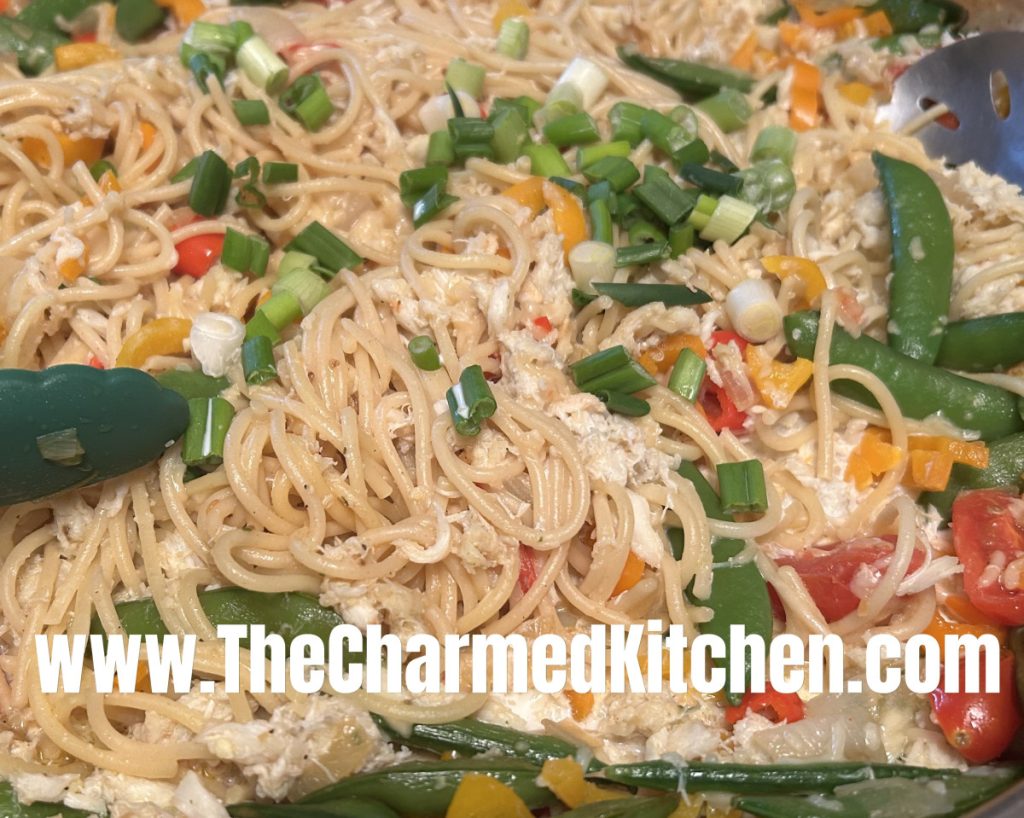
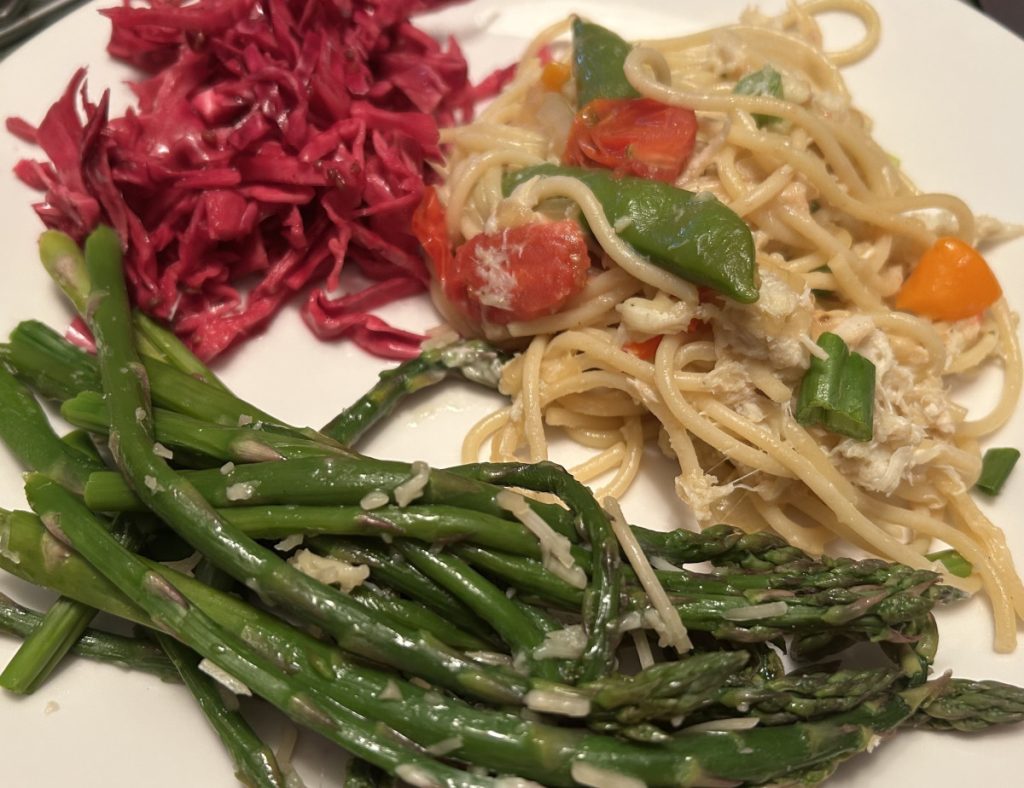
This recipe was inspired by the classic dish Pasta Primavera. Not only was I serving this for a friend’s birthday but it was also the first day of Spring. It’s the sort of dish you can adapt to suit your taste and what veggies you have on hand. This time I used onions, sugar snap peas, cherry tomatoes, sweet peppers and green onions. Asparagus would also work well in this dish, but I served asparagus as a side dish.
I had all the veggies cut up ahead of time. The pasta was cooked before my guests arrived, so the dish could be put together in no time. I just had to saute them, add the pasta and then the crab. I used one of those big cans of pasteurized crab meat. It was very solid, so when I talk about breaking up the big clumps, its more about getting the crab distributed through the whole dish. I tried not to break up individual pieces of crab, but rather to take a can- shaped hunk of crab and get it broken down. I hope that makes sense.
Its a dish that is great for any special occasion. Enjoy. Happy birthday, Lyn.
Spring Pasta with Crab
12 oz. fettuccine
3-4 T. oil- I used avocado oil
1 medium onion, chopped
1 cup cherry tomatoes, halved
2 c. sugar snap peas, washed
¾ c. sliced sweet pepper I used several baby sweet peppers
1 lemon, halved
½ c. dry sherry
2 T. butter
½ c. half and half
Salt and pepper to taste
1 can (16 oz.) lump or claw crab meat
1 c. shredded Parmesan cheese
½ c. chopped green onions
Cook pasta according to package directions, al dente. Drain and set aside. In large skillet heat oil and cook onion until tender. Add the tomatoes, peas and peppers and cook about 3 more minutes. Juice the lemon into the pan. Add the pasta, sherry, butter and half and half. Heat through and adjust seasonings. Once its heated through, add the crab, breaking up bigger pieces. Season with more salt and pepper, if needed. Add the Parmesan cheese, remove from heat and toss gently and sprinkle with the green onions before serving. Serves 6.
Cinnamon Bunny Breads

These slightly sweet bunny breads are a great addition to your Easter table. They can be used for breakfast or brunch. They could also be served with dinner, minus the candies!! The dough itself has plenty of cinnamon flavor and a slightly dense texture.
They are moist enough to eat just the way they are, or spread with butter. My favorite parts are the feet- which are a little crunchy. The recipe makes 6 bunnies. I chose to decorate mine with melted white chocolate and candies, but they are also pretty when left un-decorated. This would be a fun decorating activity for kids, too.
Cinnamon “Bunny” Breads
6-6½ c. flour
¾ c. sugar
2 pkts. Active dry yeast
1 T. cinnamon
1 t. salt
1 c. milk
½ c. water
¼ c. butter – half a stick
5 eggs – save one for brushing the breads
White chocolate and tiny candies for decorating
In mixing bowl place 2 cups of the flour with the other dry ingredients. Heat milk, water and butter together until very warm. Butter does have to melt completely. Place milk mixture in bowl with flour mixture and beat for 3 minutes. Add another cup of flour and beat another 2 minutes. Beat in 4 eggs and gradually add enough flour to make a soft dough. Place dough on a floured surface. Knead until smooth. Return dough to bowl and cover, allowing to rise until doubled, about an hour. Grease two large baking sheets, or cover in parchment or use a silicone liner. You will put 3 bunnies on each sheet. Place dough on floured surface. Divide into 6 pieces. Each piece will be a bunny. To form a bunny, take about a third of one of the pieces of dough. Shape into a round and place on a greased baking sheet. This is the body. Use about ¼ cup of the dough to form the head. Flatten the head a little on one edge and tuck the flattened part under the body. Pinch off a tiny piece for the nose and place on the head. Divide the rest of the piece of dough into 6 pieces. Use 4 pieces to form the feet. Shape into balls and tuck one edge under the body, like you did with the head. Use the last two pieces for the ears. Roll each into a tube, shape a little to look like ears, and stick one edge under the head. Repeat with the rest of the dough pieces. You’ll end up with 6 bunnies. Cover with plastic wrap, then a towel, and allow to rise in a warm place until doubled, 30-60 minutes. Preheat oven to 350 degrees. Combine remaining egg with a tablespoon of water and beat to combine. Remove the plastic wrap from the bunnies. Brush the bunnies with the egg mixture, covering completely. Bake for 20-25 minutes, or until golden brown and bread sounds hollow when tapped lightly. I switched the baking sheets in the oven after 10 minutes, so the bunnies bake evenly. Cool on rack. Once cool, decorate with melted chocolate, piped on to make whiskers. You can also use the melted chocolate to affix candies. Makes 6 bunnies.
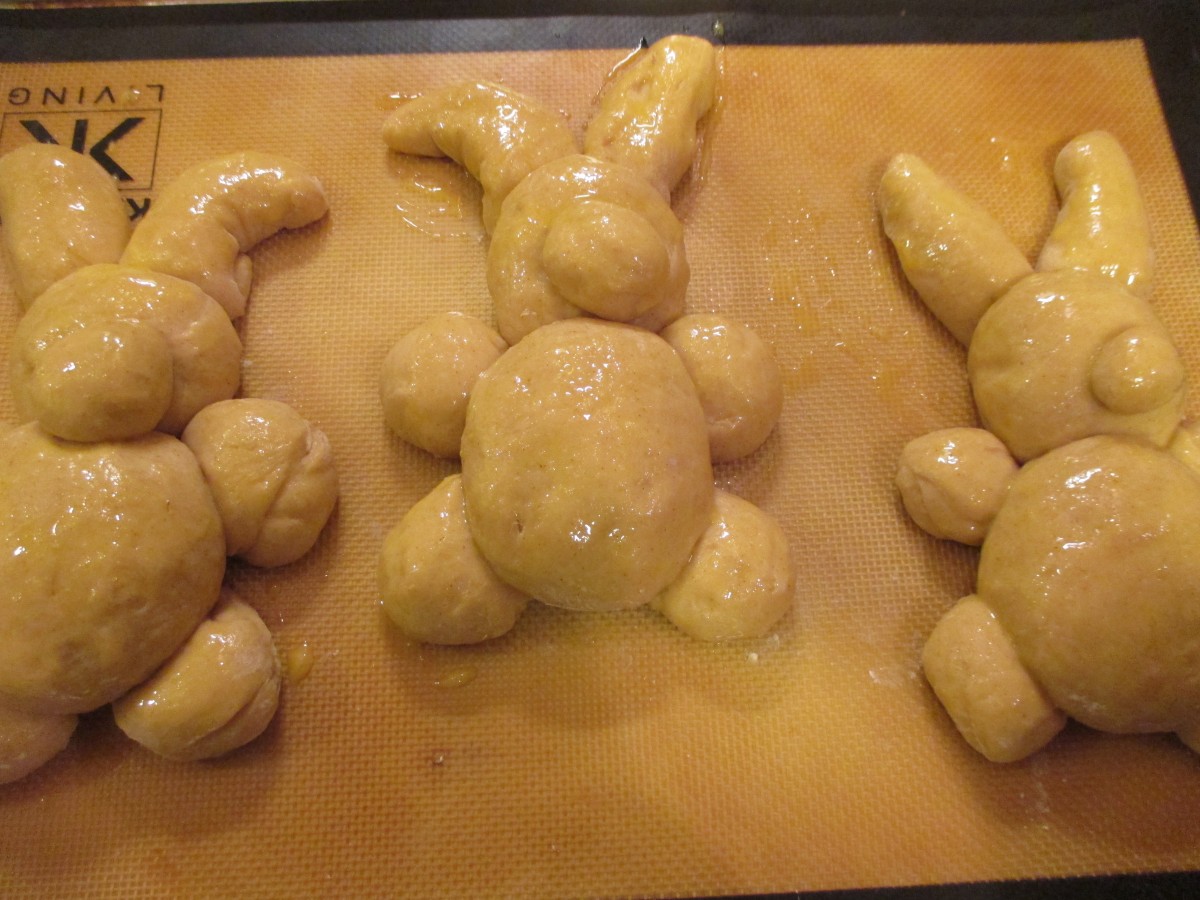
ready to bake

Asparagus Irene
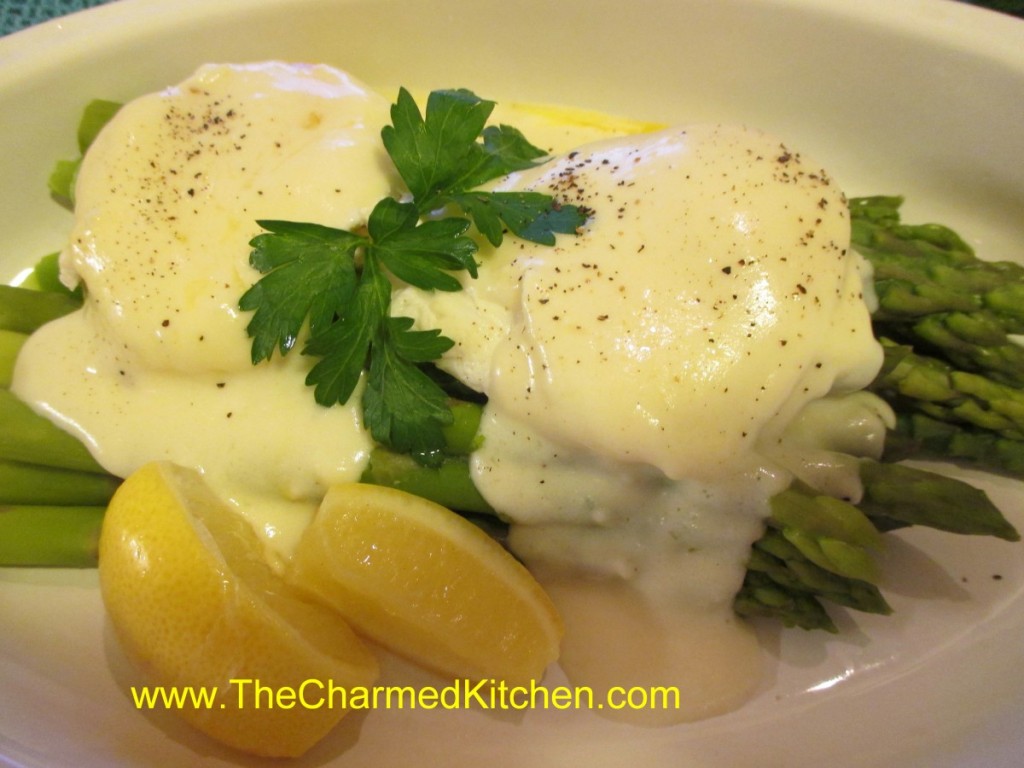
Asparagus will always be one of my favorite vegetables. I just love it. As I started writing out the recipe for this dish, I was thinking about my Mom and how much she loved asparagus. She always wanted the bigger asparagus spears- she said they had more flavor.
I remember her showing me how to break the bottom of the stalks off and how she would cook them until they were just done- but not mushy. She wouldn’t consider eating canned asparagus- only fresh- so the season was short. It was something to be savored while it lasted.
Most times she just placed the cooked asparagus on a plate, topped with a pat of butter and a sprinkle of salt. One time, though, she made a white sauce and poured it over the asparagus. It was bliss. For this version I used a white sauce, and topped the asparagus with 2 poached eggs, too. It is a lovely breakfast or brunch dish. Makes a great dinner, too. I named the dish after her.
Here is the recipe.
Asparagus Irene
1 lb. fresh asparagus, washed and stems trimmed
white sauce- recipe follows
fresh lemon, cut in wedges
2 eggs
vinegar- for the poaching water
salt and pepper to taste
Put the asparagus in a steamer and cook for about 5 minutes- or until almost done. Set aside. Make white sauce, but add some lemon juice to it. I just kept squeezing lemon wedges in until it tasted right to me. Set sauce aside. Boil some water in a shallow pan and add a tablespoon of vinegar to the water. Drop the two eggs in and simmer, covered until the whites are opaque and the yolks are still runny. While the eggs are cooking return the asparagus to the heat and cook until just tender. Place asparagus on a serving dish. Sprinkle with a little salt. Gently place the eggs on top of the asparagus. Spoon some of the white sauce over the eggs. You will have more sauce than you need. Save it for another use. Garnish with lemon wedges and parsley, if you like. Finish with some salt and fresh ground pepper. Serves 2.
Basic White Sauce (Bechamel)
The start of many a classic dish.
2 T. butter or oil
2 T. flour
1 1/4 c. warmed milk
salt and pepper to taste
In saucepan melt butter or heat oil and add flour, stirring until smooth. Slowly whisk in milk, stirring constantly until thickened and bubbly. Turn heat down and continue to cook, stirring constantly for a couple minutes longer. Season to taste. If you are going to store the sauce for later use place a layer of wax paper on top, store in a container with a lid or pour a little milk over the top to prevent a skin from forming. Makes about 1 c.
Lemon: Add zest of a lemon, 2 T. lemon juice and 2 T. butter just before serving.
Warm Shrimp and Soba Noodle Salad
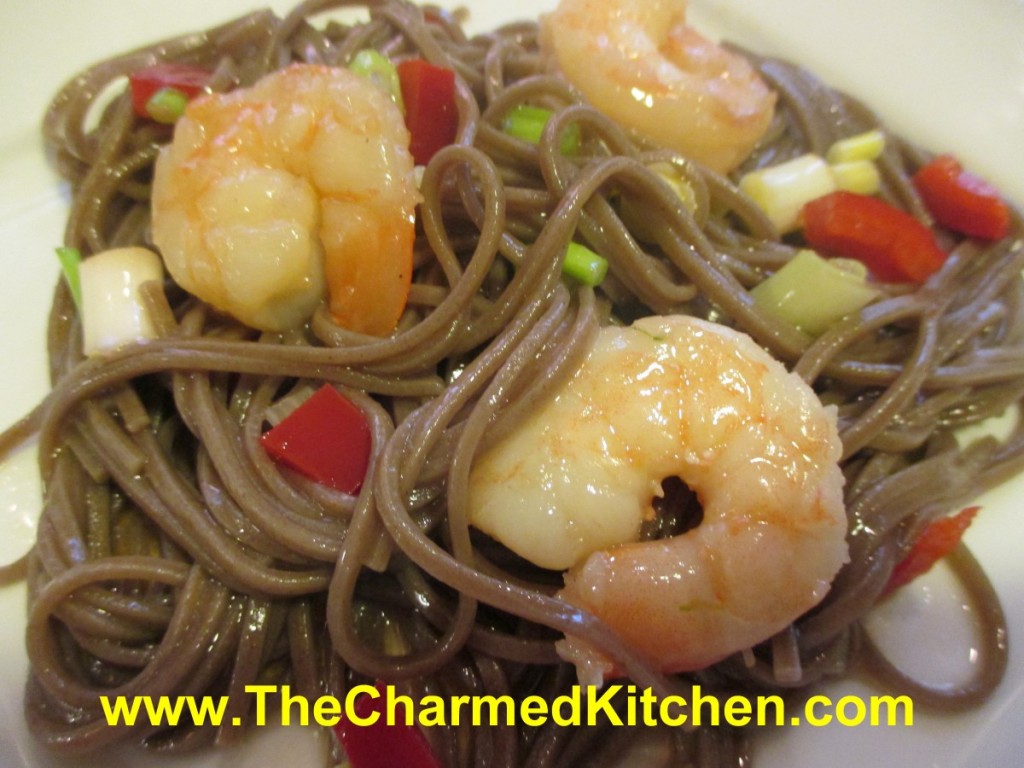
Whenever I make soba noodles, I wonder why I don’t eat them more often. I really love their flavor. Soba noodles are made from buckwheat flour. They have a wonderful, almost nutty flavor. I picked these up at a recent visit to the Asian market. You can find soba noodles in many grocery stores, too.
I have enjoyed soba noodles in cold salads, hot soups and stir fries. This time, I decided to use them in a salad that fell somewhere between hot and cold. It made a great meal for a rainy afternoon.
Warm Shrimp and Soba Noodle Salad
12 oz. soba (buckwheat) noodles
1 lb. raw shrimp, shelled and de-veined
2 T. oil
2 cloves minced garlic
½ c. chopped sweet peppers
½ c. chopped green onions
Dressing:
¼ c. oil
2 T. Rice wine vinegar
1 t. sesame oil
1 t. soy sauce, or more to taste
1 t. hot sauce, or more to taste
1 t. ginger
In pot of boiling, salted water, cook noodles according to package directions. They only take a few minutes. Be careful not to overcook them. Drain and set aside. Heat a skillet and add the oil. Add the shrimp and garlic and stir fry until shrimp are just cooked through. Time will vary based on the size of the shrimp you are cooking. Place soba noodles in a bowl. Add the cooked shrimp and veggies. Make dressing by placing all dressing ingredients in a jar with a tight fitting lid. Shake until mixed well. Pour dressing over the noodle mixture and toss to coat evenly. Serve while still warm. Serves 4-5.
Hazelnut Biscotti
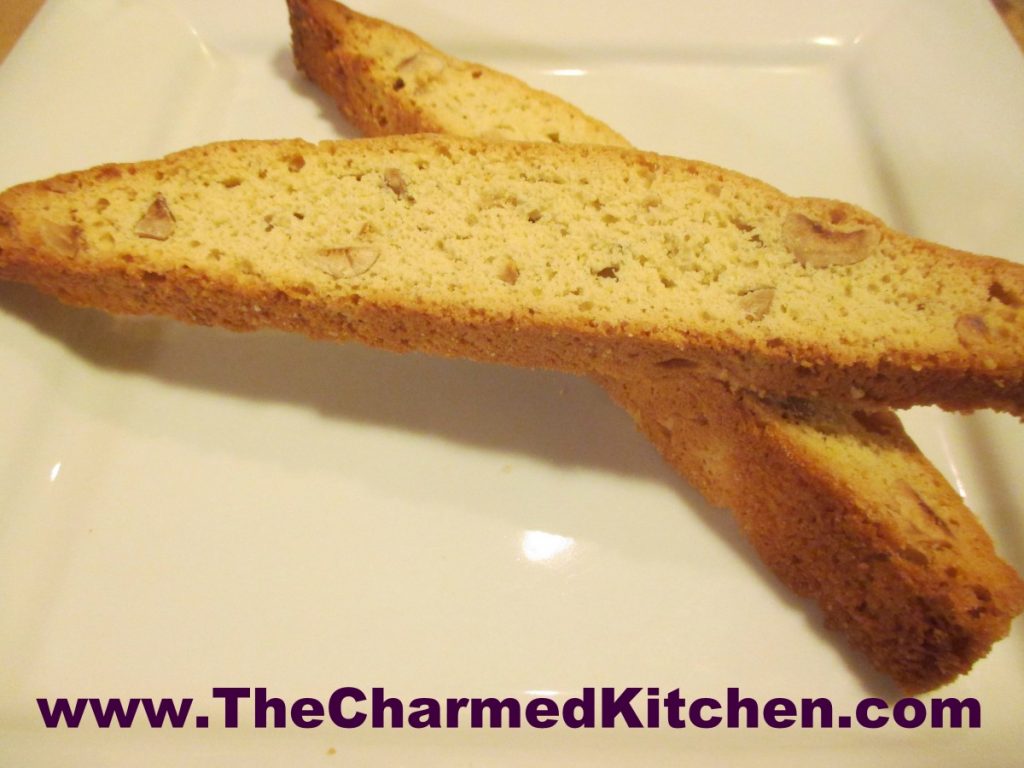
These biscotti are the perfect treat to have with your morning cup of coffee or tea. Crisp, but not too hard, they are studded with crunchy hazelnuts and flavored with vanilla and orange peel. I like them just the way they are, but you could dress them up with a drizzle of powdered sugar glaze. You can also dip one end of each biscotti in melted chocolate.
I was inspired to make these after buying hazelnuts recently.
I don’t know why more people don’t make their own biscotti. They are so easy to make, and you can flavor them to suit your own taste. Once baked, store them in an air tight container. They stay crisp for weeks. Assuming you don’t eat them first!
Biscotti get their distinctive, extra crunchy texture, from being baked not once, but twice. The batter is spread on a cookie sheet and baked until firm. Once cooled and little, the loaf is sliced and the slices are returned to the oven to get baked until crisp and toasted. I put the slices on a cooling rack, placed on the baking sheet, before the second bake. That way, the biscotti toast on both sides evenly. No need to turn them all over half-way through the second bake. My niece, Sarah, stands them up when doing her second bake to get more on the baking sheet. Great tip, Sarah.
So here is the recipe. I hope if you haven’t made biscotti before, you give them a try.
Hazelnut Biscotti
3 c. flour
2 t. baking powder
1/2 t. salt
3 eggs
1 c sugar
1/4 c. butter, melted
1/4 c. olive oil
1 1/2 t. vanilla
1 t. grated orange peel
1 c. hazelnuts, toasted, peeled and chopped*
Combine dry ingredients and set aside. Mix together eggs, sugar, butter, oil, vanilla and peel. Beat until smooth and stir in flour mixture and nuts. Grease a large baking sheet, oil your hands, and place dough on sheet, forming into a 16×4-inch log. Bake at 325-degrees until tester inserted in center comes out clean, about 30 minutes. Loaf with spread a bit. Cool 15 minutes and leave oven on. Use serrated knife to cut into 1/2 -inch thick slices. Place cooling rack on a baking sheet. Place slices, cut side down, on cooling rack and return to oven for 20-22 minutes. Cool. Makes about 24.
If you like, you can dip one end of the finished biscotti in melted chocolate.
- to toast hazelnuts, place on a baking sheet and bake in a 325 degree oven for about 10-15 minutes. You don’t want them to burn. While they are baking, place a tea towel on a rimmed baking sheet. When the nuts come out of the oven, dump them on the tea towel. They tend to roll around, so the rimmed baking sheets is to save you from cursing as nuts roll off the towel and onto the floor. Fold the nuts up in the towel and rub them to get the skins off. Most of the skins will come off, which is fine.
Hot Cross Buns

These rich rolls are a traditional at Easter. At least they are in my house. The dough is rich and slightly sweet. The frosting on top adds to their sweetness.
Hot cross buns can be served at breakfast, brunch or even as a dinner roll. I have served them with coffee, after dinner. So I guess they can be a dessert, too. If you have leftover hot cross buns, you can use them to make bread pudding. I do!
Because the dough is rich, they are slow to rise. If they aren’t jumping out of the pan after an hour or so, don’t worry. They do rise quite a lot in the oven.
After they cool a bit- pipe on the icing in the crisscross pattern that gives these rolls their name.
Hot Cross Buns
2/3 c. sugar
1 t. salt
2 packages active dry yeast
About 5 cups bread flour
1 ½ c. milk
½ c. butter
2 eggs
1 c. raisins
Icing
¾ c. powdered sugar
1 T. milk
In bowl combine sugar, salt, yeast and about 1 ½ c. flour. Heat together milk and butter until very warm. Beat milk mixture into to flour mixture and beat 2 minutes with electric mixer. Beat in 1 egg and 1 cup flour and beat 2 more minutes until batter thickens. Stir in raisins and enough additional flour to make a soft dough. Turn dough onto a floured surface and knead until smooth, about 10 minutes. Place dough in greased bowl, turning to grease top, cover with a towel and allow to rise in a draft free place until doubled in bulk, about 1 hour.
Place dough on floured surface and divide into 15 equal pieces. Cover with towel and lest rest 15 minutes. Meanwhile grease a 9×13 inch pan. Form dough into smooth balls and place in prepared pan. Cover and let rise until doubled, about an hour. Preheat oven to 350 degrees. Beat remaining egg. Cut a cross in each bun and brush with the egg. Bake for 25 minutes or until buns are golden. Remove buns to wire rack to cool 15 minutes. Make frosting, place in decorating bag and pipe onto buns. Makes 15.
Sunny Spring Salad
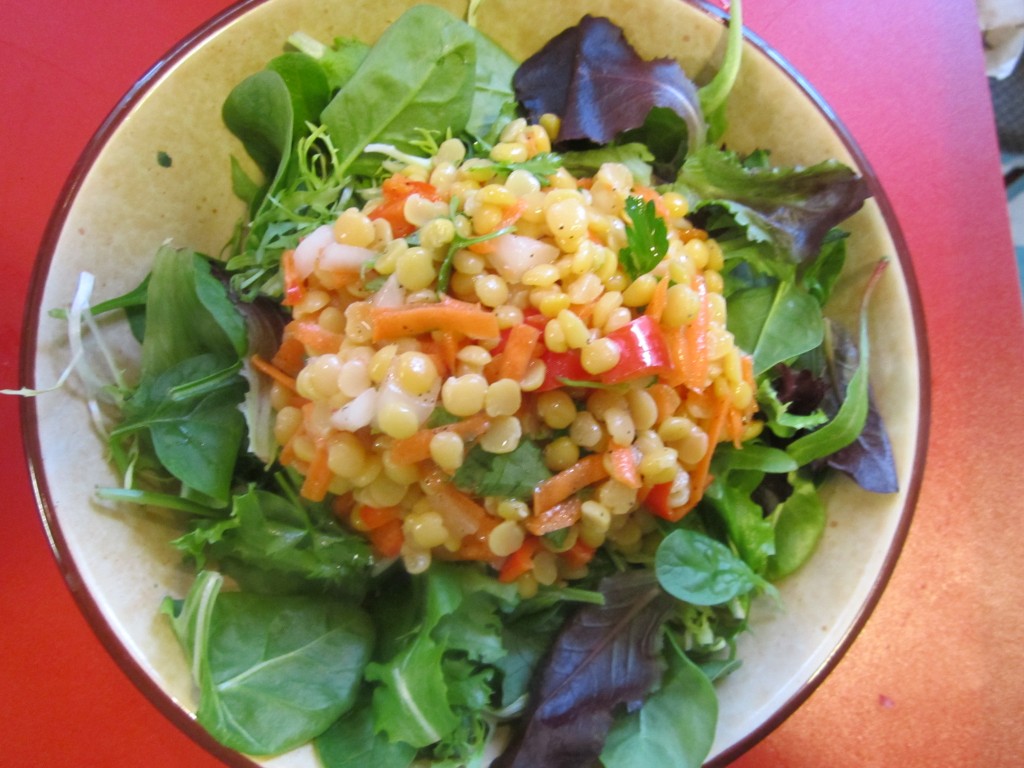
Today’s recipe is a tasty vegetarian salad that is as satisfying as it is pretty. The color is bright, just perfect for a rainy day. If it doesn’t feel like Spring outside, it can feel like Spring inside.
When I say split peas, what comes to mind? Split pea soup? GREEN split pea soup? Years ago my dear friend, Dale Gallis, turned me on to yellow split peas. I started making soup from them, but also use them in salads.
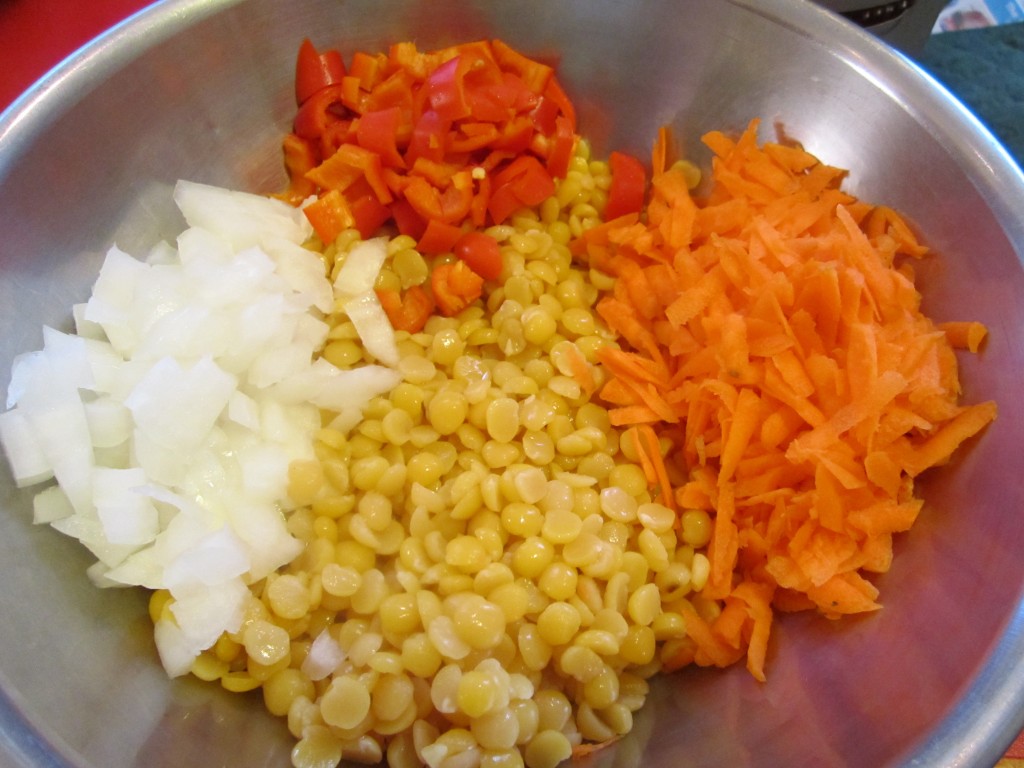
The yellow split peas are combined with carrots, sweet onion, sweet peppers and fresh herbs, then tossed with a simple combination of apple cider vinegar and olive oil. You can serve it right away, or let the flavors blend in the fridge for a bit. I served my salad over a mix of Spring greens.
Yellow (or green) split peas cook to al dente in about 20 minutes, so they are a quick option, too. Much shorter cooking times than other legumes.
Sunny Spring Salad
1- 1 1/2 c. raw yellow split peas – yellow lentils would also work
salt
1 carrot, peeled and shredded
1/2 c. chopped sweet onion
1/2 c. chopped sweet pepper
1/2 c. chopped parsley
1/2 c. snipped chives
1/4 c. olive oil
1/4 c. cider vinegar
salt and pepper to taste
6 c. mixed Spring greens
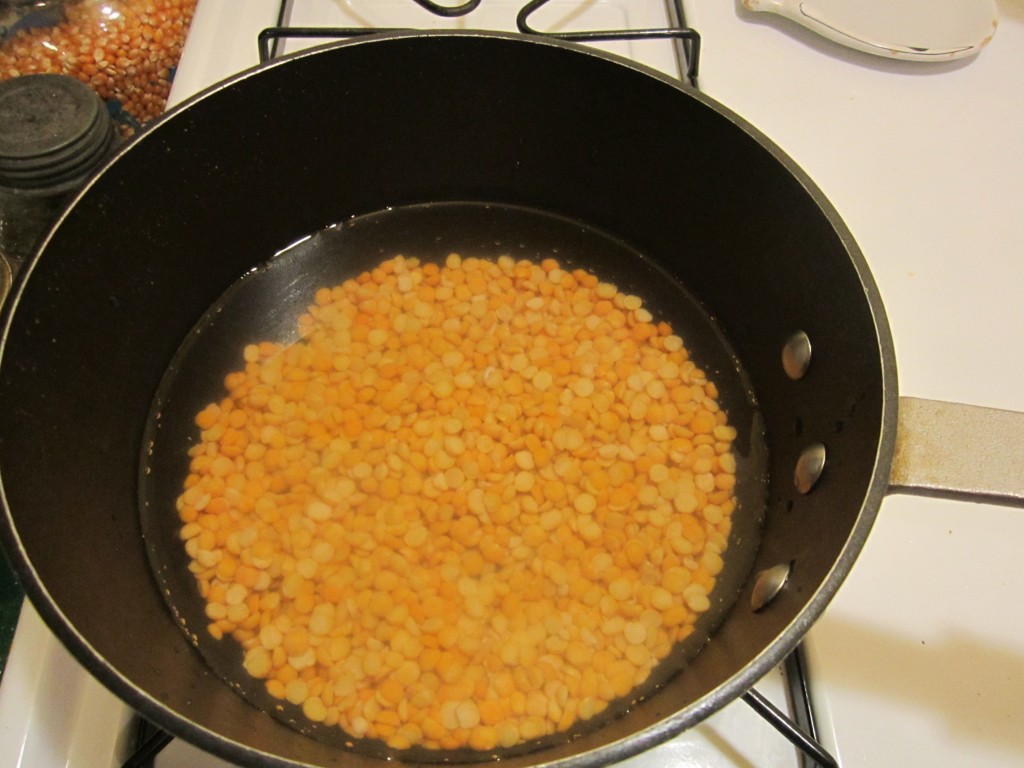
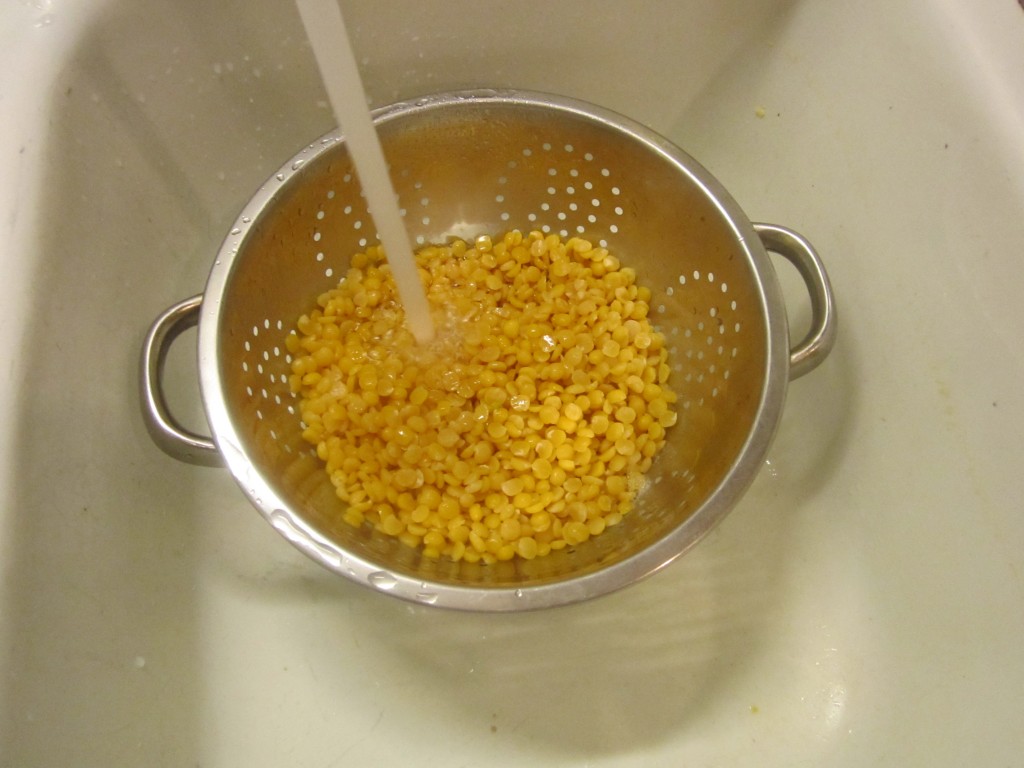
Rinse peas and place in a saucepan. Cover with water and add a little salt. Bring to a boil and simmer until peas are tender, about 20 minutes. Drain and rinse under cold water. Combine peas with carrots, peppers and onion and toss well. Add parsley, chives, oil, vinegar and salt and pepper to taste. Chill until ready to use. Serve on greens. Serves 3-4.