Hot Cross Buns


Hot Cross Buns
These rolls are a nice addition to your Easter breakfast or dinner. They are easy to make and taste better then anything you are likely to find at the store. I could tell you that you can also freeze leftovers, but who are we kidding? There aren’t going to be any leftovers.
Hot Cross Buns
2/3 c. sugar
1 t. salt
2 packages active dry yeast
About 5 cups bread flour
1 ½ c. milk
½ c. butter
2 eggs
1 c. raisins
Icing
¾ c. powdered sugar
1 T. milk
In bowl combine sugar, salt, yeast and about 1 ½ c. flour. Heat together milk and butter until very warm. Beat milk mixture into to flour mixture and beat 2 minutes with electric mixer. Beat in 1 egg and 1 cup flour and beat 2 more minutes until batter thickens. Stir in raisins and enough additional flour to make a soft dough. Turn dough onto a floured surface and knead until smooth, about 10 minutes. Place dough in greased bowl, turning to grease top, cover with a towel and allow to rise in a draft free place until doubled in bulk, about 1 hour.
Place dough on floured surface and divide into 15 equal pieces. Cover with towel and lest rest 15 minutes. Meanwhile grease a 9×13 inch pan. Form dough into smooth balls and place in prepared pan. Cover and let rise until doubled, about an hour. Preheat oven to 350 degrees. Beat remaining egg. Cut a cross in each bun and brush with the egg. Bake for 25 minutes or until buns are golden. Remove buns to wire rack to cool 15 minutes. Make frosting, place in decorating bag and pipe onto buns. Makes 15.
History of Pressure Canners/Cookers

 Did you ever wonder when people started pressure cooking/canning? The answer might surprise you. The first known pressure cooker was invented by Denis Papin, French physicist and mathematician (1647-1712). In 1679 he made a large cast iron vessel with a tightly fitted lid that locked. His invention raised the boiling point of water and at this higher temperature, bones softened and meat cooked in quick time. It was promoted as a “digester” because it cooked food so quickly. Sadly, it was difficult to control the pressure and explosions were common. Eventually he added a valve to release extra pressure.
Canning the food in jars came somewhat later. In 1795, Napoleon Bonaparte offered a reward for whomever could develop a safe, reliable food preservation method for his constantly traveling army. Nicholas Appert took on the challenge, and about 15 years later introduced a method that involved heat-processing food in glass jars reinforced with wire and sealing them with wax.
The next breakthrough was the first true “canning” (as opposed to “bottling” or “jarring”) method. By 1810, Englishman Peter Durand had introduced a method for sealing food in “unbreakable” tin cans. The can opener was not invented until 48 years later. Before that cans were opened with hammer and chisels. The first commercial canning establishment in the U.S. was started in 1912 by Thomas Kensett.
It wasn’t until much later that Louis Pasteur was able to demonstrate how the growth of microorganisms causes food to spoil. Prior to that, people knew that canning methods worked, but not why.
At the time of the U.S. Civil War glass food preservation jars with metal clamps and replaceable rubber rings had been invented. These jars are still available today, although they are no longer recommended for canning are are used for storing dry goods and for decorative purposes.
In 1858, John Mason invented a glass jar with a screw-on thread molded into its top, and a lid with a rubber seal. Most canning jars are still referred to as Mason jars.
Meanwhile in the late 1800’s, William Charles Ball and his brothers got into the food preservation jar business and began buying up smaller companies. They quickly became leaders in the industry. Ball jars are today one of the most widely used jars for canning.
Alexander Kerr invented the easy-to-fill widemouth canning jar in 1903 (an innovation that the Ball brothers quickly duplicated). Later, in 1915, Kerr developed the idea of a metal lid with a permanently attached gasket that a man named Julius Landsberger had invented. Kerr came up with a metal disk with a similar gasket, held in place by a threaded metal ring. The modern 2-piece canning lid was born.
We’ve come a long way since the early days of pressure cooking and canning. I think of other more recent cooking methods like sous vide and some of the techniques of molecular gastronomy and wonder which of these will stand the test of time.
Easter Egg Biscotti


Easter Egg Biscotti
I get so many requests for this recipe I decided to post it again. I got this recipe from Rose Dieglio. Rose was the mother of my best friend when I was a kid. I looked forward to them every Easter. I always make a bunch to hand out to friends and family. It is a tradition I enjoy very much.
Easter Egg Biscotti
1 c. shortening or butter- I use butter
1 ½ c. sugar
4 eggs
5 t. baking powder
1 t. salt
2 t. vanilla
1 c. milk
6 c. flour
Hard cooked eggs, plain or dyed
Powdered sugar glaze
Preheat oven to 350 degrees. Cream together butter or shortening and sugar. Beat in eggs. Add next 4 ingredients and blend until smooth. Stir in flour 2 cups at a time. Dough should be pliable. If dough is too sticky add a little more flour. Take a piece of dough about the size of a large egg and place on a greased baking sheet. Indent middle slightly and then place an egg in the center, pressing down slightly. It should look like a nest. Continue with remaining dough allowing about 2-3 inches in between as they grow. You can fit 6-8 on a large baking sheet. Bake 20 –25 minutes or until browned on the bottom. Cool on wire rack before drizzling with frosting. Makes 24-30.
Sugar glaze
2 c. powdered sugar
2-3 T. milk or orange juice
1 t. vanilla
Food coloring, if desired
Mix together until smooth and of drizzling consistency.
Basque Soup


Basque Soup
We made this soup in class last night. This is a vegetarian soup that should satisfy most carnivores. It is made with butter beans, tomatoes, corn and onions. Add vegetable broth and some milk and you have a rich and filling bowl of soup in no time at all. You can also make this soup vegan- we did in class last night- by using almond milk in place of the dairy milk.
Basque Soup
1 c. chopped onions
1 1/2 c. chopped celery
1/4 c. oil
1/4 c. flour
3 c. milk*
1 (14 oz.) can diced tomatoes, undrained
1 can whole kernel corn, undrained
3-4 cans butter beans, drained and rinsed
3-4 cups water and 1T. paste-type vegetable soup base
or 3-4 cups vegetable broth
pepper to taste
hot pepper sauce to taste
shredded mild cheese, optional
Sauté onions and celery in oil until tender. Stir in flour until smooth and add milk, stirring to keep lumps from forming. Stir over medium heat until milk has thickened and begins to boil. Stir constantly as mixture simmers for an additional minute or two. Add remaining ingredients, except cheese and bring up to a simmer. Adjust seasonings. Ladle into bowls and top with cheese, if desired. Serves 8-10.
Note: You can use almond, rice or soy milk in place of the dairy milk, if you like.
Sour Cream Lemon Cupcakes

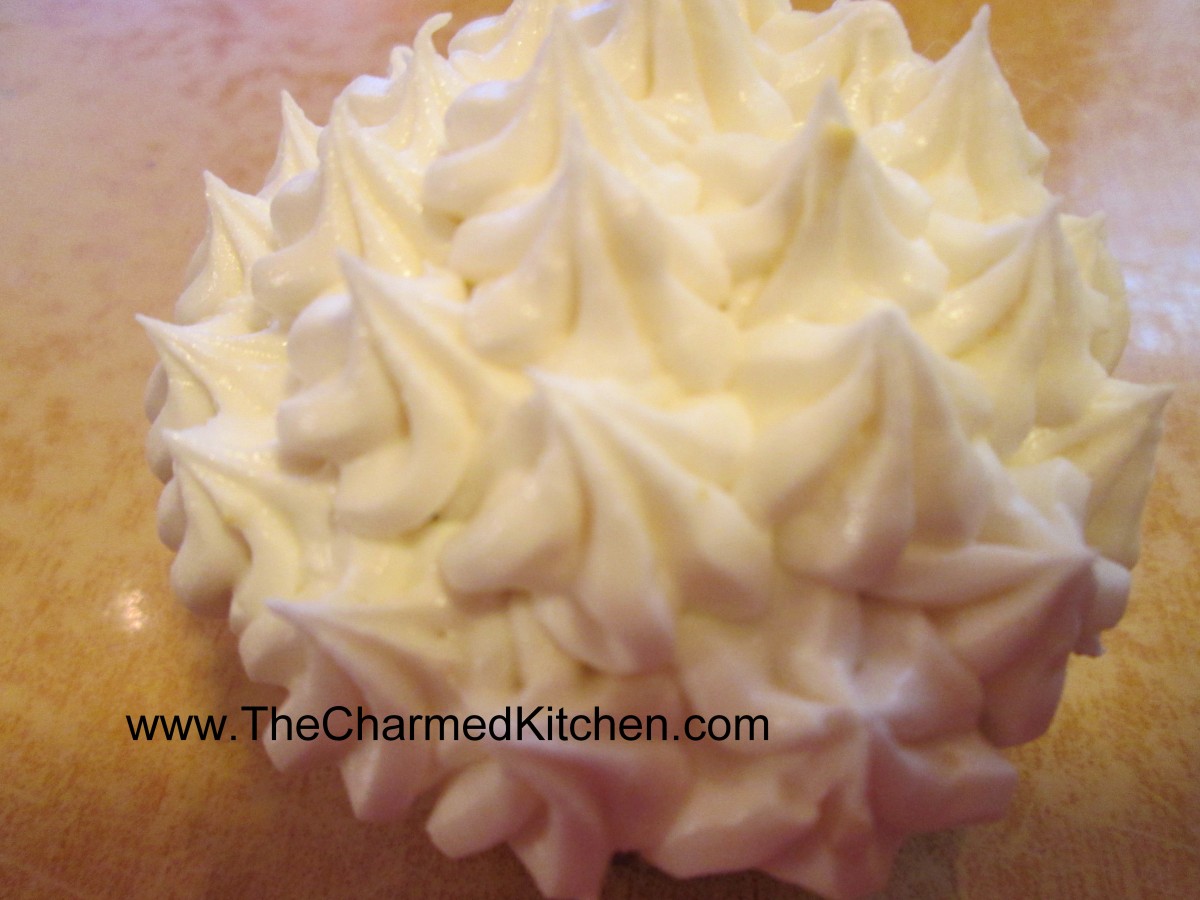
Sour Cream Lemon Cupcake
There really isn’t a cupcake I don’t like but I have to say that these are one of my favorites. They are rich and moist with a lovely lemon flavor. Perfect for any occasion they are sure to be a hit when you make them.
Sour Cream Lemon Cupcakes
1 cup butter, softened
2 cups sugar
3 eggs
2 teaspoons grated lemon peel
1 teaspoon vanilla extract
3½ cups all-purpose flour
1 teaspoon baking soda
½ teaspoon each baking powder and salt
2 cups sour cream
Frosting:
9 tablespoons butter, softened
6 ¾ cups confectioners’ sugar
6 tablespoons lemon juice
1T. vanilla extract
¾ teaspoon grated lemon peel
3 tablespoon milk
In a mixing bowl, cream butter and sugar. Beat in eggs, one at a time. Add lemon peel and vanilla; mix well. Combine dry ingredients; add to creamed mixture alternately with sour cream (batter will be thick). Fill 30 greased or paper-lined muffin cups with 1/4 cup of batter. Bake at 350 degrees for 25-30 minutes or until a toothpick inserted near the center comes out clean. Cool for 10 minutes; remove to wire racks to cool completely. For frosting, cream butter and sugar in a small mixing bowl. Add lemon juice, vanilla, lemon peel and milk; beat until smooth. Frost cupcakes. Makes 30.
Black Forest Cupcakes


Black Forest Cupcake
We made these in class the other night. It’s really a simple cupcake but it looks downright elegant. You start with a chocolate cupcake, but only fill the cups half full. That way the baked cupcake just comes up to the top of the paper liner. Pipe sweetened whipped cream around the edges- or you could used frozen whipped topping and add cherry pie filling in the middle. Keep in the fridge until ready to serve.
Black Forest Cupcakes
1 (18.5 ounce) package chocolate cake mix, I like Duncan Hines
2 containers whipped topping, thawed, or 2 c. whipping cream
1 (21 ounce) can cherry pie filling
Preheat oven according to box directions for cupcakes. Line 36 cupcake pans with cupcake liners. Mix cake according to package directions. Fill cupcake liners slightly less than half full. (You want the cupcake to bake up close to level with the top of the liner. Bake according to package directions. Cool completely.
After cupcakes are cooled completely, frost with a level layer of whipped topping. Spoon remaining topping into pastry bag fitted with a star decorating tip. Pipe around the edges of the cupcakes. Spoon a small amount of cherry pie filling in the center of each. Refrigerate and enjoy! Makes 36.
Note: you can use real whipping cream, if you prefer, slightly sweetened or use the whipped cream in the aerosol cans-very easy that way.
Coconut Orange Cupcakes


Coconut Orange Cupcake
A cupcake without frosting? Well, if it is this Coconut Orange Cupcake you will never miss it. The cupcake batter is made with orange juice and enriched with vanilla chips and mandarin oranges. Before baking a slightly sweet coconut and butter mixture is sprinkled on the top. The end result is a cupcake with a toasted coconut topping and enough flavor and moisture to carry the day without frosting. They are also very simple to make. You can have the batter mixed and ready in the time it takes to preheat the oven.
Coconut Orange Cupcakes
1 cup sugar
2/3 cup vegetable oil
2 eggs
1 cup orange juice
3 cups all-purpose flour
1 tablespoon baking powder
1 teaspoon baking soda
3/4 teaspoon salt
1 (11 ounce) can mandarin oranges, drained-you can also use 1 cup diced fresh oranges
1 cup vanilla or white baking chips
TOPPING:
1 cup flaked coconut
1/3 cup sugar
2 tablespoons butter, melted
In a mixing bowl, combine the sugar, oil, eggs and orange juice; mix well. Combine dry ingredients; stir into orange juice mixture just until moistened. Fold in oranges and chips. Fill 24 greased or paper-lined muffin cups two-thirds full. Combine topping ingredients; sprinkle over cupcakes. Bake at 375 degrees for 15-20 minutes or until golden brown. Makes 24.
Strawberry Cupcakes


Strawberry Cupcake
We had a lot of fun in the cupcake class in Concord last night . I thought I’d share a couple of the recipes with you. Here is the strawberry cupcake with strawberry butter cream frosting. Perfect for any party. A very special cupcake with the addition of color and flavor from the berries.
Strawberry Cupcakes
2/3 cup whole fresh or frozen strawberries, thawed
1 1/2 cups all-purpose flour, sifted
1 teaspoon baking powder
1/4 teaspoon coarse salt
1/4 cup whole milk, room temperature
1 teaspoon pure vanilla extract
1/2 cup (1 stick) unsalted butter, room temperature
1 cup sugar
1 large egg, room temperature
2 large egg whites, room temperature
Preheat oven to 350 degrees. Line a 12-cup muffin tin with cupcake liners; set aside. Place strawberries in a small food processor; process until pureed. You should have about 1/3 cup of puree, add a few more strawberries if necessary or save any extra puree for frosting; set aside. In a medium bowl, whisk together flour, baking powder, and salt; set aside. In a small bowl, mix together milk, vanilla, and strawberry puree; set aside. In the bowl of an electric mixer fitted with the paddle attachment, cream butter on medium-high speed, until light and fluffy. Gradually add sugar and continue to beat until well combined and fluffy. Reduce the mixer speed to medium and slowly add egg and egg whites until just blended.
With the mixer on low, slowly add half the flour mixture; mix until just blended. Add the milk mixture; mix until just blended. Slowly add remaining flour mixture, scraping down sides of the bowl with a spatula, as necessary, until just blended.
Divide batter evenly among prepared muffin cups. Transfer muffin tin to oven and bake until tops are just dry to the touch, 22 to 25 minutes. Transfer muffin tin to a wire rack and let cupcakes cool completely in tin before icing. Makes 12.
Strawberry Frosting
1/2 cup whole frozen strawberries, thawed
1 cup (2 sticks) unsalted butter, firm and slightly cold
Pinch of coarse salt
3 1/2 cups confectioners’ sugar, sifted
1/2 teaspoon pure vanilla extract
Place strawberries in the bowl of a small food processor; process until pureed. In the bowl of an electric mixer fitted with the paddle attachment, beat together butter and salt on medium speed until light and fluffy. Reduce mixer speed and slowly add confectioners’ sugar; beat until well combined. Add vanilla and 3 tablespoons strawberry puree (save any remaining strawberry puree for another use); mix until just blended. Do not over-mix or frosting will incorporate too much air. Frosting consistency should be dense and creamy, like ice cream. Makes enough for 1 dozen cupcakes.
Alfajores


Alfajores
If you are looking for a new cookie you might want to try these. Made with cornstarch as a primary ingredient they are very crispy and light. Sandwiched together with dulce de leche they make a wonderful dessert. These cookies are popular in a number of South American countries and in Spain although the origin is probably from the Middle East.
Alfajores
1/2 cup butter
1 cup sugar
1 egg
2 egg yolks
1 tsp. vanilla
2 tsp. lemon rind, grated
1 1/2 cup cornstarch
1/2 cup flour
1 tsp. baking powder
1/4 tsp. salt
Cream butter; add sugar and beat until fluffy. Add egg and egg yolks, one at a time, beating well. Beat in vanilla and lemon rind. Sift together cornstarch, flour, baking powder and salt. Add to mixture and mix well. Drop batter by small spoonfuls onto well-buttered baking sheet. Bake at 350 degrees for 15 minutes. Remove immediately. Sandwich the cookies together with (dulce de leche) sweet milk dessert. Makes 40 cookies.
Dulce de Leche (Milk Jam)
This is the easiest way to make Dulce de Leche…the taste is pretty authentic and the work is almost completely eliminated!
1 can sweetened condensed milk
Place the can inside the pot on top of a wire rack. I use a round rack used for cooling cakes. If you don’t have a rack place a towel on the bottom of the pot. Add water to completely cover can, plus 1-2 more inches. Simmer for 4 hours, making sure the can is always completely covered with water…if not…there is an explosion!! Leave the can to cool several hours and only then open it and serve. Serve the golden-brown confection over flan, as a filling for crepes, cakes or just plain. For breakfast you can spread it on croissants, rolls or toast.
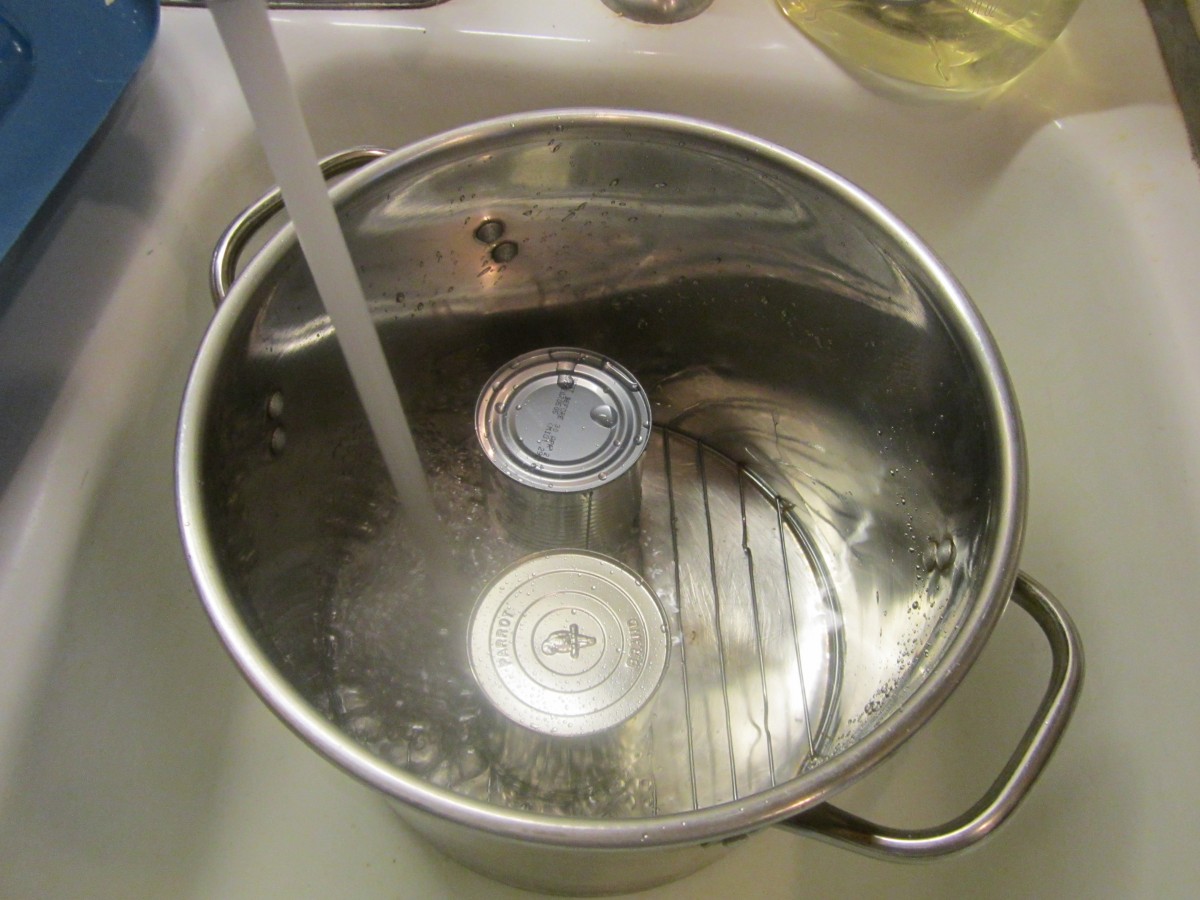
Cover cans of sweetened condensed milk with water
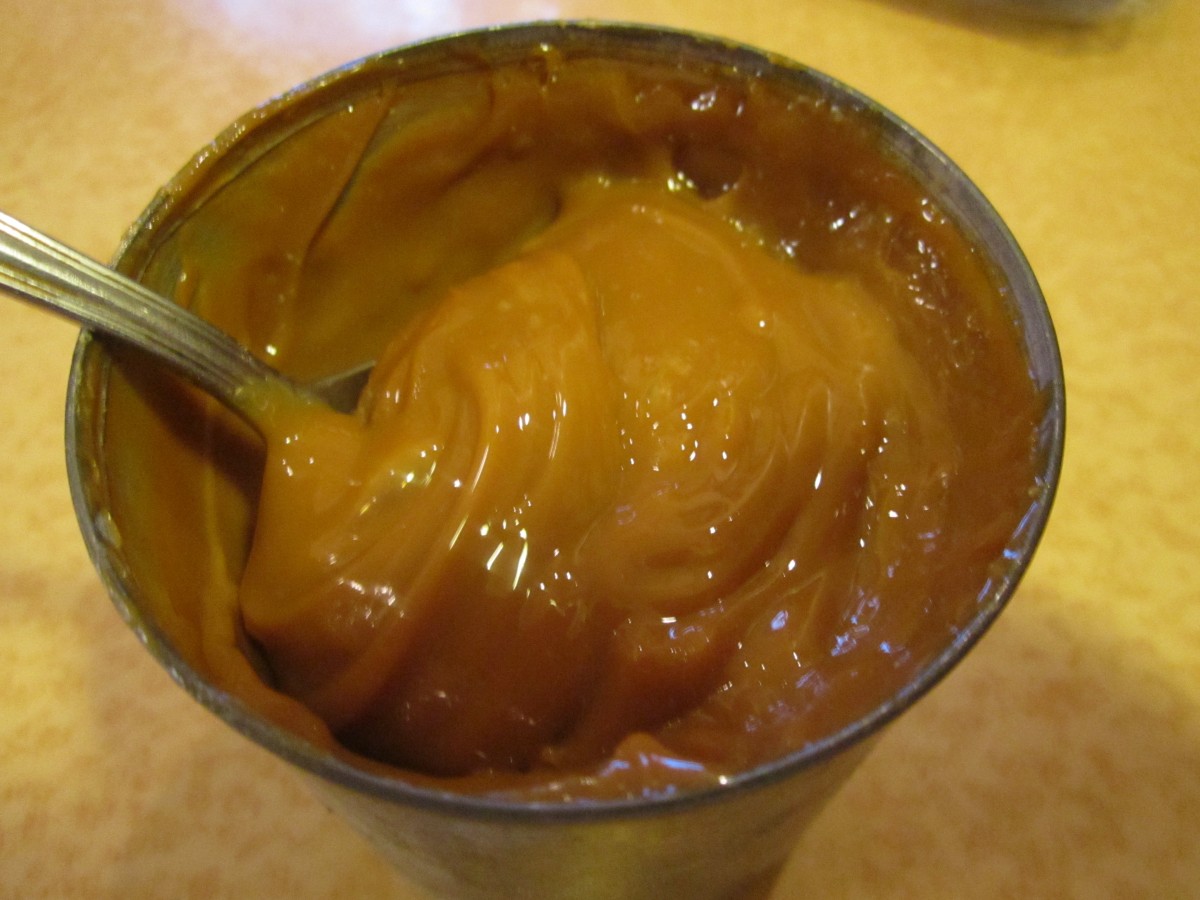
Dulce De Leche- this is what it looks like when you open the can
Orange Glazed Pork Roast

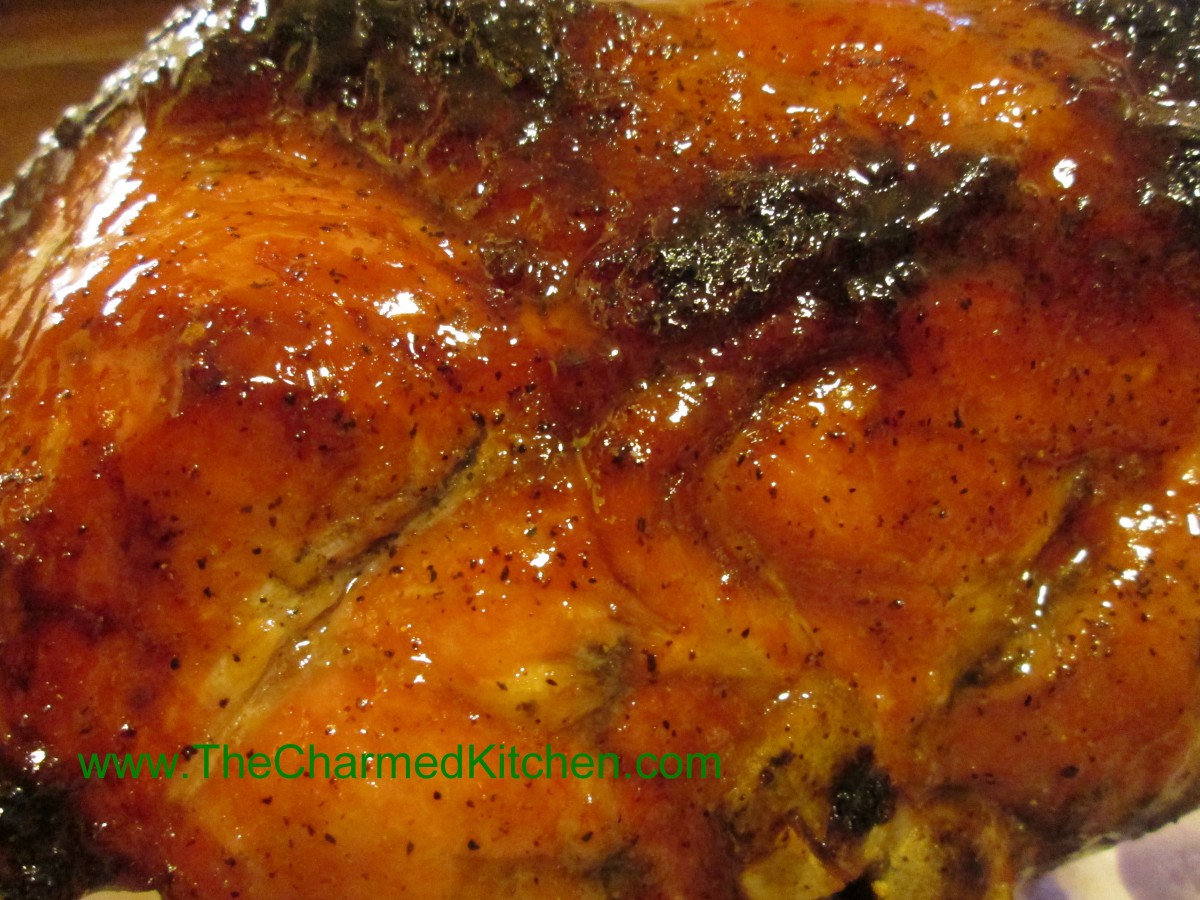
Orange Glazed Pork Roast
We made this is class last night. It’s a wonderful and easy way to make your next pork roast special. The secret is a pretty simple glaze of orange juice, brown sugar and spices. The result is a roast with a slightly sweet flavor and lovely aroma. While the recipe calls for a pork loin I used a sirloin pork roast and it was really good.
Orange Glazed Roasted Pork Loin
4½ to 5 lb. loin of pork (10 chops)
2 teaspoons salt
freshly ground pepper
1-cup orange juice
1/2 cup light brown sugar
1 tablespoon ginger
1/4 teaspoon cloves
Preheat oven to 325 degrees. Place pork, fat side up, in a roasting pan. Insert thermometer; do not let it touch bone. Rub in the salt and pepper Roast for 35 minutes to the pound, or until it reaches 145 degrees. In a small saucepan, mix the orange juice, sugar, ginger & cloves. Simmer for 30 minutes. Brush this glaze at least twice over the pork while it is roasting.