Puttin’ on the Spritz

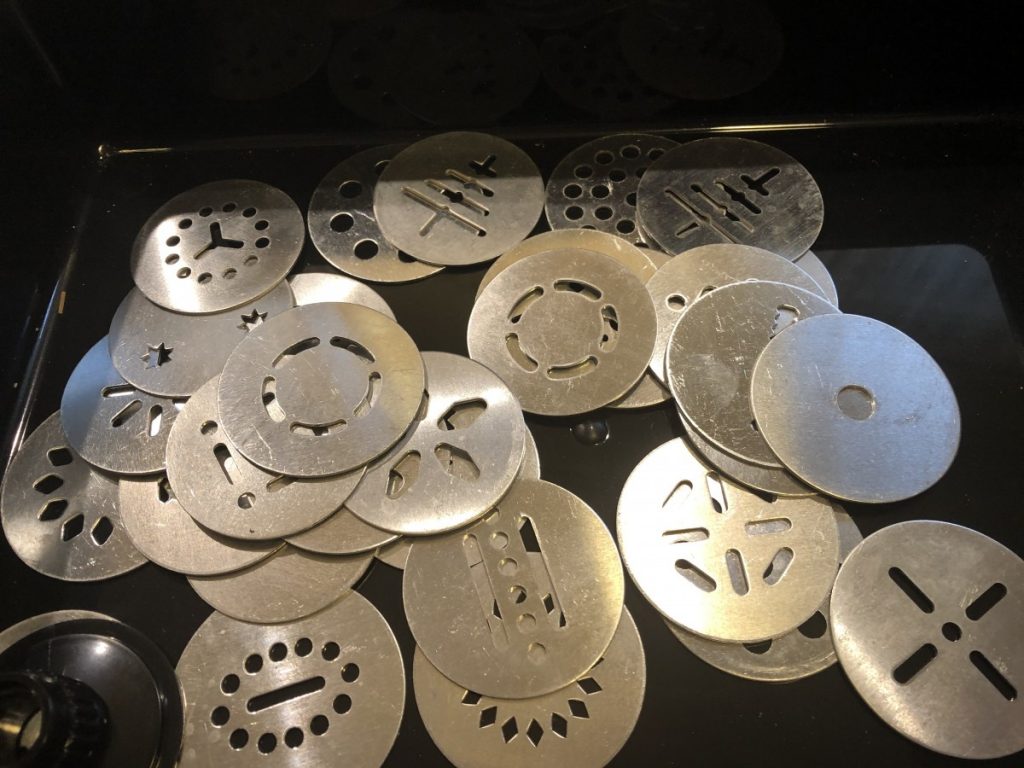
Spritz cookies are so fun to make. Delicate, tender and buttery, they are also so pretty. The dough is squeezed through a cookie press with different discs to produce a wide variety of shapes.
I have been making a lot of different variations of Spritz cookies in the last few days. I’ve also received a few messages from people who have issues with using their cookie presses.
Hope I can answer a few questions and make your Spritz cookies easier to create. The big problem is getting the dough to stick to the cookie sheet. There is a balance you need to get where there is enough friction to get the dough to stick, but not too much, so the cookies will release after baking.
I use silicone liners on my cookie sheets. Parchment paper works well. You can also squeeze the dough onto ungreased baking sheets. Hold the cookie press firmly down on the baking sheet. Click the ratchet once or twice and lift up. The dough, hopefully, will be on the sheet. Sometimes I can click 10 or 15 cookies with no problem, then get one that sticks. Just remove the excess dough from the end of the cookie press and start over. Little gaps or air pockets in the dough can cause that to happen.
The dough has to be soft enough to go through the press. Make the dough with room temperature butter and don’t chill the dough after mixing it. A good spritz dough should be soft, but easy to shape into a roll shape and put in the cookie press. It should not be dry or crumbly.
Within certain parameters, dough for Spritz cookies are all pretty similar. At least in that the texture is all pretty much the same. My classic recipe uses egg yolks. Some of the recipes I tried used whole eggs instead. Both variations produced tender, tasty cookies. Some have a little more or less sugar. Sweetness level is a personal preference.
You can vary them by adding different flavorings or extracts. You can’t add ingredients like nuts or chips because the dough would not go through the press. You can also tint the dough to produce colorful cookies.
So here are some of the Spritz cookies I have been making. Enjoy.
Classic Spritz Cookies
1 c. butter
1 c. sugar
3 egg yolks
2 t. vanilla
½ t. salt
2½ c. flour
In mixing bowl, beat together butter and sugar until fluffy. Beat in egg yolks. Stir in vanilla and salt. Tint dough, is desired. Add flour and stir until smooth. Using a cookie press with desired shape press cookies on to ungreased baking sheet. Leave about 1-inch between cookies. Bake in a preheated 375-degree oven for about 8-10 minutes- cookies should be a light golden color around the edges. Cool on a wire rack. Makes about 4-5 dozen.
Vanilla Spritz
1 c. butter, room temp
¾ c. sugar
1 egg
1 t. vanilla
1 t. almond extract
2¼ c. flour
½ t. salt
Mix butter and sugar until well mixed. Beat in egg and extracts. Stir flour and salt together in a medium bowl, then add to butter mixture. Mix well. Don’t chill dough. Place dough in cookie press and press dough onto parchment or silicone lined baking sheets. Bake in a preheated 350-degree oven for 8-10 minutes. Cookies should be lightly toasted on the edges. Cool on the baking sheet for a few minutes. Makes 6-7 dozen tiny cookies.
Chocolate Spritz
Make the Vanilla Spritz or Classic Spritz dough, but add 2 oz. of unsweetened chocolate (baking chocolate) melted, when you combine the butter and sugar.

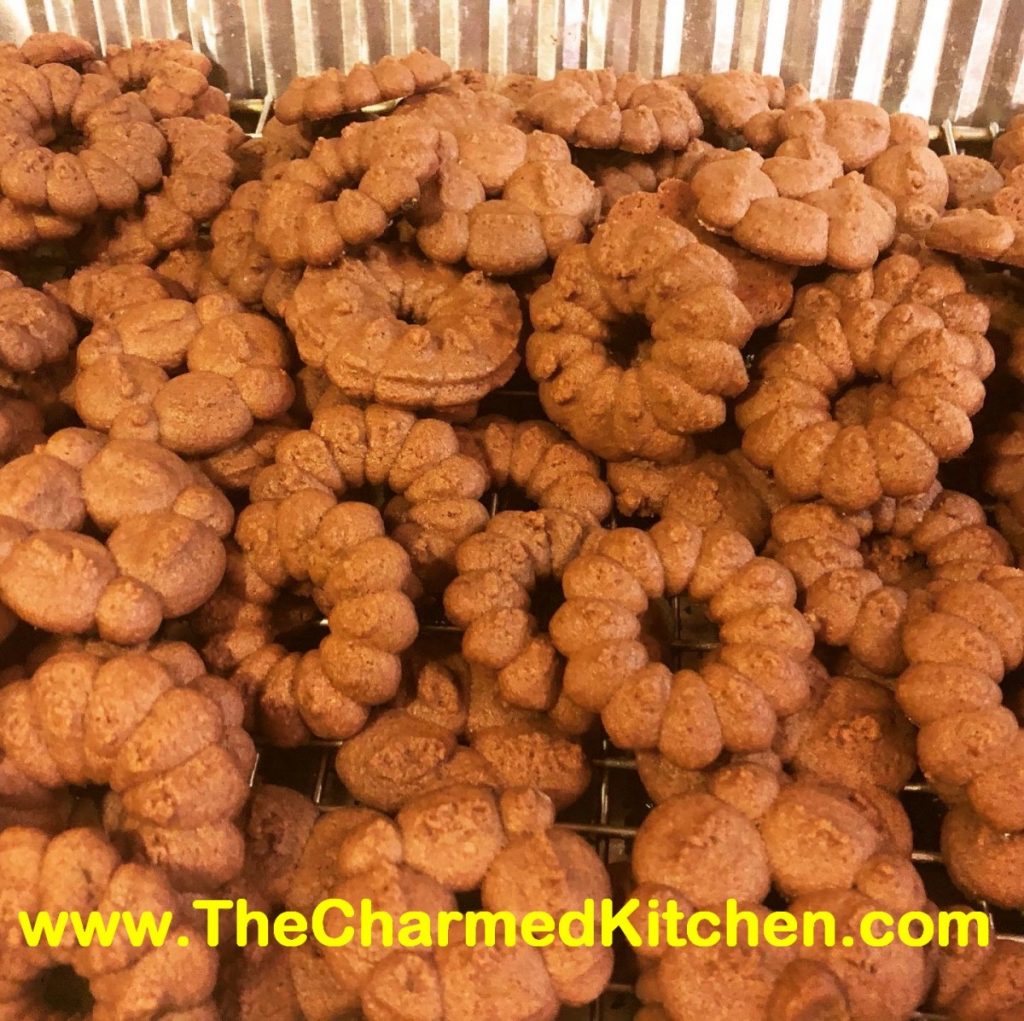
Viennese Shortbread with Coffee/Cinnamon Filling
1 c. butter
½ c. powdered sugar
½ t. vanilla
2 c. flour
¼ t. baking powder
Heat oven to 375-degrees. Cream together butter, sugar and vanilla. Blend in flour and baking powder. Using flower design of cookie press to make 1- inch cookies on ungreased baking sheet. Bake about 7 minutes, or until very lightly browned. Cool and then put two cookies together with coffee filling.
Note: You can make these cookies in almost any cookie press design that is symmetrical. I have made strips, trees and stars among others. Makes about 2 dozen double cookies.
Coffee/Cinnamon Filling
2/3 c. powdered sugar
2 T. butter, softened
1 t. instant coffee dissolved in 1 t. boiling water
1 t. cinnamon
Beat all ingredients together until smooth. Add a few drops of water if too dry.
Russian Teacakes
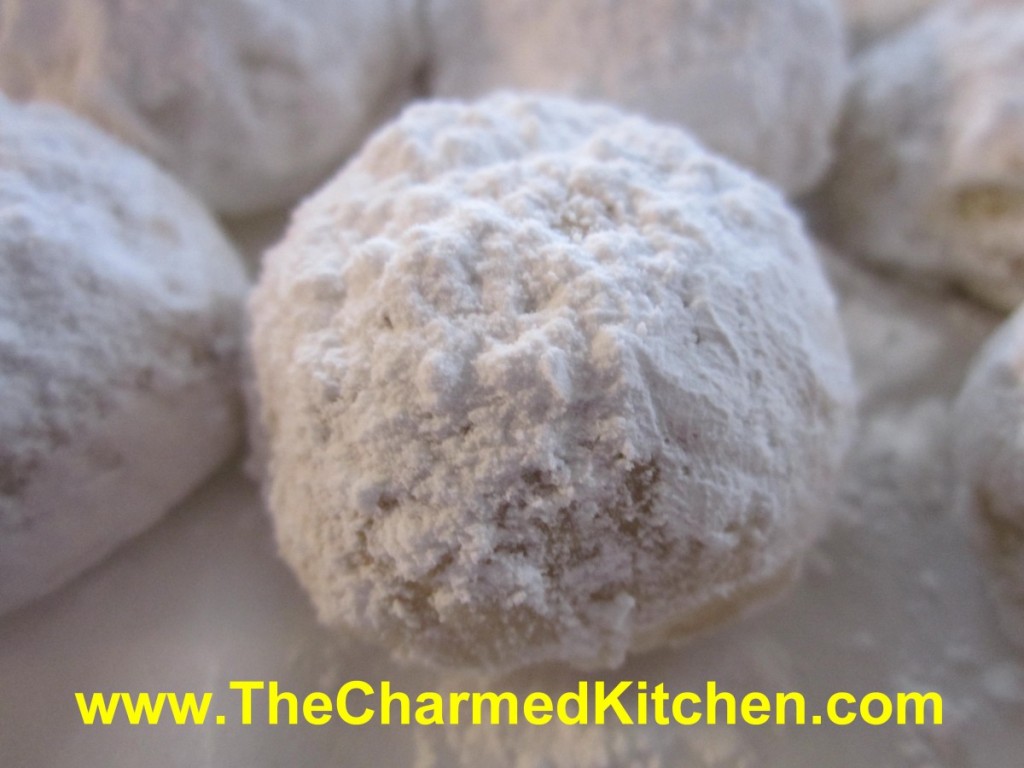
This is the first cookie I can remember making with my Mother. She sat me down at the kitchen table with a pile of chilled dough. I think I was 7. She put a piece of wax paper on the table, then rolled out one small ball of dough. She told me to do what she had just done. Roll out the rest of the dough into little balls. I sat there and made one tiny dough ball after another, until I was done. I can’t make these cookies without thinking of her. A special memory, indeed.
I had a conversation with a childhood friend recently about these cookies. She remembered that my Mom used to make them, and she wondered if I still did. I still do make them. Wouldn’t seem like Christmas without them.
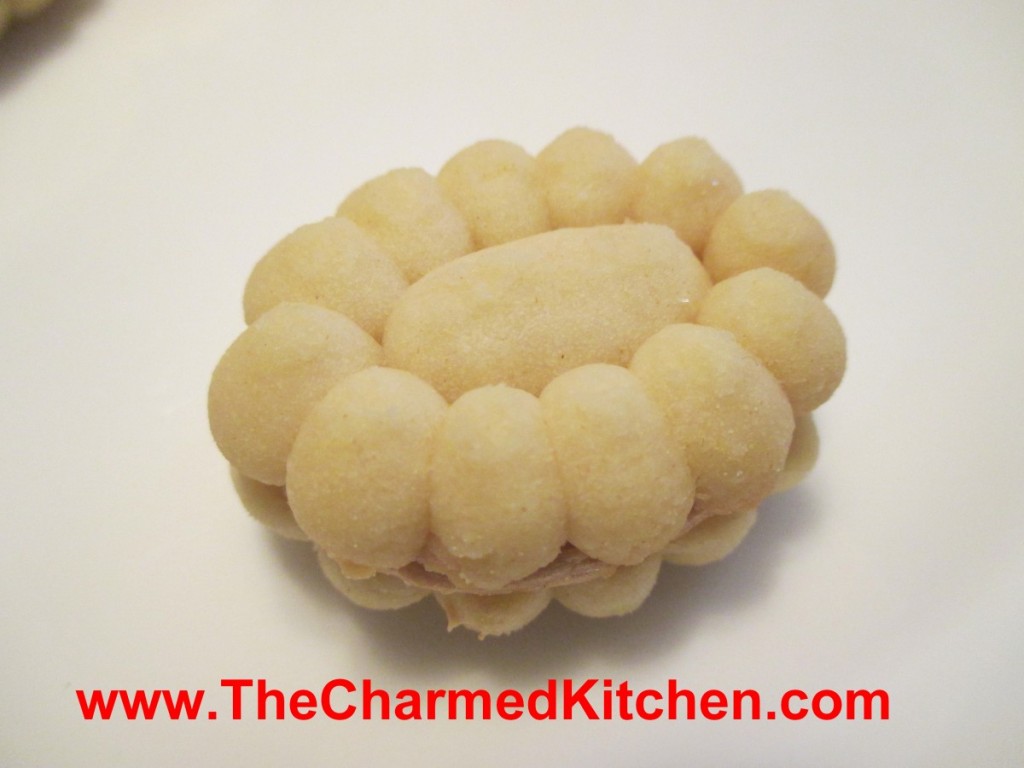
Russian Teacakes, also known as Mexican Wedding Cakes are a delicate nut-filled shortbread cookie coated in powdered sugar. The magic is created when the cookies, hot from the oven, are rolled in powdered sugar. The powdered sugar clings to the hot cookies and makes a sort of sweet coating. Once cooled, they are dusted with more powdered sugar. Whether you call them Russian Teacakes, Mexican Wedding Cakes, or as another friend always refers to them, butter balls, these cookies are a must for your holiday cookie baking.
Russian Teacakes
1 c. butter
½ c. powdered sugar, plus extra for coating
1 t. vanilla
2 ¼ c. flour
¼ t. salt
¾ c. finely chopped nuts, nearly ground
Mix butter, ½ cup sugar and vanilla well. Stir flour and salt together and then add to butter mixture. Mix well and stir in nuts. Wrap dough and chill. Heat oven to 375 degrees. Roll dough into 1-inch balls and place 1 inch apart on ungreased baking sheet. Bake 10-12 minutes. Cookies should be lightly browned on the bottom. While still warm, roll cookies in powdered sugar. Dust again with sugar once cooled. Makes about 4 dozen.
Soft Butter Cookies

If you are looking for a truly tender cookie, this may be it. These cookies are so delicate, they just melt in your mouth!!
The secret ingredient might surprise you. It is oil. Yes, I know I said butter cookies – they also contain butter. But the combination of oil and butter makes them soft and delicate, even days after baking.
They also contain both granulated and powdered sugar. Not your typical cookie recipe, for sure. This just may be my “go to” butter cookie recipe from now on.
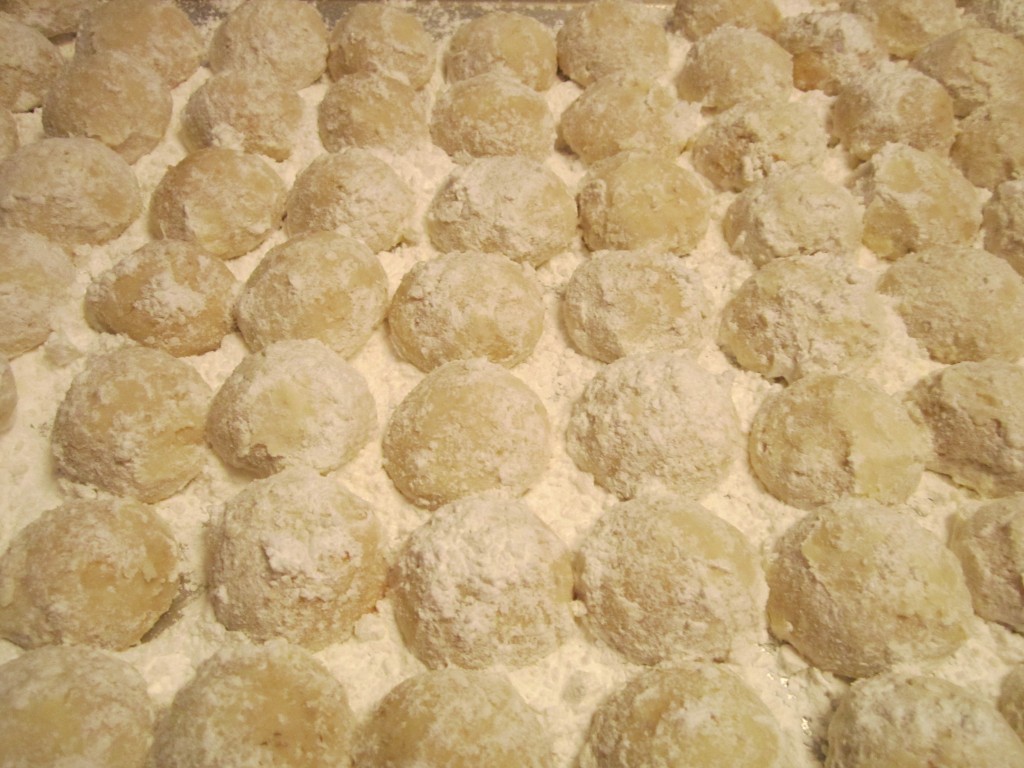
I found a sheet of paper with the ingredients written on it. No directions, just ingredients listed and a notation about cooking time and oven temperature. I wish I knew where I got the recipe. I would certainly give the source credit. I did increase the amount of vanilla a little. You don’t have to chill the dough and they roll very easily, without sticking to your fingers. You could chill the dough, but let it warm up a little before rolling. The dough can also be made ahead and frozen- I tested it.
I dipped the tops of the raw cookies in nonpareils, then baked them. I also dipped some in sprinkles. You could leave them plain, then roll in powder sugar, once baked and cooled, or drizzle with melted chocolate.
Soft Butter Cookies
1 c. butter
1 c. oil, I used avocado oil
1 c. sugar
1 c. powdered sugar
2 eggs
1 T. vanilla
1 t. baking soda
1 t. cream of tartar
½ t. salt
4 ½ c. flour
In mixing bowl, beat together butter, oil, sugars and vanilla. Once well blended, beat in eggs. Stir in the baking soda, cream of tartar and salt, then add the flour, mixing until well combined. Heat oven to 350 degrees. Roll dough into one inch balls and press tops of cookies in sprinkles or colored sugar, if desired. Place one inch apart on ungreased baking sheets. Bake for 12 minutes, or until light golden on bottom. Leave cookies on baking sheets 3 minutes before placing on cooling rack. Makes about 6 dozen cookies.
Phyllo Chocolate Fan Cookies
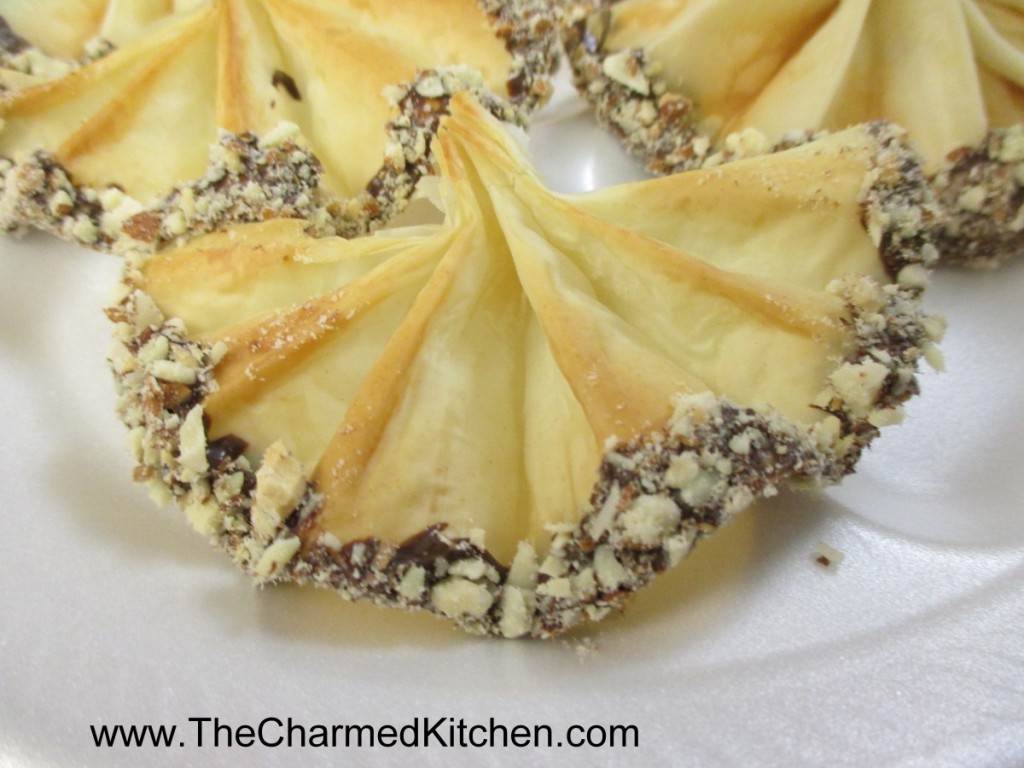
If you want a cookie that is really going to impress, you might want to make these Chocolate Fans. They are crisp, not too sweet, and tipped with chocolate and fine chopped nuts.
While they look difficult to make, they are actually quite easy. For starters, you don’t have to make dough. These are made with phyllo dough.
Phyllo is found in the freezer section at the grocery store. Phyllo dough (also spelled filo) can be a little fussy. Be sure to keep extra dough covered with a damp towel so it won’t dry out and get brittle. It is best to work quickly when making these. We made these dipped in finely chopped toasted almonds. Other nuts could be used. You could also use white chocolate, if you prefer. I have even added a few sprinkles to the nuts for a pop of color.
Chocolate Fan Cookies
1 lb. phyllo dough, thawed*
1 c. butter, melted
12-oz. chocolate chips
2 T. shortening- you can use coconut oil instead
1 c. finely chopped nuts or coconut, pistachios are extra nice
Remove phyllo from box, still rolled up and cut crosswise into 5-6 equal pieces. Keep unused dough covered in a damp towel to prevent drying out. Take one piece of dough and open it up, cutting it in half crosswise. Take 1 sheet and brush with butter. Place another sheet on top and brush again with butter. Place third piece of dough on top and butter again. Starting at short end begin to fold the dough in ¾ inch folds, accordion style. Pinch together at one end and fan out the dough at the other. It should look like a little fan. Place on ungreased baking sheet and repeat with remaining dough. Bake at 375 degrees for 5 minutes. Cool. Melt chocolate and shortening together in microwave or on top of double boiler. Stir to smooth. Dip tip of wide end of fans in melted chocolate and then in the nuts or coconut. Place on a rack to cool and harden. Makes about 65 fans. Can be frozen.
*I buy frozen phyllo dough but be sure to get the right one. Around here there are 2 different sizes. You’ll need the long box- where the dough is 15 inches long.
Cheese Puffs

Forget any of the store-bought “cheesy” crackers you have had in the past. These are so much better. The dough is pretty simple, with just 5 ingredients- cheese, butter, salt, cayenne or hot sauce and flour.
Homemade crackers are not hard to make at all. They do involve a little time, but it is well worth it.
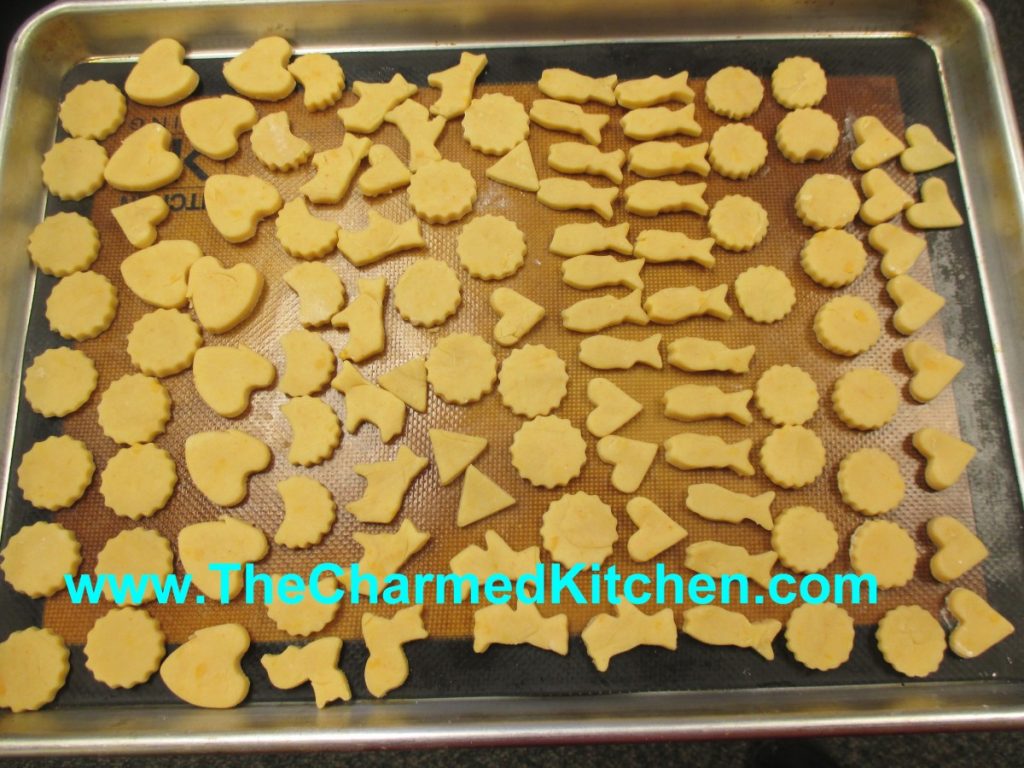
We used miniature cookie cutters (also called aspic cutters) that come in all sorts of adorable shapes. You can also just cut the dough into thin strips, or small squares. We even cut some in little fish shapes, like a popular cheesy snack cracker.
I used sharp cheddar cheese, but you can play around with other cheeses. I have made these with Swiss cheese and they were also good. You can add more cayenne or add some herbs, if you like. I really recommend using a food processor to make the dough. It helps to get the cheese and flour to combine.
They don’t spread at all, so you can place them pretty close together on the baking sheet.
Think of how much fun these would be to serve at your next party. They make a nice gift, too.
Cheese Puffs
1 lb. sharp cheddar cheese, grated
½ c. butter
½ t. salt
¼ t. cayenne pepper or hot pepper sauce to taste
1¾ c. flour
In mixer or food processor, combine cheese and butter until smooth. Add remaining ingredients and blend until pretty smooth. Roll out onto lightly floured surface to 1/4-inch thickness. Cut into thin strips or use mini cookie cutters to make shapes. Place on ungreased baking sheet, nearly touching, as they do not spread. Bake in a preheated 350 degree oven for 15-20 minutes. Bottoms should be lightly browned. Makes about 100, freeze well.

Christmas Tree Coffee Cake

This Christmas “tree” has become a tradition around here. I make one as a gift for a dear friend every year. If you are looking for something to serve for Christmas morning, or even as a dessert option, I suggest you make this coffee cake.
The recipe actually makes 2 “trees,” so you can have one to give- and one to keep. Or perhaps, one for Christmas Eve and one for Christmas Day.
The yeast dough is prepared, then chilled before rolling. You can do that a day, or even two days, ahead of time. The rolls are filled with a pineapple and cream cheese mixture and are very tasty.
The rolls are arranged in a tree pattern before baking. Then, after baking, the “tree” is topped with a light glaze and gently sprinkled with red and green sugars. The original recipe called for candied cherries. You can use them, or Maraschino cherries or even dried cherries or cranberries. I can my own spiced cherries and sometimes use them. So pretty, and not that hard to make.
Here is the recipe.
Christmas Tree Coffee Cake
Dough:
4-4 1/2 c. bread flour
1/2 c. sugar
1 1/2 t. salt
2 packages active dry yeast
3/4 c. milk
1/2 c. water
1/2 c. butter
1 egg
Filling:
1 lb. Cream cheese, softened
1/2 c. sugar
1/4 t. nutmeg
dash salt
1/4 t. vanilla
1 (20 oz.) can pineapple in its own juice drained and squeezed dry
Topping:
11 Maraschino cherries, halved
2 c. powdered sugar
3 T. milk
red and green sugars
For dough in large mixing bowl combine 2 cups of the flour with the sugar, salt and yeast. Heat together the milk, water and butter until very warm. Add to flour mixture and beat 2 minutes. Add egg and 1 more cup of flour and beat 2 more minutes. Stir in enough of the remaining dough to make a stiff batter, about 1 cup. Cover bowl tightly with foil or plastic wrap and refrigerate for at least 2 hours or up to 3 days before using. For filling combine all ingredients for the filling except the pineapple and beat until smooth. Stir in pineapple and set aside until ready to use. Remove dough from fridge cut in half. Roll out one piece on lightly floured surface into a 10×11- inch rectangle. Spread with half the filling, leaving an inch at the end of 11-inch side. Roll up from eleven- inch side. Use thread or dental floss to cut through dough in 1-inch pieces by placing thread under roll and crossing ends. Pull outward and thread should cut through dough. If you aren’t having any luck you can always use a knife, but they tend to flatten the rolls. On a greased baking sheet arrange the slices (you should have 11) into a tree shape. Start with one on the top and then a row of 2 below then 3 and then 4. The last roll will serve as the trunk. Cover dough with plastic wrap and set in a warm place to rise. Repeat with the remaining dough and filling. When dough is risen, about 1-2 hours bake in a 375- degree oven for 15 minutes then cover edges with foil to prevent over browning and return to oven for 10 minutes more. Cool on wire rack. Place half a cherry in the middle of each roll. Make a glaze with powdered sugar and milk and drizzle over. Sprinkle with the sugars. Makes 2 trees, 11 rolls each. Can be frozen up to a month ahead . Defrost in a 350 -degree oven for 10 minutes and apply toppings.
Multi Bean Soup Mix
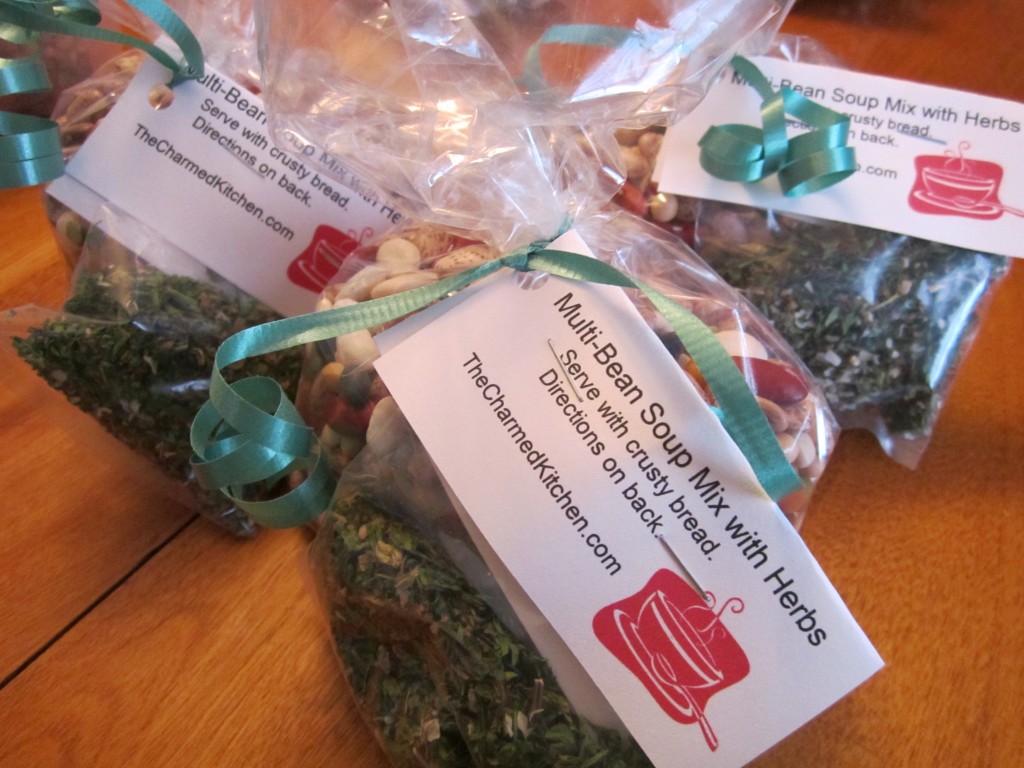
This is another fun gift to make for the holidays. They are a nice gift for experienced cooks and inexperienced cooks alike. They each make a big pot of soup.
There are three parts to the mix- a bag of assorted dry beans, a packet of herbs and the label with directions. You create a label for the soup mix and include the directions on the back of the label. I package them in cellophane goodie bags I get at a local craft but you can also use pint jars. The herbs are in small plastic lollipop bags and are part of the label. This is a project kids can do, too.
Multi Bean Soup Mix
For 12 gifts you will need
1 case of pint canning jars. With lids and rings or 12 cellophane bags and ribbon
24 cups of assorted dry beans
Labels and directions
Herb packets
Get as many types of beans as you can find at the grocery store. When estimating how many bags you will need to get a 1 pound bag of most beans fills a pint jar with a little extra, however lentils and split peas under fill the same jar. I get 13 lbs. for good measure and if I have some left over I save it for the next batch or for home use. I’ve also found that it usually takes a couple of stores to find a decent assortment of beans. Look for a variety of colors and sizes. Some of the things I try to include are: black beans, large and small lima beans, navy beans, yellow and green split peas, pinto beans, cranberry beans, black-eyed peas, brown and red lentils and kidney beans.
Get a large bowl and add the beans. I usually have an empty pint jar on hand and measure as I go. Counting how many jars of beans I’ve placed in the bowl as I empty them into the jar and then empty the jar into the bowl. Measure a little generously, though. Small legumes tend to fill in spaces when several types are mixed and so 12 jars mysteriously become 11. It’s more of a general guide than a precise measure. Mix the beans well and scoop them into the jars, adding the lids as you go.
Now you have some pretty jars of beans, but not a soup mix. To complete the job, mix up a batch of herbs for the seasoning packets. You will need:
12 lollipop bags
12 labels
And
3/4 c. parsley flakes
1/2 c. dried diced onion
2 T. dried savory
1 T. dried oregano
1 T. dried marjoram
1 T. dried thyme
1 T. dried minced garlic
1 t. powdered bay leaf
You can adjust the herbs to taste or use what you have on hand. Other herbs or seasonings you could add would be basil, mint, chili powder, cumin or rosemary to name but a few. The blend recipe given is a mix of flavors I happen to like. Savory is sometimes called the “bean herb” because its flavor complements legumes. Thyme is also similar in flavor. Anyway, mix the herbs well and divide the mixture in the 12 bags. Use a couple of slightly rounded tablespoons per bag, depending on how powdered your herbs are. Fold over the labels and staple. Punch a hole in the corner of the label and affix to jar with stretchy loop or raffia or twine or even thin ribbon.
The labels
I make labels that are the same size as 2 business cards. On the front add your own graphic and on the back the directions for the soup. The print on the back will have to be small.
Directions to include with soup mix.
Rinse beans and pick over. Place beans in large kettle of cold water and bring to the boil. Boil 3 minutes and remove from the heat. Let stand 1 hour then drain and rinse beans. Return beans to pot and add enough water to cover and simmer until beans are tender, about 2-3 hours. Meanwhile in large pot in 2-T. oil sauté 1 large onion (chopped) until tender. Add beans with water and 1 (28 oz.) can diced tomatoes. Add seasoning packet, water or broth if needed and salt and pepper to taste. Serves 6-8.
Homemade Mustard

I love making food gifts for the holidays. I often make cookies or other baked goods. But not everyone wants sweets. For those friends and family, I often make them homemade mustard. I have included recipes for 4 of my favorite mustards.
I wasn’t a big fan of mustard, when I was a kid. I am now. I enjoy using all types of mustard in all sorts of dishes, not just on hot dogs.
Mustard is great on sandwiches and sausages. It is a versatile ingredient for salads, salad dressings, marinades and all sorts of sauces. I lean towards spicy brown mustard myself.
I also enjoy making my own mustard. That way, I can tweak the seasonings.
So here are four of my favorite homemade mustard recipes. If you never made mustard before- you might want to try. It is easy, and fun. All of them are stored in the fridge- and will keep for months. For gift-giving, look for decorative jars or crocks to put them in.
Horseradish Mustard
1 c. dry mustard
3/4 c. white wine vinegar
1/3 c. dry white wine or dry sherry
1/4 c. brown sugar
1/4 c. granulated sugar
1 T. dried minced onion
2 t. caraway seeds
1 1/2 t. salt
1/4 t. coarse ground mustard
2 eggs, slightly beaten
1 T. prepared horseradish
Combine all ingredients, except eggs and horseradish in top of double boiler and let stand at room temperature for 2 hours. Whisk in eggs and cook over simmering water until mixture has thickened and eggs are cooked, about 10 minutes. Remove from heat and stir in horseradish. Pour into sterilized jar, cool and cover. Store in fridge for up to 3 months. Makes 2 cups.
Bavarian Mustard
3/4 c. beer
2/3 c. dry mustard
2 T. sugar
2 T. cider vinegar
2 t. salt
1-t. celery seeds
1/2 t. fresh grated ginger or 1/4 t. dry
1 egg, beaten
Combine all but the egg in the top of a double boiler and let stand 2 hours at room temperature. Stir in egg and cook over simmering water. stirring constantly until mixture thickens and egg is cooked, about 10 minutes. Pour into sterilized jars and cool before covering. Store in fridge for up to 2 months. Makes 2 cups.
Spicy Mustard
1 c. dry mustard
2/3 c. dry white wine
1/2 c. vinegar, flavored with herbs or garlic
1/2 c. sugar
2 t. salt
1 t. basil
1 t. chili powder
1 t. dried minced garlic
1 t. oregano
1/2 t. cracked pepper
2 eggs, slightly beaten
Mix all ingredients, except eggs, in top of double boiler and let stand 2 hours at room temperature. Add eggs and cook over simmering water, stirring constantly until mixture thickens and eggs are cooked, about 10 minutes. Pour into sterilized jars and cool down before covering and refrigerating. Keeps in fridge for up to 2-3 months. Makes 2 cups.
French Herb Mustard
1/4 c. dry mustard
1/4 c. white wine vinegar
1/4 c. white wine or dry sherry
1/4 c. brown sugar
1/2 t. salt
1/2 t. tarragon
1/4 t. dill seed
1/4 t. celery seed
1/4 t. ground cloves
3 egg yolks or 1 whole egg
Combine all ingredients, except eggs, in top of double boiler and let stand at room temperature 2 hours. Whisk in eggs and cook over simmering water, stirring constantly, until mustard thickens and eggs are cooked, about 5 minutes. Store in crock or jar in fridge for up to 1 month. Makes 1 cup, recipe can be doubled.
Homemade Bath Salts
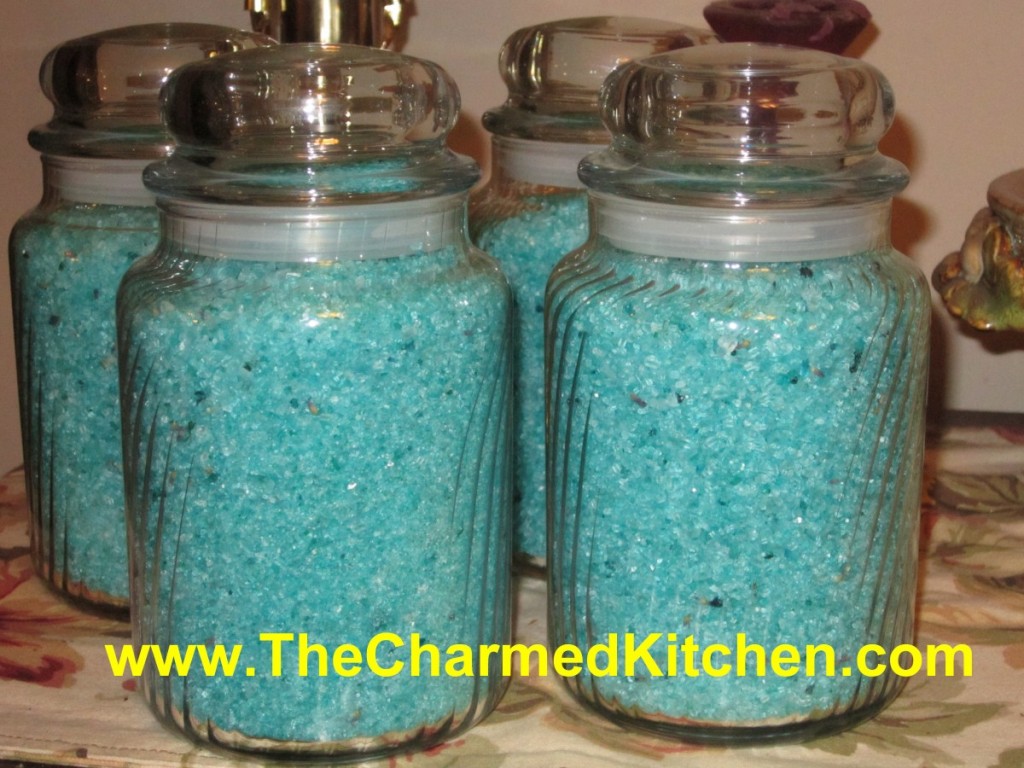
If you are looking for a simple and easy gift to make for someone, you might want to make bath salts. It is one of my favorite gifts to make. Everyone seems to like them. This is a fun craft for kids to make for Mom, teachers etc. I like using essential oils, but you can use perfume, too. You can also leave them unscented, if someone is sensitive to perfumes and fragrances.
The ingredients are fairly easy to find. Epsom salts can be found at any drug store. Essential oils can be found at most craft stores. Food coloring- grocery stores. Try to find pretty jars to put them and finish with a pretty label.
Sometimes I add small amounts of dried flower petals. If you do that- just small amounts and crumbled pretty fine, so there won’t be issues with clogging drains. Here are the directions.
Homemade Bath Salts
Epsom Salts
Fragrant oils
Food coloring, optional
Flower petals, optional
Place 2 cups Epsom salts in a non-reactive bowl and add a few drops of scented oils and a few drops of food coloring, if desired. Toss to distribute, or place in a jar with a tight fitting lid or even in a plastic bag and shake mixture well. Take a whiff. If you can’t smell them, add more. You can add more coloring, too if needed. Add a few petals, broken up, for additional fragrance and for color. Place salts in a glass jar with a lid or in a plastic bag and let stand 1 week. Smell again and adjust fragrance as needed. Fragrances mature and you may find them too weak or strong. Add more oil or cologne to heighten aroma or add more salts to cut down on intensity. Keep in mind that the bath salts will be diluted a lot in a bath, so a little strong is good.
The oils are available at many craft stores and by mail. See the section on mail order in the back of the book. Choosing the fragrance you want to use can be a little trickier. Most of the florals are a safe bet, but you may want to get more creative. Citrus, herb, spice and woody fragrant oils can add a dimension to your bath salts that make them really outstanding.
To present them as a gift salts can be put in a wide-mouth jar, with a lid. Decorate with ribbon and attach a small scoop, if you like. Discount and dollar stores are a good place to find attractive jars at a reasonable price as well as garage sales and resale shops. You can also package them for individual use in lollipop bags with a card board header, like the herb packets. I like to make different fragrances and label them (relaxing bath, earthly delights, sweet dreams, etc. I then package them in the bags and add a few to a gift basket.
Cookies and More for Sale
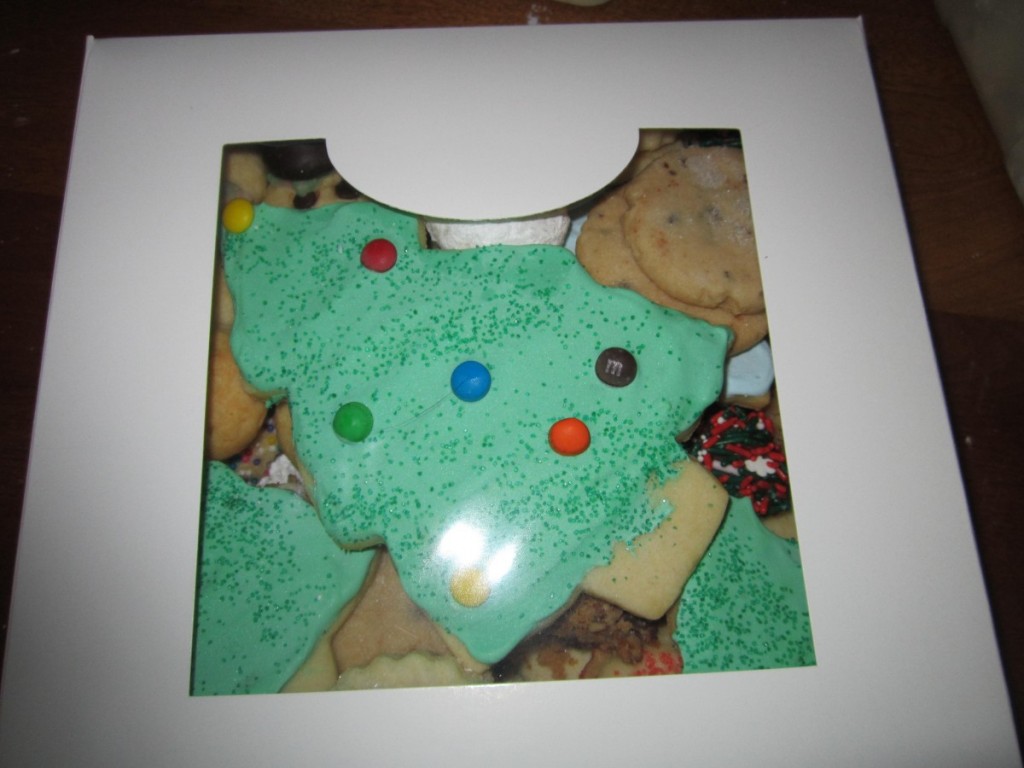
I will be selling boxes of cookies again this year. The boxes weigh more than 2 pounds and contain at least 10 different kinds of cookies. Contact me if you are interested. They are $20 ( $18 per box if you order 3 or more) and will be available for pick-up at my house starting December 20th.
But there’s more……
I will have other holiday treats.
Pumpkin bread, cranberry bread, or applesauce bread Large (4×8) $7 Small (3×6) $4
Pumpkin Cake Rolls- $15
Chocolate Beet Cake (Red Velvet) (6×8 in), Pumpkin Squares (6×8 in.) or Apple Cake (6×8 in.) $7 each
I will also be making the Christmas tree coffee cakes, pictured below. Eleven rich pineapple and cream cheese rolls- in the shape of a Christmas tree. Adorable. $20
I can make other sweet and savory treats. Just ask.
Contact me: Judi_strauss@att.net